Beyond Traditional Lipid Lowering: Obicetrapib and the Renaissance of Cholesteryl Ester Transfer Protein Inhibition
Abstract
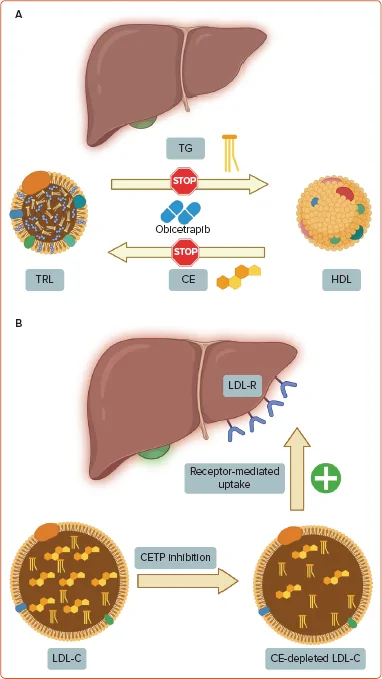
Obicetrapib, a next-generation cholesteryl ester transfer protein (CETP) inhibitor, is emerging as a potent therapeutic option to address residual cardiovascular risk in patients not achieving optimal outcomes with existing lipid-lowering therapies, such as statins, ezetimibe and proprotein convertase subtilisin/kexin type 9 inhibitors. Many high-risk individuals fail to meet recommended LDL cholesterol targets, and up to 40% experience recurrent cardiovascular events, highlighting the need for novel interventions. This review consolidates the evidence from Phase I-III trials (including TULIP, ROSE, BROADWAY, BROOKLYN and TANDEM) and meta-analyses. Take together, the results demonstrate that obicetrapib significantly reduces LDL cholesterol by 30-50%, apolipoprotein B by 20-30% and lipoprotein(a) by as much as 40-50%, while elevating HDL cholesterol levels by more than 100%. The average LDL cholesterol reduction was 0.92 mmol/l (35.4 mg/dl), with amplified effects when combined with ezetimibe. Obicetrapib achieves up to 97% inhibition of CETP activity and maintains a favourable safety profile. Additional metabolic benefits include decreased HbA1c and a lower incidence of new-onset diabetes. These results highlight obicetrapib's robust efficacy across multiple lipid parameters and its contribution to atherogenic lipoprotein reduction, particularly lipoprotein(a), a marker of high residual risk. Overall, obicetrapib represents a meaningful advancement in cardiovascular risk management and is positioned as an important new agent for high-risk patients with persistent residual risk despite current standard-of-care therapies.
The paper
King George's Medical University; University of Rome Tor Vergata
European Cardiology, 23 Sep 2026, Open access