Continuous glucose monitoring after discontinuation of incretin-based obesity pharmacotherapy: indirect evidence and a research framework for metabolic stability and weight maintenance
Abstract
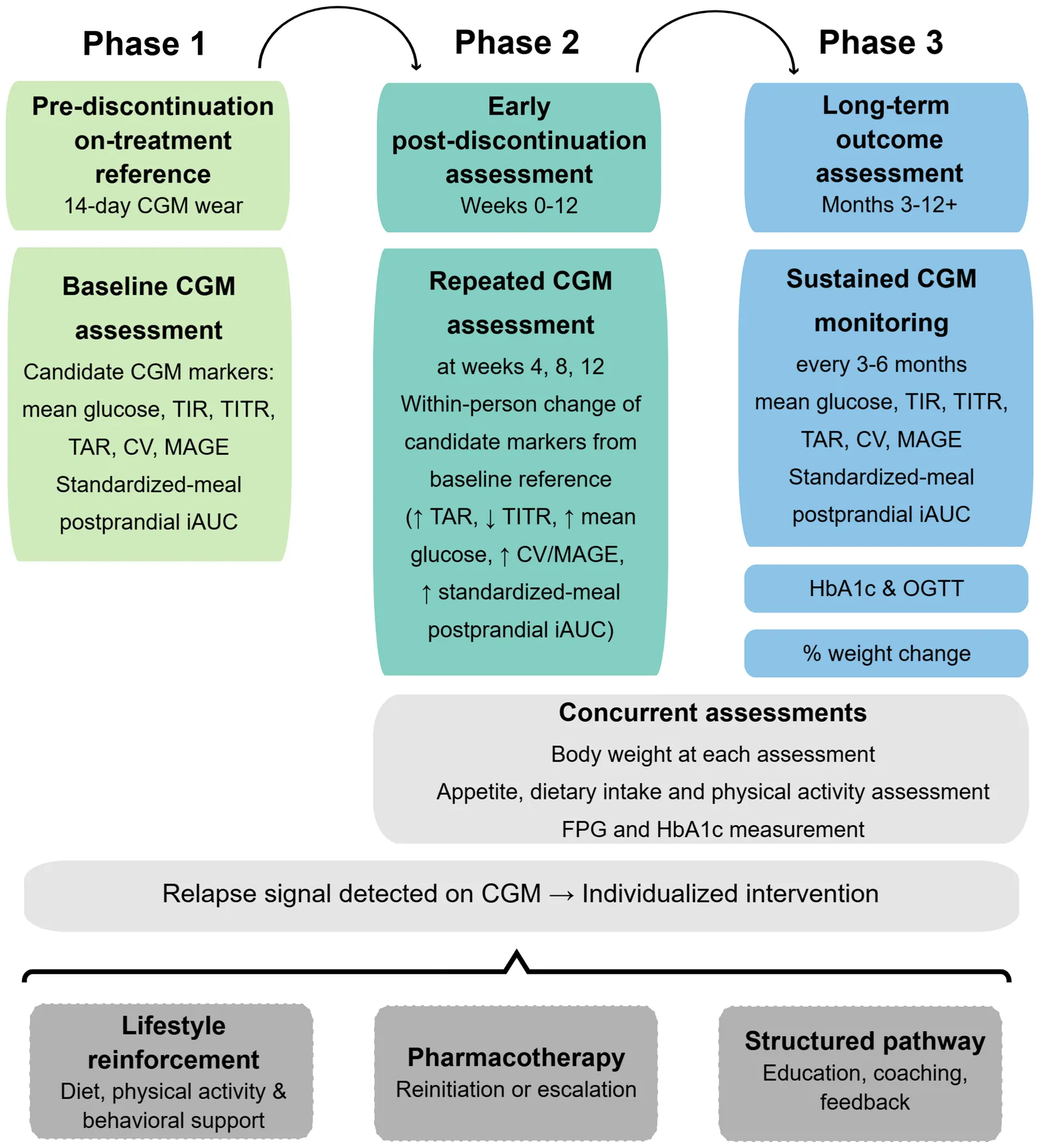
Discontinuation of incretin-based pharmacotherapy is frequent and is associated with weight regain and metabolic relapse, including deterioration in cardiometabolic risk factors. New strategies are needed to preserve metabolic stability and body weight after treatment withdrawal. Whether continuous glucose monitoring (CGM) can facilitate early detection of metabolic relapse or support long-term weight maintenance after discontinuation remains unknown. This narrative review examines the indirect evidence supporting CGM use after discontinuation of incretin-based obesity pharmacotherapy, focusing primarily on adults with obesity without established diabetes, including those with normoglycemia or prediabetes. CGM can characterize postprandial glucose responses and glycemic variability under free-living conditions while also offering real-time behavioral feedback. However, no prospective studies have established whether CGM-derived metrics precede or predict weight regain, nor whether CGM-guided interventions improve long-term weight-maintenance outcomes in this setting. Moreover, validated CGM thresholds for identifying metabolic relapse in individuals without diabetes have yet to be defined. We outline a hypothesis-generating three-phase monitoring framework for the prospective evaluation of CGM alongside body weight, appetite, dietary intake, and physical activity during the post-discontinuation transition period. If validated, unfavorable CGM trends could support earlier individualized behavioral or pharmacological intervention, before clinically meaningful weight regain or metabolic relapse occurs. Potential benefits must be balanced against costs, skin reactions, anxiety, and unnecessary dietary restrictions arising from overinterpreting unvalidated signals. CGM-guided post-pharmacotherapy care, therefore, remains investigational and requires prospective validation.
- Continuous glucose monitoring
- Discontinuation of incretin-based pharmacotherapy
- Obesity
- Prediabetes
- Glycemic variability
- Humans
The paper
University of Maribor; University of Ljubljana
Frontiers in Endocrinology, 28 Sep 2026