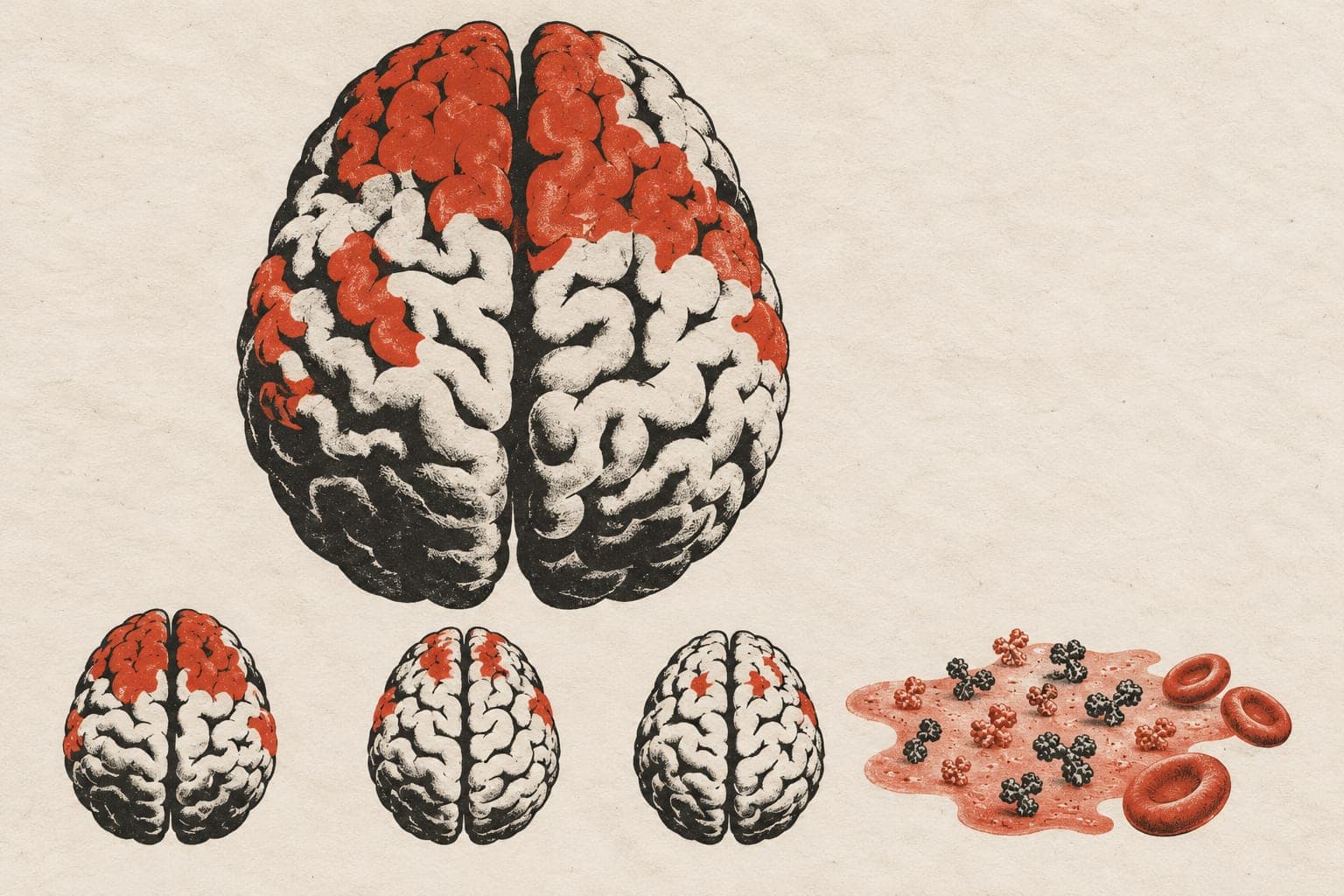
Models link brain network organisation to local changes in aging
An observational analysis of an aging cohort linked local connection patterns to highly connected hubs, nearby connections and groups of connected brain regions.
In an aging cohort of people, researchers modelled changes over time in brain networks in an observational study. They examined structural networks, which represent physical connections, and functional networks, which represent coordinated brain activity. The models described connections forming and disappearing. Researchers selected the local connection factors used in the models from the data rather than specifying them in advance.
The models linked interacting factors to highly connected hubs, connections between nearby regions and groups of connected regions. Functional networks showed substantially higher rates of change than structural networks, suggesting more frequent opportunities for maintenance and reorganisation. In structural networks, cognitive impairment was associated with less specific patterns behind hub formation.
Why it matters
The framework offers a way to investigate how brain networks maintain and reorganise their connections as people age.
Caveats
The observational models identified associations, not proof that the selected factors caused network changes. The paper is a preprint and has not been peer-reviewed.
The paper
University of Calgary
bioRxiv, 10 Oct 2026, CC BY, Preprint, not peer-reviewed