Wearable Health-Tracking Devices and Adherence to Physical Activity Guidelines Among US Adults, Including Those with Elevated Anxiety Symptoms: A Nationally Representative Cross-Sectional Analysis of HINTS 7 (2024)
Abstract
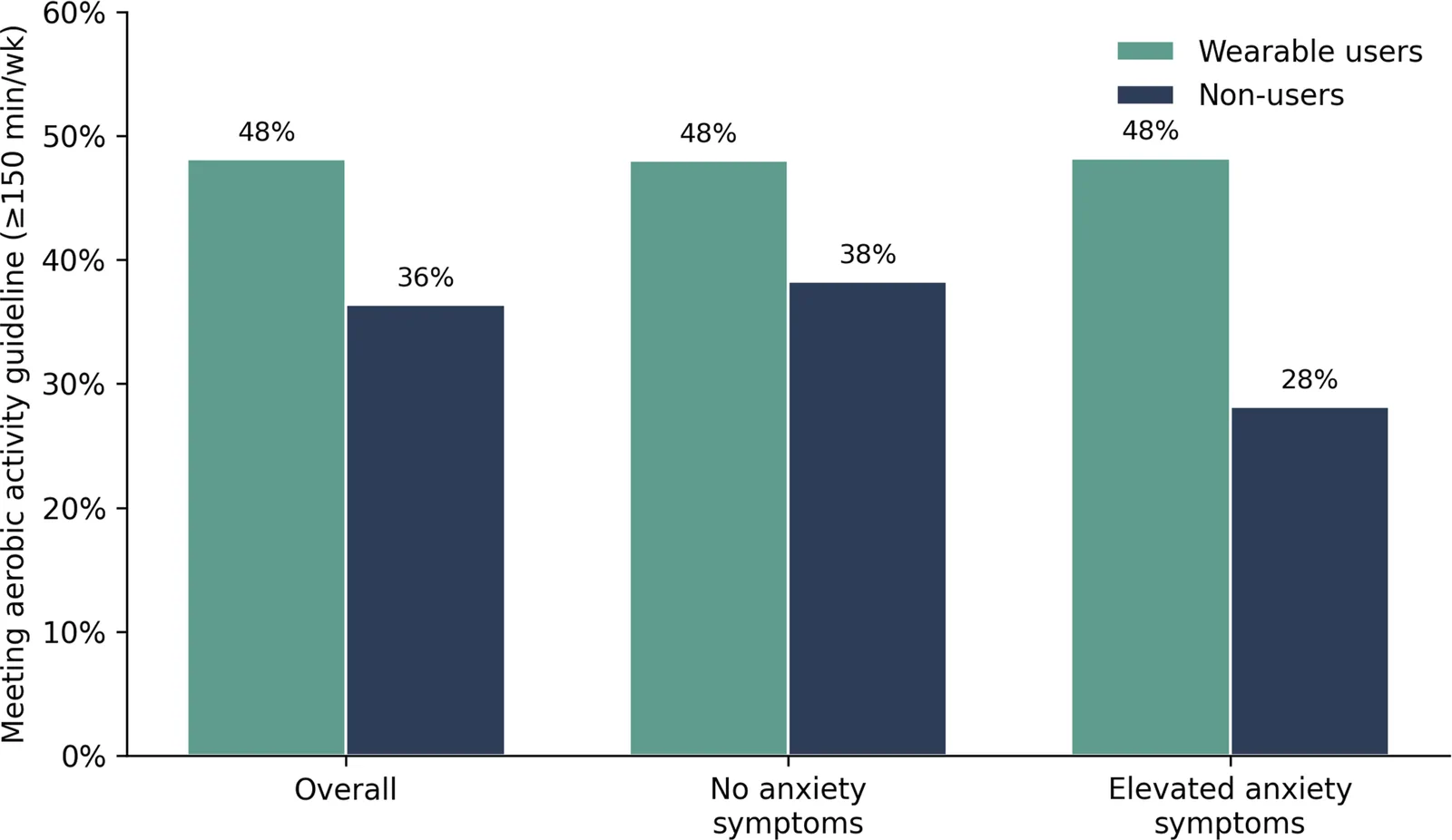
Physical activity is a pillar of lifestyle medicine, yet most US adults do not meet aerobic guidelines, and inactivity is especially common among people with anxiety. Wearables enable self-monitoring, but population-level evidence linking them to guideline adherence among distressed adults is limited. We analyzed 6686 adults from the nationally representative Health Information National Trends Survey 7 (2024). The outcome was meeting the aerobic guideline (≥150 weekly minutes of at least moderate-intensity activity); the exposure was wearable device use for health tracking. Elevated anxiety was defined as a 2-item Generalized Anxiety Disorder scale score ≥3. Weighted logistic regression yielded odds ratios (ORs) adjusted for sociodemographic and health covariates. Wearable users were more likely than non-users to meet the guideline (48.1% vs 36.4%; adjusted OR, 1.59; 95% CI, 1.33-1.91; P < .001). The association was consistent across anxiety strata (interaction P = .33); among distressed adults, 48.2% of users vs 28.1% of non-users met the guideline. In secondary analyses, wearable use was not associated with meeting ≥300 min/wk (adjusted OR, 1.09; 95% CI, 0.84-1.40). Wearable use was independently associated with meeting activity guidelines, including among adults with elevated anxiety, supporting its potential as a scalable lifestyle-medicine adjunct. Cross-sectional data preclude causal inference.
- Wearables
- Anxiety symptoms
- 2-item Generalized Anxiety Disorder scale
- Weekly physical activity duration
- Humans
The paper
University of Helsinki; University of British Columbia
American Journal of Lifestyle Medicine, 10 Oct 2026