Wnt-PPARγ Seesaw Mechanism Mediates the Perilipin 2-to-1 Dominance Shift in Engineered Adipose Tissue Regeneration
Abstract
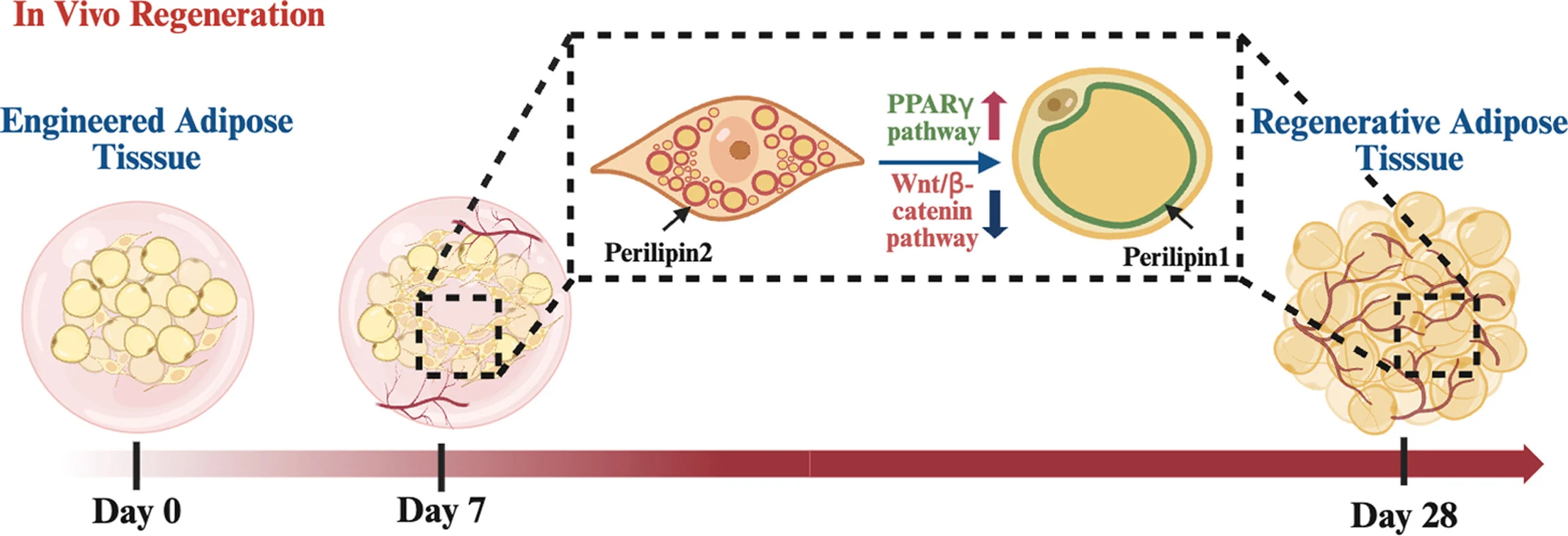
BACKGROUND: The transition from perilipin 2 to perilipin 1 occurs during adipose tissue regeneration following fat grafting, but engineered adipose tissue follows a similar pattern remains unclear. OBJECTIVES: To investigate the dynamic expression of perilipin 2 and 1 during engineered adipose regeneration and elucidate the underlying molecular mechanisms. METHODS: Adipose-derived stem cells (ADSCs) were induced into adipocytes, mixed with Matrigel, and subcutaneously implanted into nude mice. In vitro, the dynamic changes of perilipins during adipogenic differentiation were tracked, and cellular viability and adhesion within Matrigel were evaluated. In vivo, hypoxic stress, vascular remodeling, and perilipin expression within the grafts were monitored at 7, 14, and 28 days post-implantation. Regulatory pathways were investigated through transcriptomic analysis, in vivo validation, and in vitro adipogenic intervention assays. RESULTS: In vitro, ADSCs differentiated into adipocytes with a perilipin 2-to-1 transition and maintained adhesion, lipid droplets, and viability within Matrigel. In vivo, engineered fat underwent progressive vascularization, with hypoxia-inducible factor-1 alpha expression peaking at day 14. Perilipin 2 predominated at day 7, while perilipin 1 became predominant by day 14. Transcriptomic analysis between mature adipose tissue and engineered fat at day 14, together with in vivo and in vitro pharmacological intervention revealed that the perilipin 2 to 1 shift was mediated by Wnt/β-catenin pathway downregulation and subsequent PPARγ activation, primarily through the induction of perilipin1. CONCLUSIONS: Engineered adipose tissue undergoes a perilipin 2-to-1 transition during post-transplantation regeneration, driven by the "seesaw" mechanism of Wnt/β-catenin-PPARγ axis.
The paper
Shanghai Tenth People's Hospital
Journal of Lipid Research, 11 Oct 2026