Deleting beta-catenin in mouse disc cells lowers inflammation and immune cell recruitment
Simulating age-related declines in disc Wnt signaling blunted chemotactic gene expression and cut injury-induced myeloid infiltration roughly in half.
Aging Cell
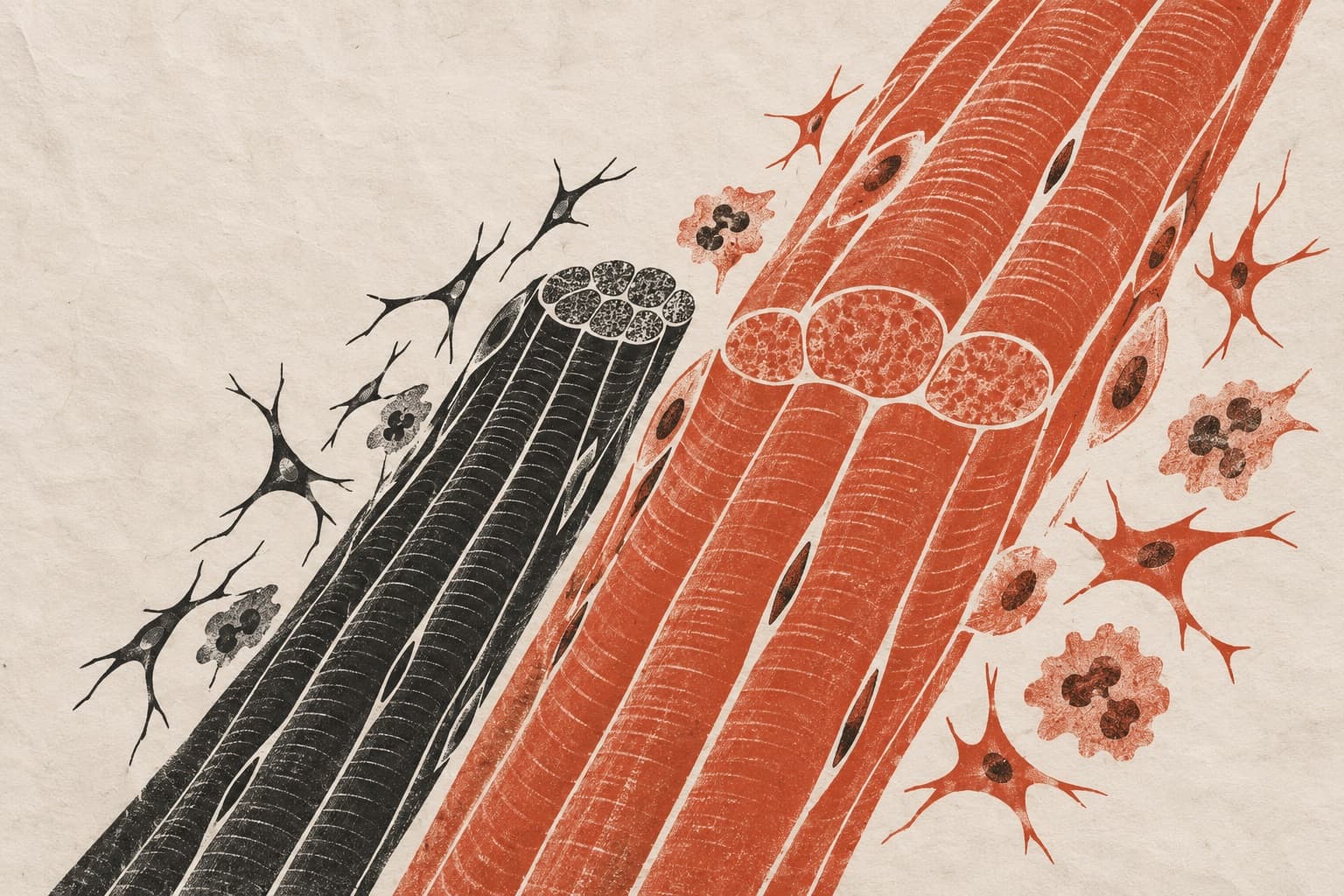
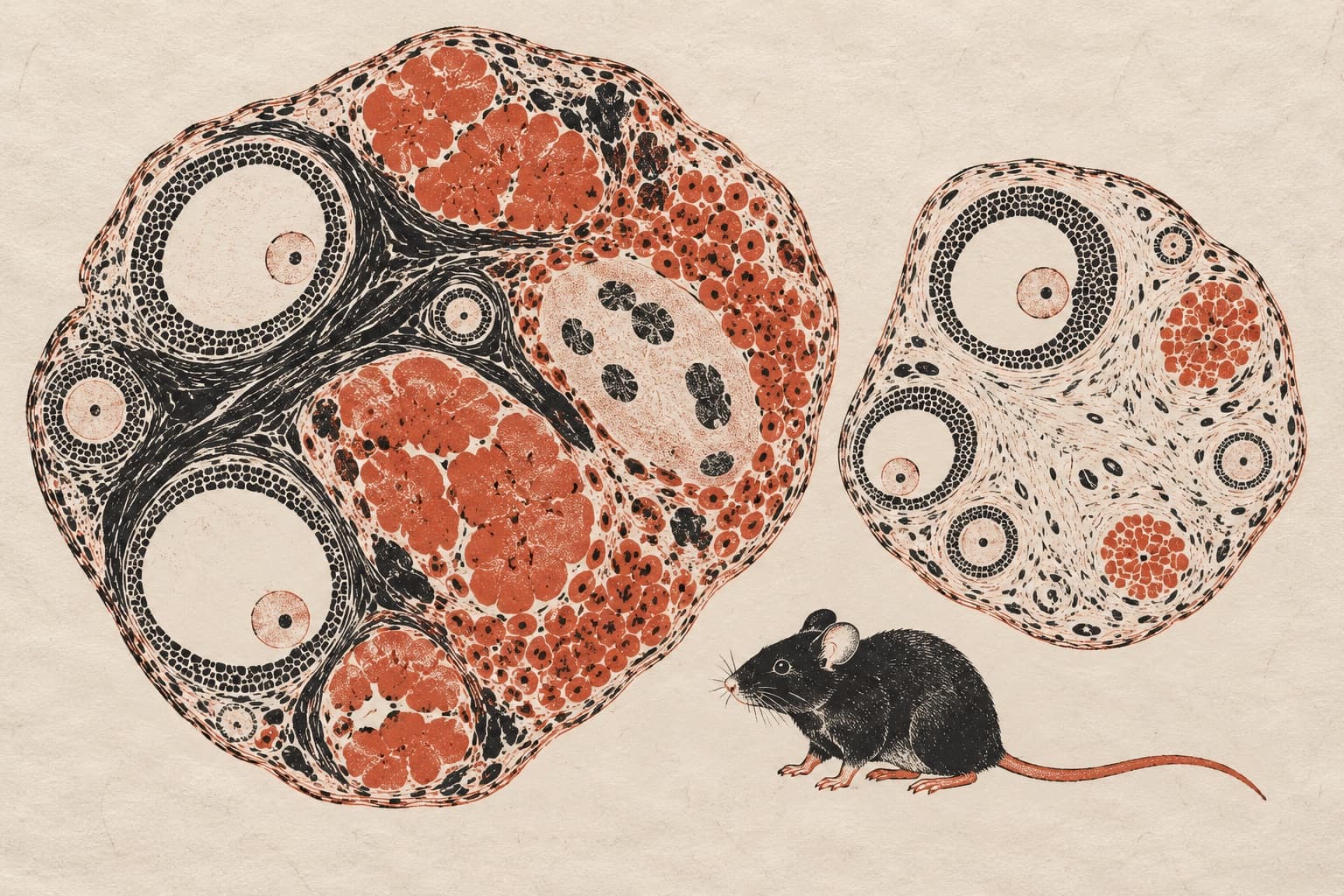
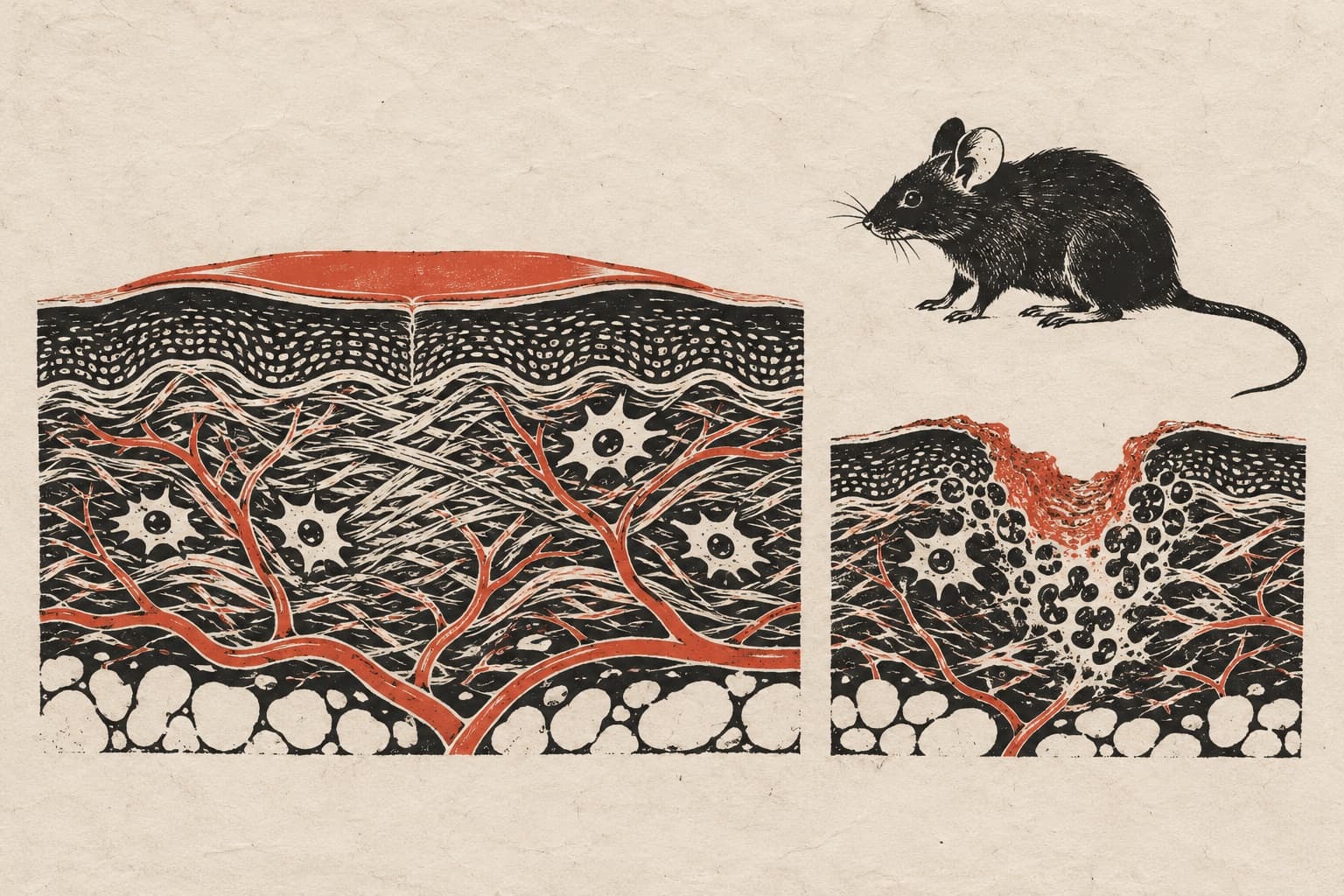
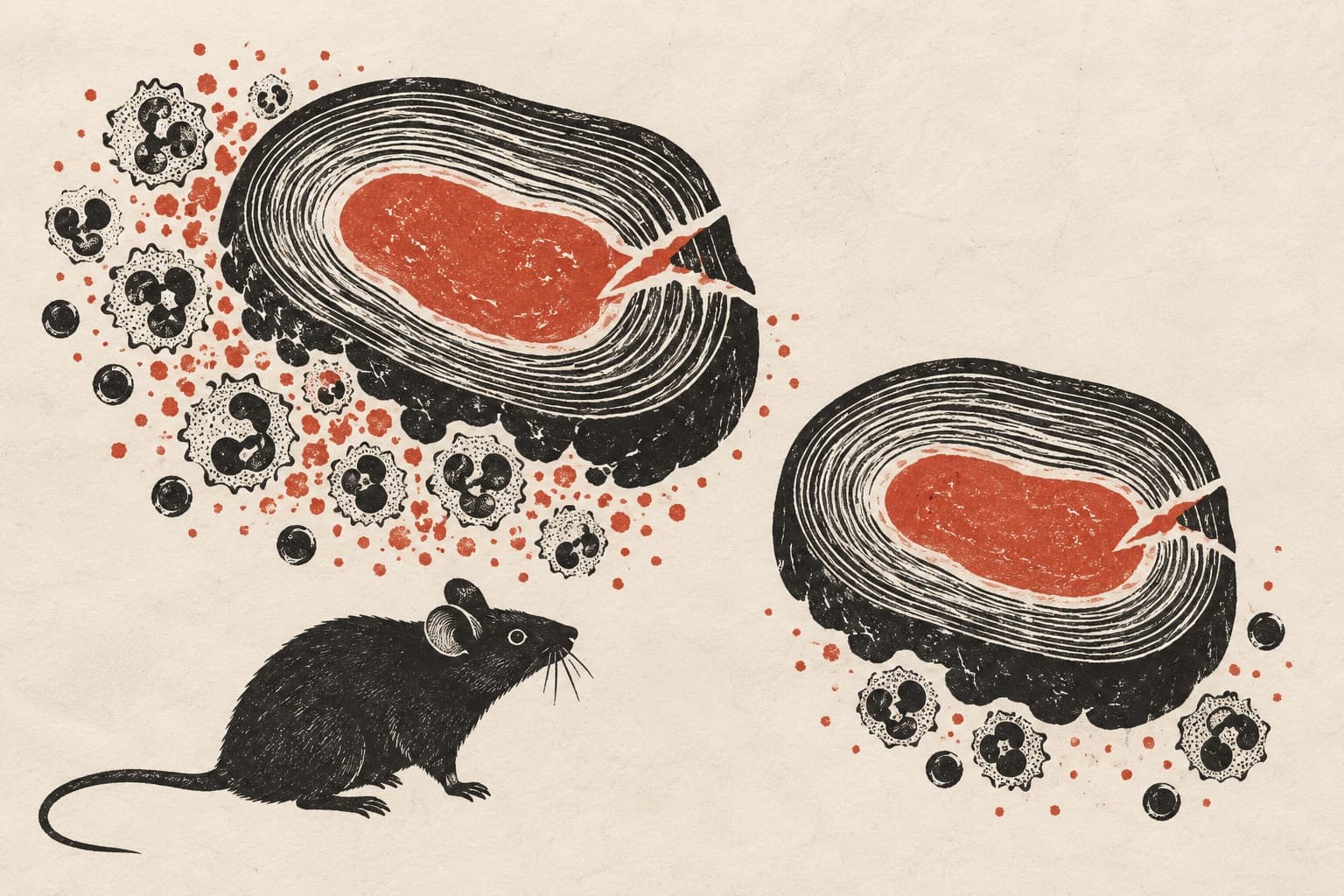
In mice, deleting the Wnt signaling cofactor beta-catenin in intervertebral disc cells reduced chemotactic signaling and myeloid cell recruitment. Aging typically reduces disc Wnt signaling, but how this affects immune recruitment was unclear. Researchers modeled this loss by deleting beta-catenin across all disc cells or specifically in nucleus pulposus cells. Broad deletion reduced disc Ccl2 transcription by 58% in males and 79% in females. Using PET/CT imaging in five-month-old mice, the authors found that beta-catenin loss reduced baseline myeloid cell presence by 79%. After disc injury, myeloid recruitment dropped by 48%. Targeted deletion in nucleus pulposus cells similarly impaired immune pathway activation. These results show that disc beta-catenin drives local chemotactic responses.
Why it matters
Age-related disc degeneration and chronic back pain involve sustained inflammation and immune cell infiltration. Understanding how declining Wnt signaling alters disc immune responses helps define the molecular pathways driving spinal aging.
Caveats
The study was conducted exclusively in genetically modified mice with small cohorts per experiment, and findings may not fully translate to human disc biology.
The paper
Icahn School of Medicine at Mount Sinai
Aging Cell · 1 Oct 2026