Disrupted daily rhythms in light exposure and wrist temperature are associated with metabolic risk markers and obesity
7 days, registered NCT03036592
Abstract
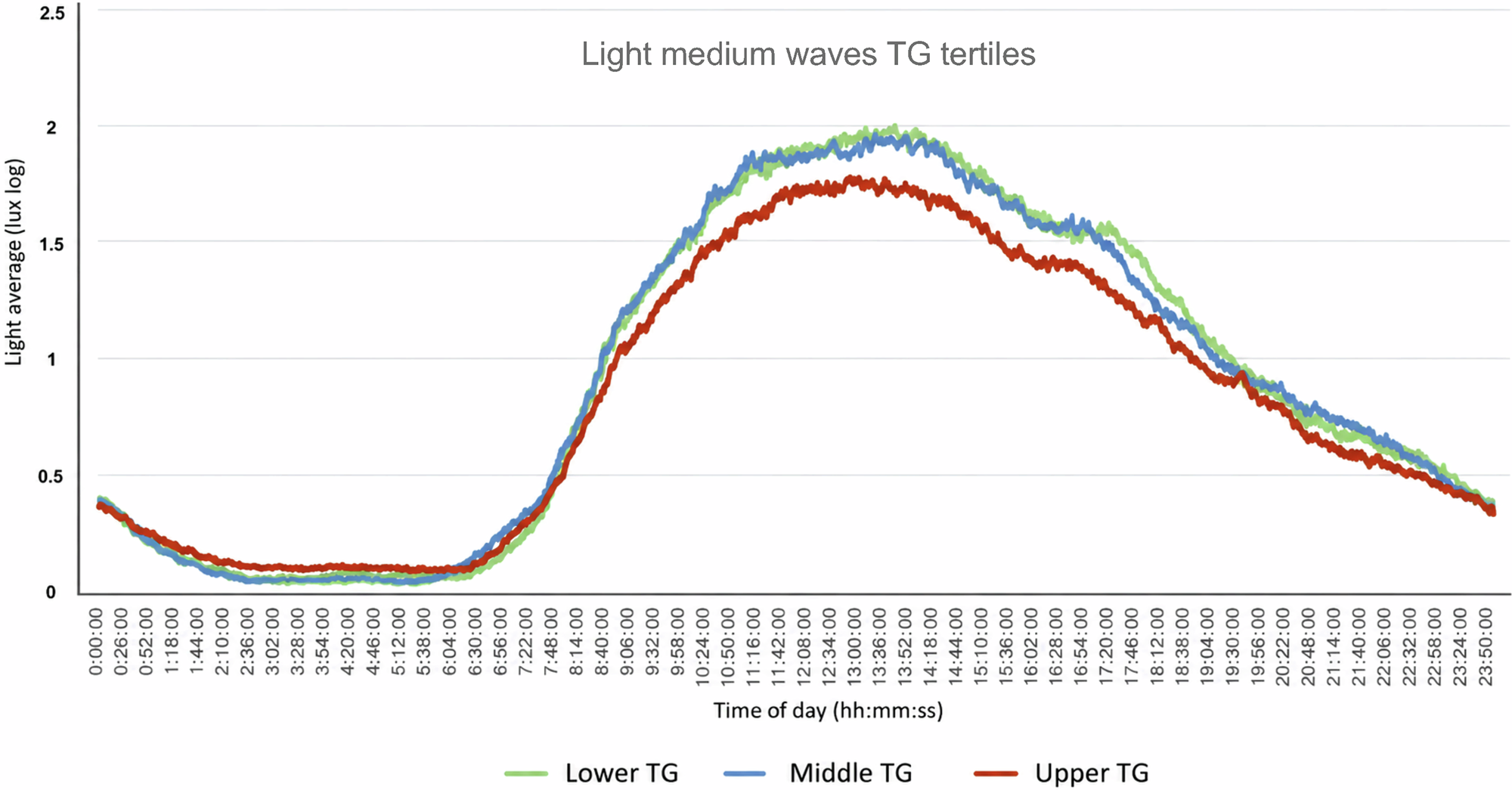
BACKGROUND/OBJECTIVES: Light exposure is the primary external synchronizer of the body's internal clocks and daily rhythms. This study investigated whether light exposure and wrist temperature real-life 24-h rhythms are associated with obesity and metabolic risk markers in a large cohort of healthy adults. SUBJECTS/METHODS: A total of 809 individuals from the ONTIME-MT study (ClinicalTrials.gov NCT03036592) were included. Mean age was 37.47 ± 14.24 years, mean BMI was 25.75 kg/m², and 71% were women. Daily light exposure and wrist temperature were continuously monitored over seven consecutive days under free-living conditions. Principal component analysis was used to identify factors capturing circadian-related functioning. DESIGN: Cross-sectional study. SETTING: Healthy adults of European descent from a Spanish cohort assessed in an ambulatory setting. MAIN OUTCOME MEASURES: Obesity-related and metabolic risk parameters. RESULTS: Three factors emerged in both the light exposure and wrist temperature rhythm domains, explaining approximately 73% and 80% of the total variance. In both domains, Factor 1 accounted for the largest proportion of variance (≈41-42%) and reflected overall rhythm robustness, characterized by higher relative amplitude and greater interdaily stability, together with average light exposure or wrist temperature levels. Higher light exposure Factor 1 was associated with lower serum triglyceride concentrations (P = 0.013). Wrist temperature Factor 1 was associated with lower BMI and body fat percentage in women, as well as lower insulin, HOMA-IR and triglyceride levels, and higher HDL-cholesterol (all P < 0.05). Mediation analyses showed that interdaily stability of wrist temperature rhythms may affect the association between light exposure stability and triglyceride levels, accounting for approximately 11% of the total effect (P = 0.021). CONCLUSIONS: In this large real-life cohort, less robust daily rhythms of light exposure and wrist temperature were consistently associated with adverse metabolic profiles. These findings highlight the potential of circadian-related markers derived from wearable technologies as non-invasive indicators of metabolic risk. CLINICAL TRIAL NUMBER: ONTIME-MT study; ClinicalTrials.gov NCT03036592.
The paper
International Journal of Obesity, 10 Oct 2026