More broken-up rest and activity linked to higher death risk
A 0.1-unit higher score for broken-up rest and activity was linked to 1.15 times the death rate among 3,061 adults.
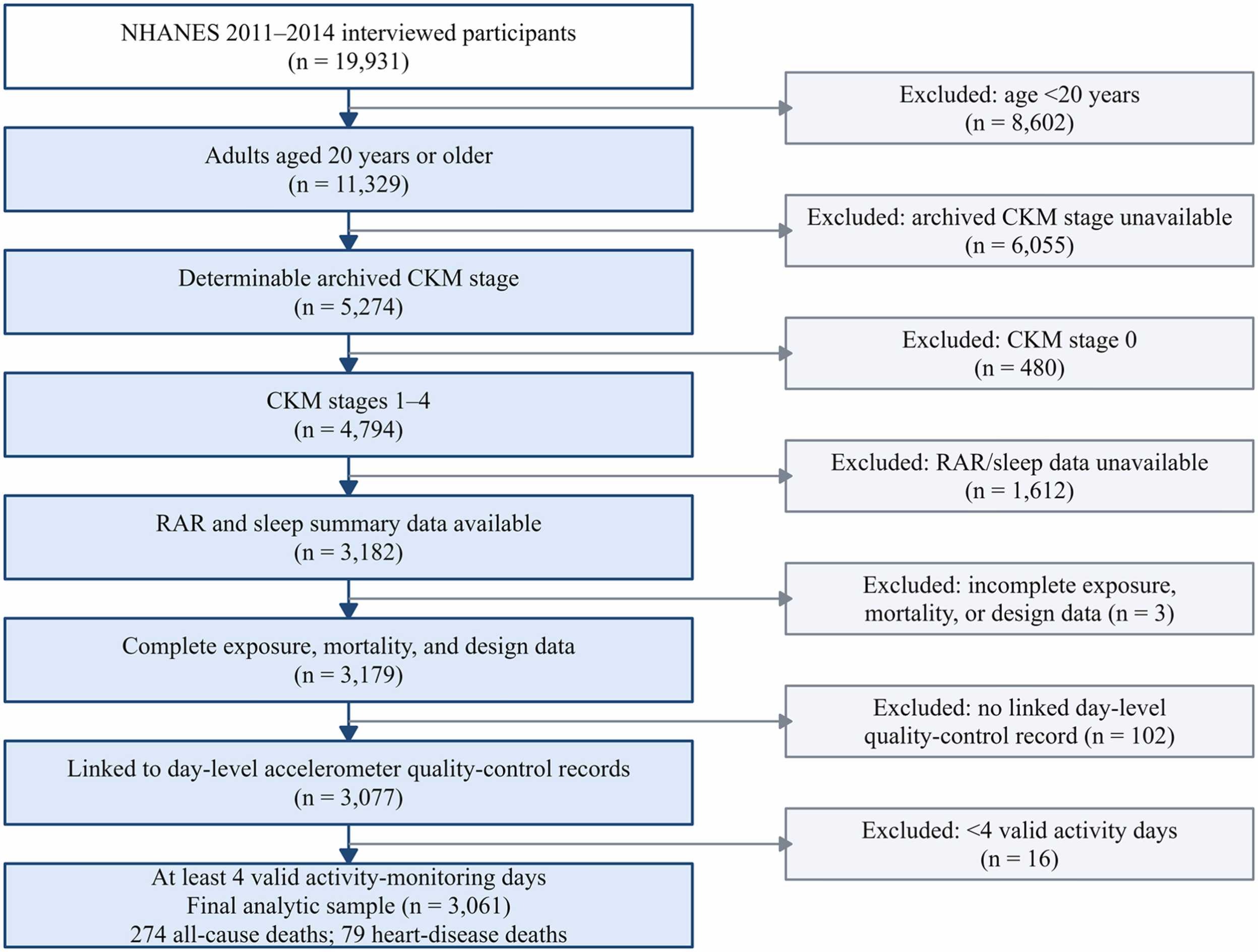
Researchers analysed 3,061 adults with stages 1 to 4 of cardiovascular-kidney-metabolic syndrome in an observational cohort study. This syndrome groups linked problems involving the heart, kidneys and the body's use of energy. They used 2011–2014 health survey data linked to death records through 2019. Wrist-worn movement monitors provided measures of rest, activity and sleep.
During follow-up, 274 participants died. More broken-up rest and activity was associated with higher mortality. A stronger contrast between active and inactive periods, longer average sleep and a greater share of time in bed spent asleep were associated with lower mortality. Greater variation in when the midpoint of sleep occurred was linked to higher mortality. The links for activity contrast and average sleep duration were not linear: risk did not change at a constant rate as these measures changed. Heart-disease mortality findings supported the overall results.
Why it matters
The study addresses how daily rhythms and sleep relate to survival among adults with interconnected health problems relevant to healthy aging.
Caveats
This observational study could not establish cause and effect. The findings also did not establish clinical cut-offs for sleep or activity patterns.
- Cardiovascular-kidney-metabolic syndrome
- Heart disease
- Interdaily stability
- Intradaily variability
- Mean sleep duration
- Humans
The paper
The Second Clinical Medical College; The Second Affiliated Hospital
Sleep Health, 9 Oct 2026