Association of obstructive sleep apnea with pancreatic cancer in high-risk patients under surveillance in CAPS and PCYST cohorts
Abstract
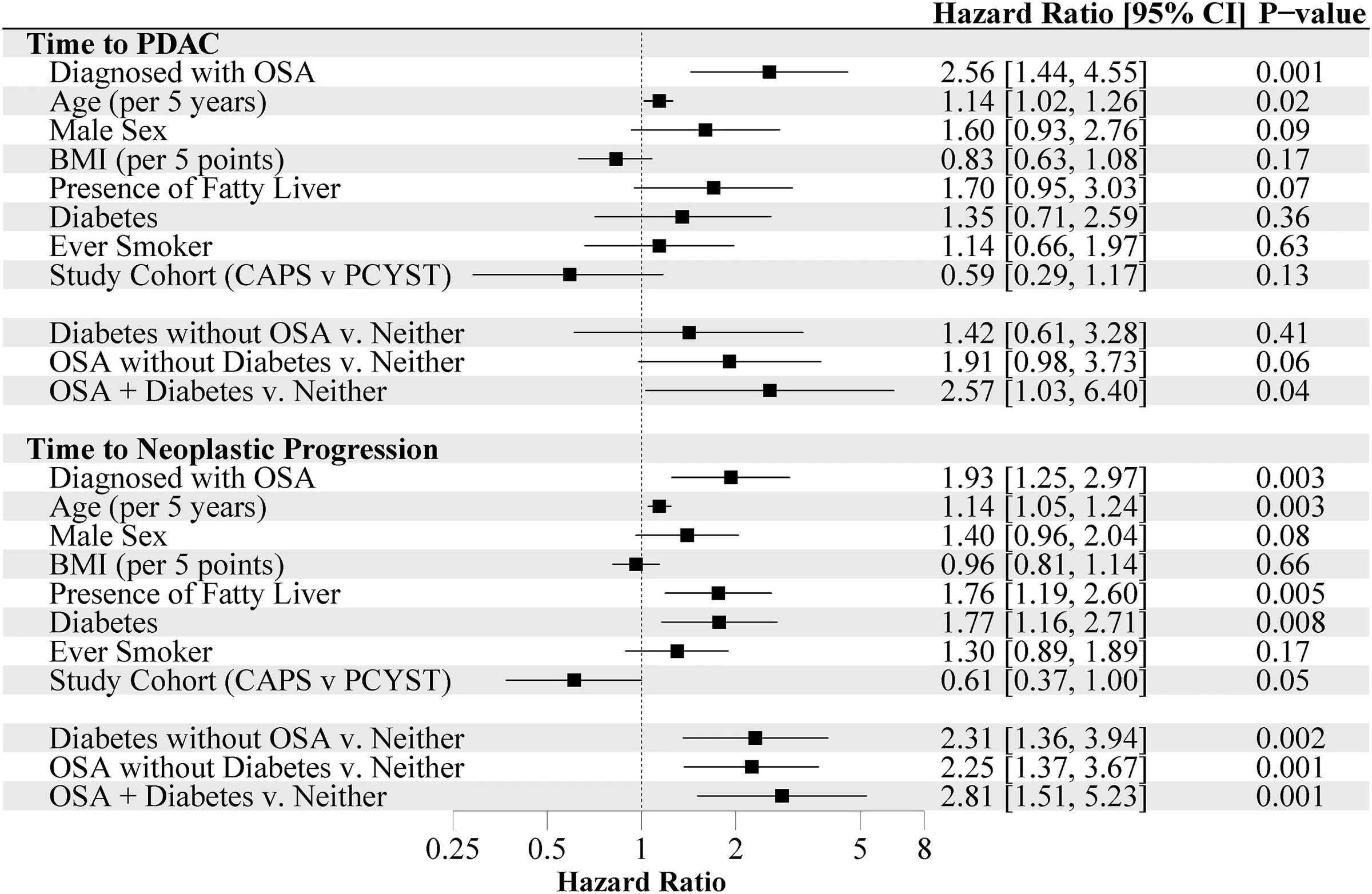
BACKGROUND: Obstructive sleep apnea (OSA) has been linked with increased cancer incidence and mortality. We hypothesized that OSA may be a risk factor for neoplastic progression among patients undergoing pancreatic cancer surveillance. METHODS: Retrospective medical record review of two Johns Hopkins Hospital cohorts undergoing pancreas surveillance; patients with familial/genetic risk enrolled in the Cancer of the Pancreas Screening (CAPS) study and patients with incidentally detected pancreatic cysts, enrolled in the PCYST study. Time-to-progression to pancreatic ductal adenocarcinoma (PDAC) and neoplastic progression (either PDAC, high-grade dysplasia or pancreatic neuroendocrine tumor) were compared by OSA status, adjusting for covariates. RESULTS: OSA was diagnosed prior to or during surveillance in 174 (19.5%) of 893 patients in CAPS and 376 (23.7%) of 1585 patients in the PCYST cohort. In the combined cohorts, OSA was associated with increased risk of progression to PDAC (unadjusted HR: 3.12, 95% CI: [1.82, 5.34], p < 0.001). OSA was also associated with male sex, higher BMI, fatty liver, fatty pancreas, diabetes, and history of smoking (all p < 0.01). After covariate adjustment, OSA remained associated with PDAC risk (adjusted HR: 2.56 [1.44, 4.55], p = 0.001). Factors associated with neoplastic progression included OSA (adjusted HR: 1.93 [1.25, 2.97], p = 0.003), increasing age (age-per 5-years adjusted HR: 1.14 [1.05, 1.24], p = 0.003), fatty liver (adjusted HR: 1.76 [1.19, 2.60], p = 0.005), and diabetes (adjusted HR: 1.77 [1.16, 2.71], p = 0.008). CONCLUSIONS: Patients undergoing pancreatic surveillance for their familial/genetic risk and/or incidentally detected pancreatic cysts have a greater likelihood of developing pancreatic cancer if they've been diagnosed with OSA.