Endogenous Trigeminal Neurons Induce Schwann Differentiation of Donor Stem Cells in Dental Pulp Regeneration via Reciprocal Extracellular Vesicles Interplay
Abstract
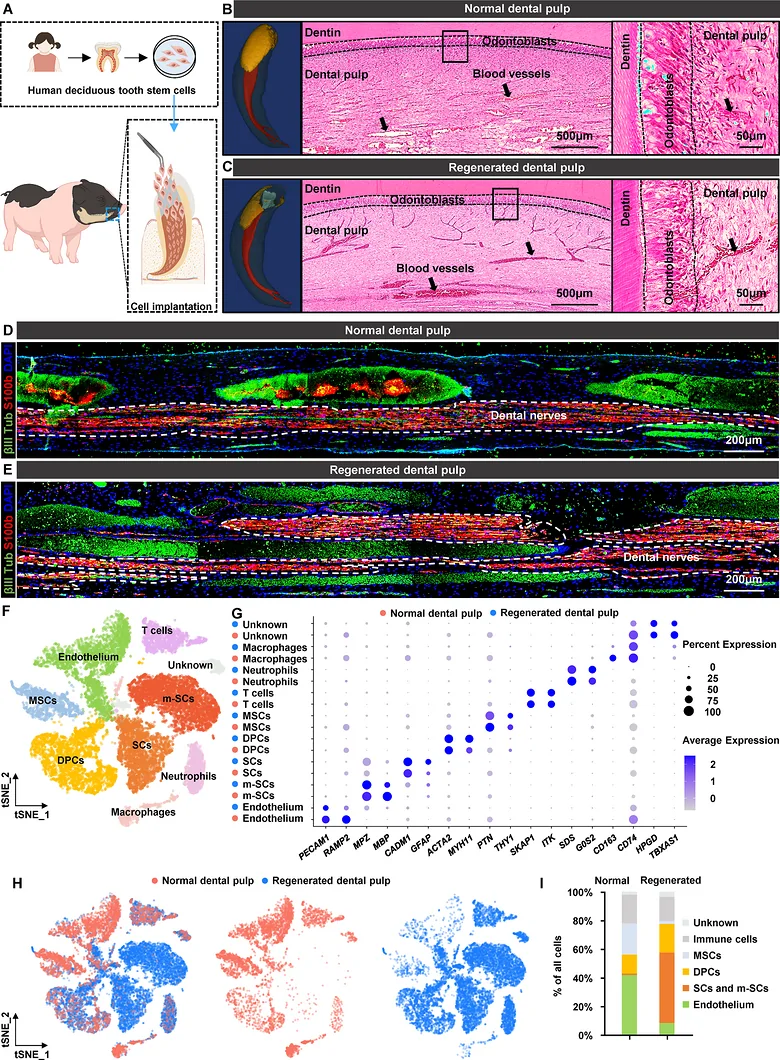
The potential of stem cells transplantation to restore organ function in recipients is hindered by the poor integration of donor cells into host tissues. Here, we successfully regenerated tooth pulp in the root canal of minipigs by transplanting human deciduous tooth stem cells (SHED). The implanted SHED differentiated into several functional cells, particularly Schwann cells (SCs), which attracted and enwrapped regrown host axons in regenerated pulp. The reciprocal extracellular vesicles (EVs) communication between SHED and the host trigeminal ganglion (TG) regulated the regeneration of dental nerves. EVs derived from SHED (SHED-EVs) facilitated axonal growth, while those released by TG neurons (TGN) induced the differentiation of SHED into SCs. TGN that engulfed SHED-EVs secreted endogenous EVs (ST-EVs) and migrated to the regenerated pulp tissue. ST-EVs from TGN are enriched with TUFM (Tu translation elongation factor, mitochondrial), which, in turn promotes Schwann cell differentiation (SC differentiation) of SHED. This study highlights the importance of cellular signal exchange during the integration of donor cells and host tissues for organ regeneration.