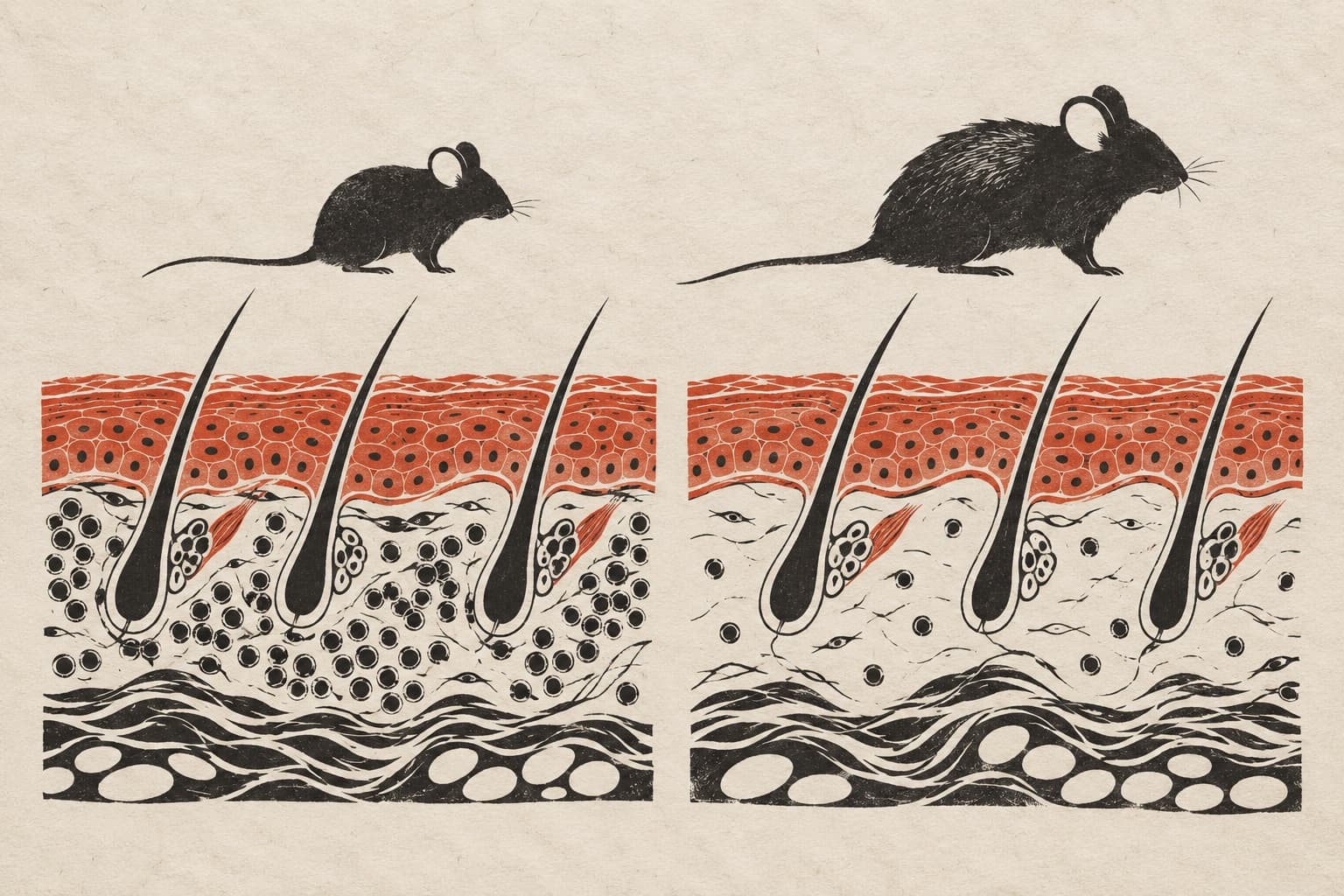
Antibody reactivity shows focal remodeling across human aging
A study of 853 adults aged 20 to 94 years found antibody architecture broadly preserved, with age-associated signals concentrated in focal targets.
bioRxiv
In a preprint, researchers analyzed clinically screened Chinese adults aged 20 to 94 years to profile antigen-resolved humoral immunity across adult life. The dataset, named the Chinese Healthy Aging Immune Resource (CHAIR), includes 1,008 PhIP-seq samples, 995 clinical records, and 977 T, B, and natural killer cell records, with 853 participants completing all three layers. Investigators evaluated 23,584 self-antigen targets, 210 virome targets, and 1,258 virulence-factor source targets. Across these domains, overall antibody-reactivity architecture was largely preserved with age. Instead of widespread shifts, age- and sex-associated variations were concentrated in focal targets and modules.
Why it matters
Humoral immunity changes across a lifespan, but broad profiling of specific antigens has been limited compared to cellular immune metrics. This reference framework offers a basis to study how specific antibody responses are retained or altered during healthy human aging.
Caveats
The findings rely on cross-sectional data from a single regional cohort and have not yet undergone peer review. Longitudinal tracking is needed to see how individual antibody reactomes evolve over time.
The paper
CHAIR an antigen-resolved antibody-reactome resource for healthy adult immune aging
Sundell GN, Chen M, Sha Z et al.
bioRxiv · 4 Oct 2026 · Preprint, not peer-reviewed