One human immune cell type varied most before adulthood
An observational study of 223 healthy people aged 1 to 90 found relatively stable patterns in this immune cell group across adulthood.
Cell Reports
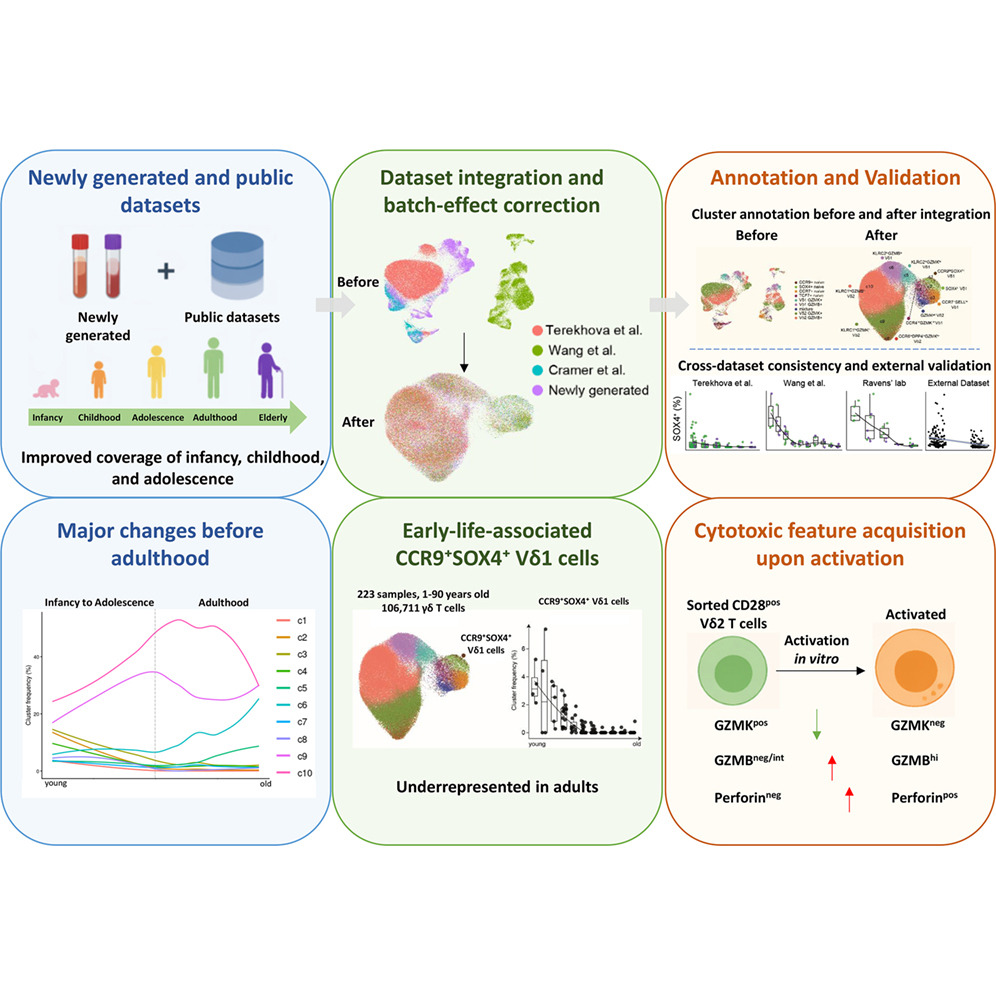
Researchers studied blood cells from 223 healthy people aged 1 to 90 in an observational study. They focused on gamma delta T cells, a type of immune cell. They measured gene activity in 106,711 individual cells to build a reference map. The dataset improved coverage of infancy, childhood and adolescence. Healthy reference datasets for young people are rare.
The most pronounced age-linked differences occurred before adulthood. These involved both the mix of gamma delta T cell groups and their gene activity. Major cell states were relatively stable across adulthood. The researchers presented the map as a resource for future studies of these cells in disease.
Why it matters
Disease studies need healthy comparisons that account for age. This reference map may help researchers distinguish age-related patterns in these immune cells from patterns linked to disease.
Caveats
This observational study cannot establish that aging caused the differences. The map describes cells in healthy people's blood, not changes in disease.
The paper
Show 12 more authors
Ziqing Wang, Yusuf E Abu, Anika Janssen, Charlotte Kleine-Wechelmann, Ahmed Hassan, Zheng Song, Moana Marilyn Dempsey, Martin Boehne, Constantin von Kaisenberg, Immo Prinz, Reinhold Förster, Likai Tan,Institute of Immunology
Cell Reports · 5 Oct 2026