Antiviral autoantibodies show little genetic link in older twins
Only one pair shared the immune-blocking proteins while 35 pairs differed, with autoantibodies detected in 1.5% of the 3,270 older twins tested.
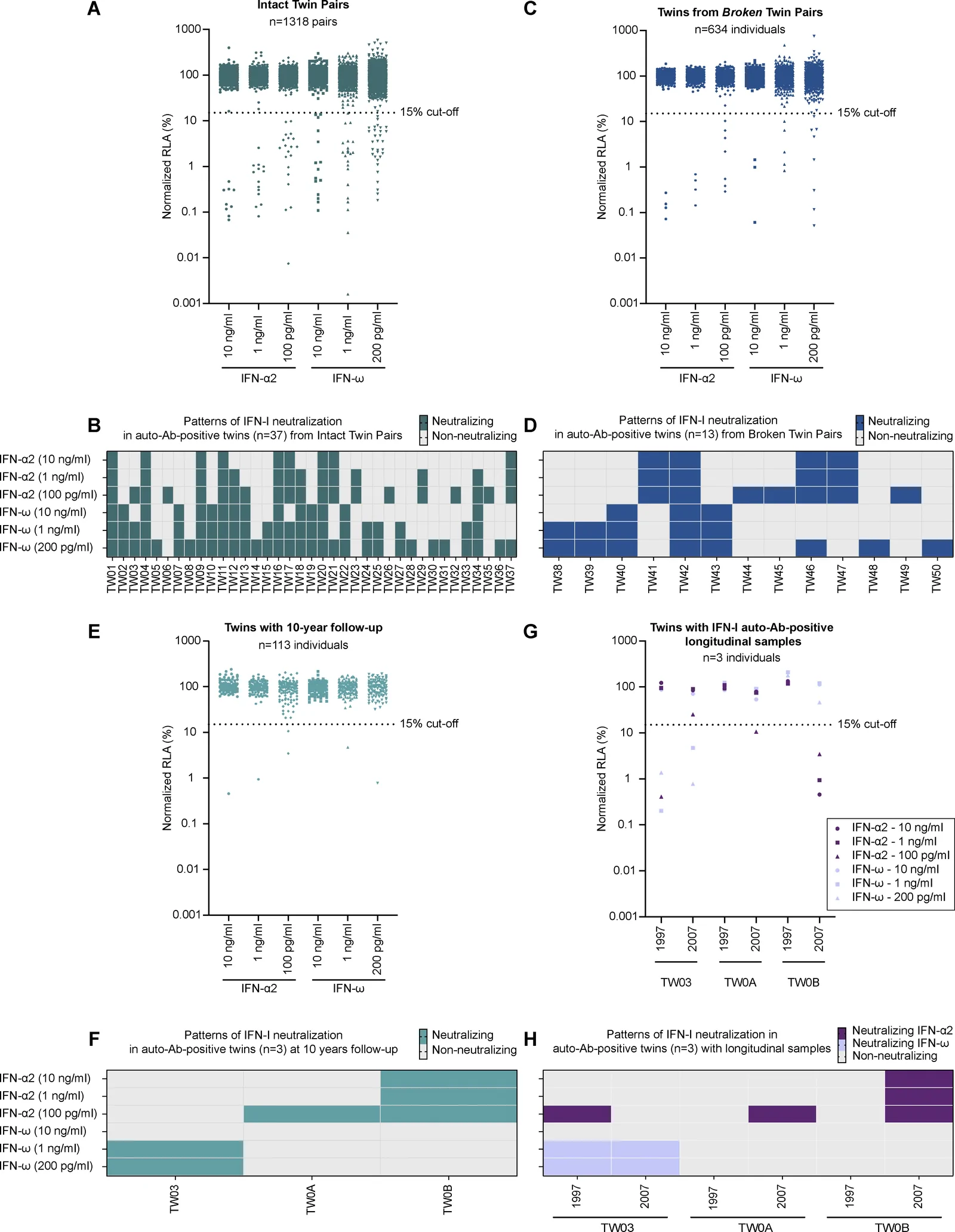
In an observational study, researchers assessed 3,270 Danish twins aged 65 to 96 years. The sample comprised 1,318 intact twin pairs (2,636 individuals) and 634 twins from broken pairs. The team screened for autoantibodies, immune proteins that mistakenly attack the body, that neutralise type I interferons. Neutralizing autoantibodies were detected in 1.5% of all twins tested, including 1.4% of twins from intact pairs and 2.1% from broken pairs. Fifty twins carried them, including one concordant identical twin pair and 35 discordant pairs. This low overall concordance rate revealed no familial aggregation, arguing against a strong inherited genetic cause of these autoantibodies in older adults. Carrying the autoantibodies was also associated with a slight, but non-significant, increase in mortality.
Why it matters
Because these autoantibodies rise sharply between ages 65 and 70 and make viral infections more dangerous, understanding what triggers them is central to studying immune changes in older age. The results suggest that factors outside inherited genes may drive why some older adults develop these harmful immune proteins.
Caveats
The observational findings come from a single Danish twin cohort and cannot identify which non-genetic factors trigger the autoantibodies. In addition, the link between carrying these proteins and a higher risk of death did not reach statistical significance.
From the paper
- Participants
Among the 634 twins from broken twin pairs, the median age at blood sampling was 72.0 years, and 15% of the pairs were monozygotic.
Results, Neutralizing IFN-I auto-Abs in intact and broken twin pairs
- Result
… no clear difference in mortality was observed for IFN-I auto-Ab–positive twins compared with their matched controls (adjusted hazard ratio [HR]: 1.08, 95% confidence interval [CI]: 0.61–1.92 …
Results, Mortality in twin pairs discordant for neutralizing IFN-I auto-Abs
Quoted word for word from the full text on rupress.org.
The paper
Autoantibodies neutralizing type I interferons in older twin pairs: Low concordance
University of Southern Denmark; Aarhus University
Journal of Human Immunity, 9 Oct 2026, Open access

