Immunosenescence and immune dysfunction in treated and untreated HIV-infected individuals
Abstract
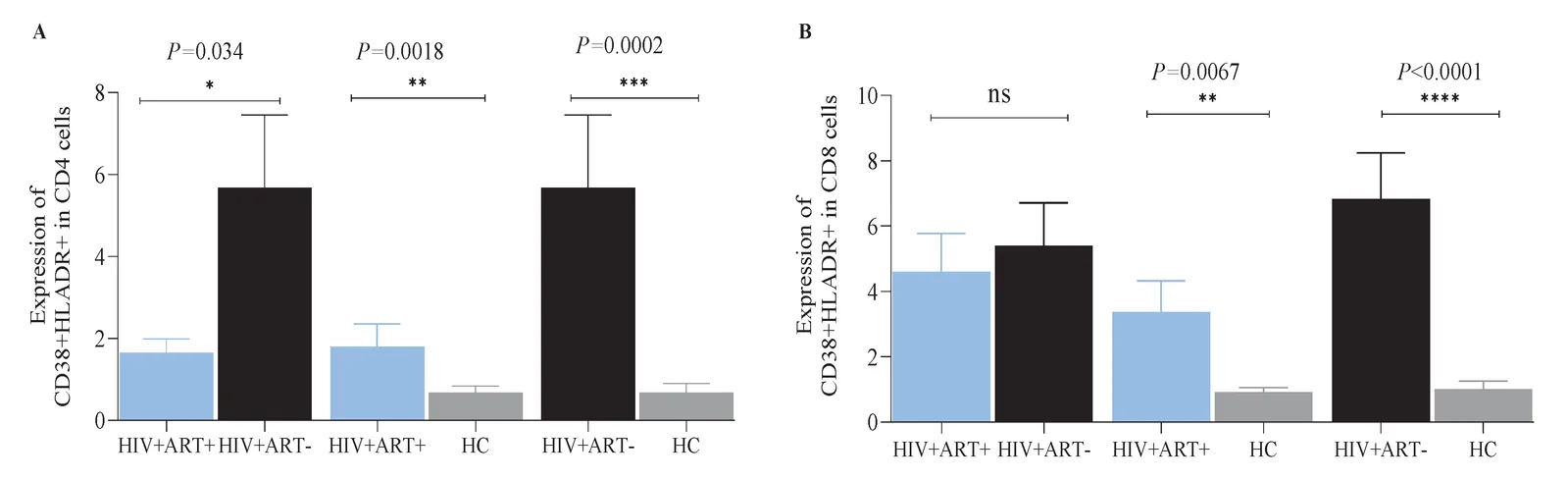
Background and objectives To better understand the immune alterations resulting from HIV infection and antiretroviral therapy, we analysed various markers of immunosenescence and immune dysregulation in HIV-1-infected individuals on prolonged combination antiretroviral therapy (cART) (HIV+ART+), treatment-naïve HIV+ individuals (HIV+ART-), and HIV-negative healthy controls (HCs). Methods Multicolour flow cytometric analysis was performed to assess levels of immune activation, T cell differentiation, immunosenescence, immune exhaustion, and regulation using surface immune phenotyping and intracellular staining assays with a FACS Aria III SORP flow cytometer (Beckton Dickinson). The study groups were compared and correlated using the Mann-Whitney U test and the Spearman correlation test. Results We observed significant immunological perturbations in immune activation, cellular differentiation, immunosenescence, and exhaustion in CD8 T cells from HIV+ART+ (n=68) compared with HIV+ART- (n=19) and HC (n=57) groups. The proportion of immunosenescent T cells (CD8⁺CD28⁻CD57⁺KLRG1⁺) was lower in the ART+ group [23% (6-80)] than in the ART- group [28% (4-52)]. Telomere length was significantly (P<0.005) shorter in the ART+ group compared with the HC group. We also observed an inverse relationship (r=-0.27) between levels of immunosenescence and telomere length. Interpretation and conclusions Our study demonstrates substantial immunological perturbations associated with immunosenescence and dysregulated immune response in the HIV+ART- group, compared with the HIV+ART+ group, which maintained a stable immunological status characterised by reduced frequencies of senescent T cells and increased telomere length. This suggests that prolonged and effective treatment might contribute to deceleration of ageing, resulting in healthy longevity.
- Combination antiretroviral therapy
- Cellular senescence
- Immune response
- Immune dysfunction
- HIV-1 infection
- Humans
The paper
Indian Council of Medical Research
The Indian Journal of Medical Research, 1 Aug 2026