Lamin B1 deficiency impairs bone formation in stem cells
In bone marrow stem cells linked to senile osteoporosis, lamin B1 loss triggered a form of cell death that disrupted mitochondria and impaired bone formation.
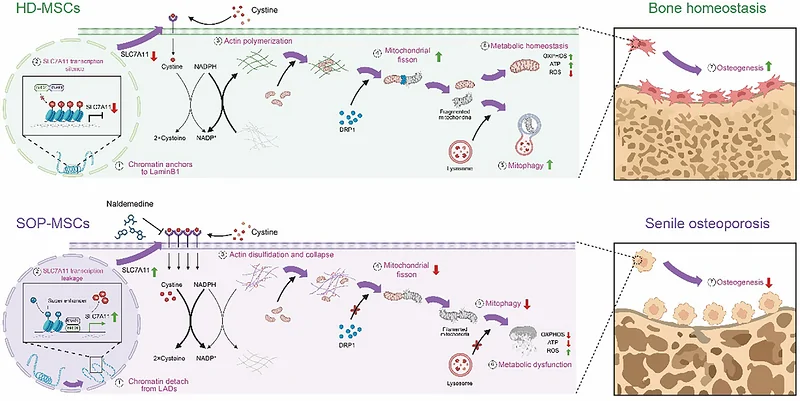
In an experiment using bone marrow-derived mesenchymal stem cells linked to senile osteoporosis, researchers examined how aging impairs bone formation. They found that an age-related loss of lamin B1 caused detachment of lamina-associated domains. This led to the formation of super-enhancers, clusters of regulatory DNA that drove production of the transporter protein SLC7A11. Elevated SLC7A11 activated disulfidptosis, a form of cell death that formed abnormal chemical bonds in actin fibres and collapsed the internal skeleton of the cell. This structural collapse disrupted binding with DRP1, a protein needed for mitochondrial division. Intercepting mitochondrial division caused dysfunction in cellular energy generation and impaired osteogenesis, the process by which stem cells build bone. Using virtual molecular screening, the team also identified the drug naldemedine as an inhibitor of this pathway.
Why it matters
Senile osteoporosis weakens bones in older adults, partly because skeletal stem cells lose their ability to generate new bone tissue. Uncovering this specific cell-death mechanism highlights potential biological targets for therapies designed to protect aging bones.
Caveats
The molecular mechanism was examined in mesenchymal stem cells, and naldemedine was identified through virtual molecular screening. Clinical studies are still needed to determine whether targeting this pathway can safely prevent bone loss in people.
From the paper
- Participants
A total of 23 old subjects with SOP and 17 young healthy donors (HD) without OP (Table S2) were recruited.
- Limitation
Several limitations remain, such as the double-edged sword effect of SLC7A11 in ferroptosis and disulfidptosis, the detailed mechanism by which the actin disulfide bond disrupts DRP1 binding and the clinical role of naldemedine in SOP treatment.
Quoted word for word from the full text on advanced.onlinelibrary.wiley.com.
- Naldemedine
- SLC7A11
- DNM1L
- Chromatin and 3D genome organisation
- Senile osteoporosis
- Disulfide-crosslinked actin
The paper
Sun Yat-sen University
Advanced Science, 8 Oct 2026, Open access