Two PDE4 inhibitors extend lifespan in worms
In laboratory experiments, roflumilast and rolipram lengthened roundworm lifespan by activating a signalling pathway that improved mitochondrial function and alleviated oxidative stress.
Free Radical Biology & Medicine
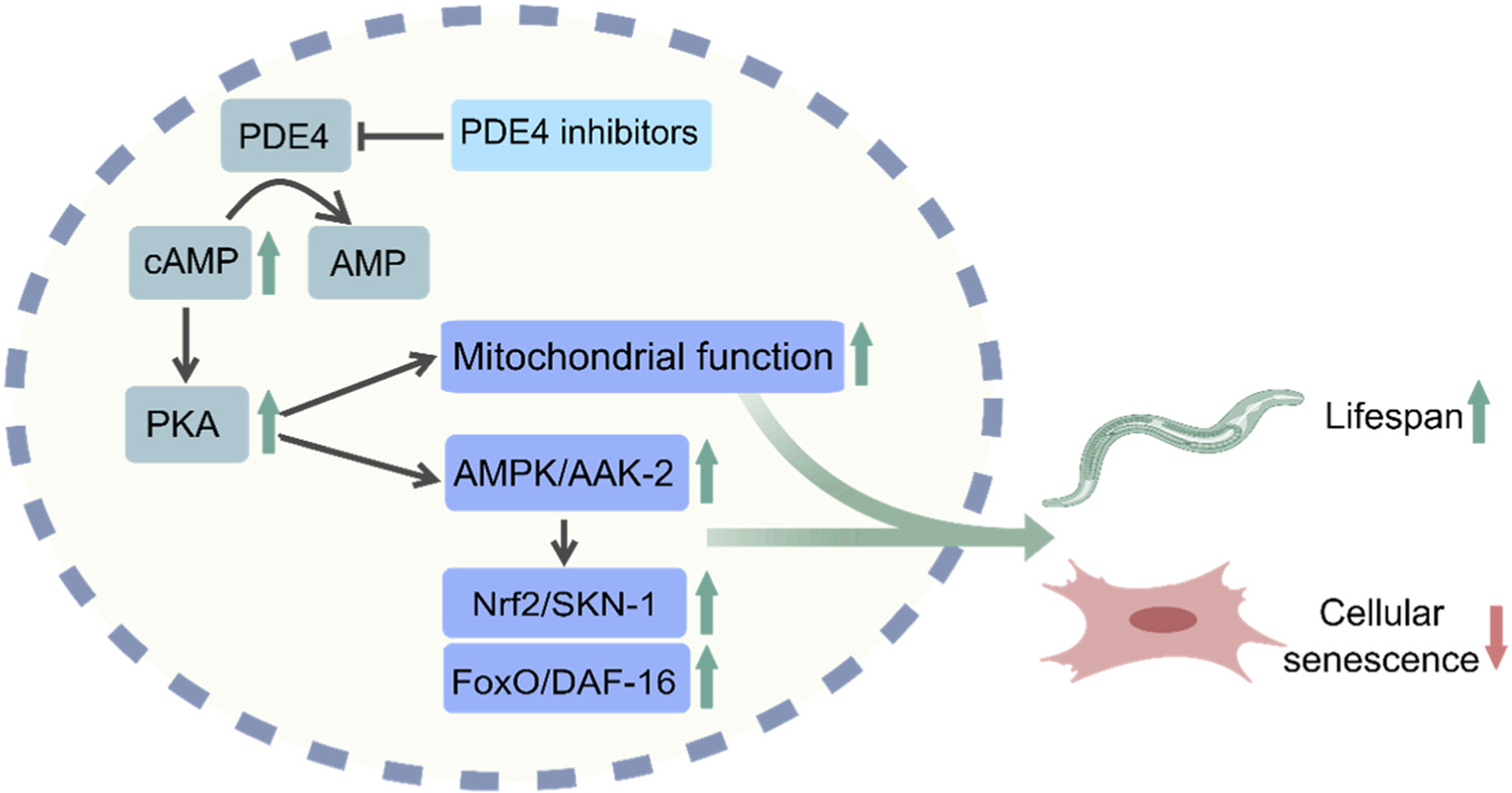
In an experiment in the roundworm Caenorhabditis elegans and in mouse embryonic fibroblasts grown in the lab, researchers tested whether blocking phosphodiesterase-4 altered signs of aging. Phosphodiesterase-4 is an enzyme that breaks down a cellular messenger molecule. Two inhibitors of the enzyme, roflumilast and rolipram, extended lifespan in the worms. In the cultured mouse cells, roflumilast reduced cellular senescence, a state in which cells stop dividing, that had been induced by repeated laboratory passages. The researchers found that activating protein kinase A, a downstream signalling enzyme, mediated these anti-aging effects in both systems. This pathway improved the function of mitochondria, the structures that generate cellular energy, and alleviated oxidative stress, an imbalance of harmful reactive oxygen molecules.
Why it matters
Targeting mitochondrial dysfunction and oxidative stress is central to research into aging and age-related disease. Because some phosphodiesterase-4 inhibitors are already approved for medical conditions, mapping their cellular pathways bears on whether these drugs possess broader anti-aging potential.
Caveats
The results come entirely from an invertebrate organism and cultured mouse cells, so it remains unknown whether these effects occur in living mammals or humans. The researchers also did not state how much the drugs lengthened lifespan or whether they improved broader measures of health.
The paper
Show 5 more authors
Yuan-Xin Liao, Hao-Cheng Chen, Meng-Ge Zhang, Cheng-Cheng Li, Zhi-Jie Sun,China Pharmaceutical University
Free Radical Biology & Medicine · 8 Oct 2026