Dietary CoQ10 ameliorates megakaryocyte dysfunction in aged mice
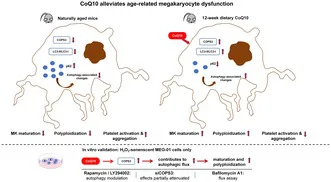
Male mice treated with CoQ10 for 12 weeks showed enhanced megakaryocyte maturation and polyploidization, accompanied by reduced platelet aggregation and activation.
Aging Cell
Male C57BL/6J mice aged 1 to 23 months received dietary coenzyme Q10 for 12 weeks to evaluate megakaryocyte homeostasis and platelet function. CoQ10 enhanced megakaryocyte proliferation, maturation, and polyploidization in aged mice. It did not alter platelet counts in naturally aged mice, but it was associated with reduced platelet aggregation and activation. Shifts in autophagy markers were consistent with enhanced autophagy, and proteomic profiling showed higher COPS3 abundance in megakaryocytes from treated 24-month-old mice.
In hydrogen peroxide-induced senescent MEG-01 cells, CoQ10 increased autophagic flux and elevated COPS3 expression. Knocking down COPS3 attenuated these autophagy marker shifts and partially diminished CoQ10's effects on maturation and polyploidization.
Why it matters
Megakaryocyte dysfunction during aging can disrupt platelet production and elevate thrombotic risks. These results suggest that dietary CoQ10 may help maintain megakaryocyte homeostasis and moderate platelet hyperactivity, in part via COPS3-linked autophagy pathways.
Caveats
Key mechanistic pathways were validated using chemically induced senescence in cultured cell lines rather than primary aged tissue alone. Additionally, the in vivo experiments used only male mice, so potential sex differences remain unexamined.