Hearing aids did not cut dementia conversion in older adults
Over 24 months, dementia conversion was 3.09% with hearing aids compared with 4.74% with hearing care education, a non-significant difference.
Our read
Interventions- Studied:
- Randomized trial in 703 people (24 months, multicenter, registered ChiCTR2000036139)
- In the record:
- The 55th paper on hearing aids with results in people; 107 on record in all. Its result on cognitive function agrees with 12 of 15 other findings on record; 3 found no change.
Editor of record: Boris Djordjevic · AgingResearch.News
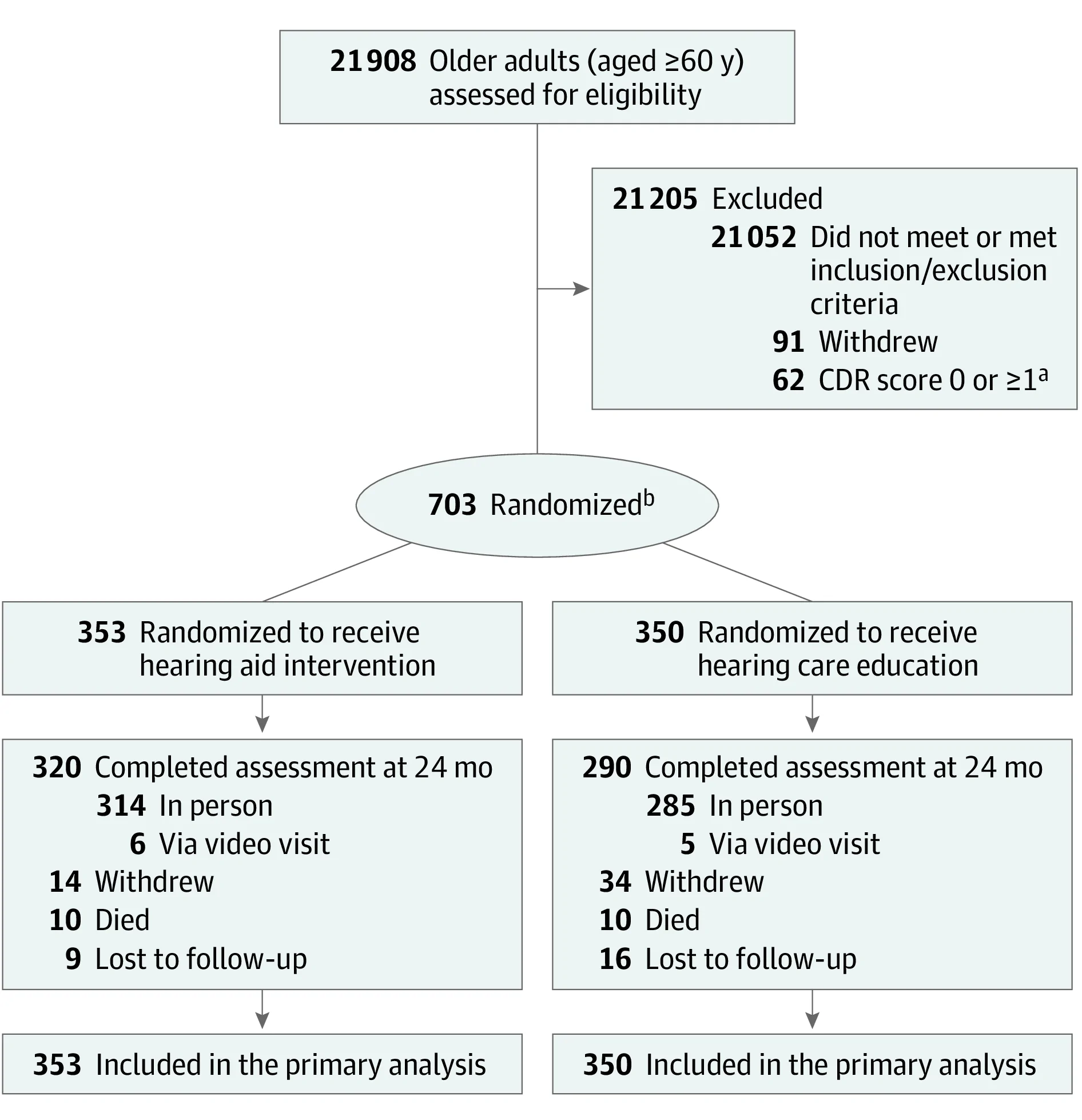
In a randomized clinical trial of 703 older adults with coexisting mild cognitive impairment and moderate to severe hearing loss, hearing aids did not significantly reduce dementia incidence over 24 months. Participants in Shanghai, China, who had a mean age of 74.53 years, were assigned to either a hearing aid intervention (n = 353) or hearing care education (n = 350). Conversion to dementia-level impairment occurred in 3.09% of the hearing aid group compared with 4.74% of the control group (P = .23). In prespecified secondary analyses, the rate of cognitive improvement was 15.34% in the hearing aid group compared with 2.36% in the education group. A total of 610 participants completed the trial, and no study-related adverse events were reported.
Why it matters
Hearing loss is a prominent modifiable risk factor for cognitive decline in late life. These results provide controlled evidence on whether sensory interventions can slow or alter cognitive decline in older adults who already present with mild cognitive impairment.
Caveats
The trial used an open-label design and evaluated conversion over 24 months, which yielded low overall event numbers. The study was conducted at clinical and community sites in a single city, which may limit generalizability.
From the paper
- Who took part
As the primary outcome, the 24-month incidence of conversion from MCI to dementia-level impairment did not differ significantly between the intervention group (3.09%; 95% CI, 1.62%-5.74%) and the control group (4.74%; 95% CI, 2.60%-8.29%; RD, −2.07%, 95% CI, −4.74% to 0.61%; RR, 0.59; 95% CI, 0.25-1.38; P =.23 …
- Harms
A total of 20 nonstudy-related serious adverse events were reported, with 10 occurring in each group.
- Limitation
First, the eligibility criterion of CDR score of 0.5 was not prespecified in the protocol or trial registration, which may introduce potential selection bias and reduce screening transparency.
- Cognitive function
The rate of cognitive improvement (CDR = 0) was 15.34% (95% CI, 11.84%-19.62%) in the intervention group and 2.36% (95% CI, 0.99%-5.22%) in the control group (RD, 12.00%; 95% CI, 8.79%-15.21%; RR, 5.94; 95% CI, 2.46-14.37).
Quoted word for word from the full text on PubMed Central.
The paper
Shanghai Jiao Tong University; Collaborative Research Group
JAMA Neurology, Sep 28, 2026, Open access, CC BY-NC-ND

Comments
Be the first to comment.