Pectin improves lower limb function in frail older adults
In a trial of 29 frail older adults, four weeks of low-methoxy pectin raised 30-second sit-to-stand repetitions by 2.07 compared with 0.71 for placebo.
GeroScience
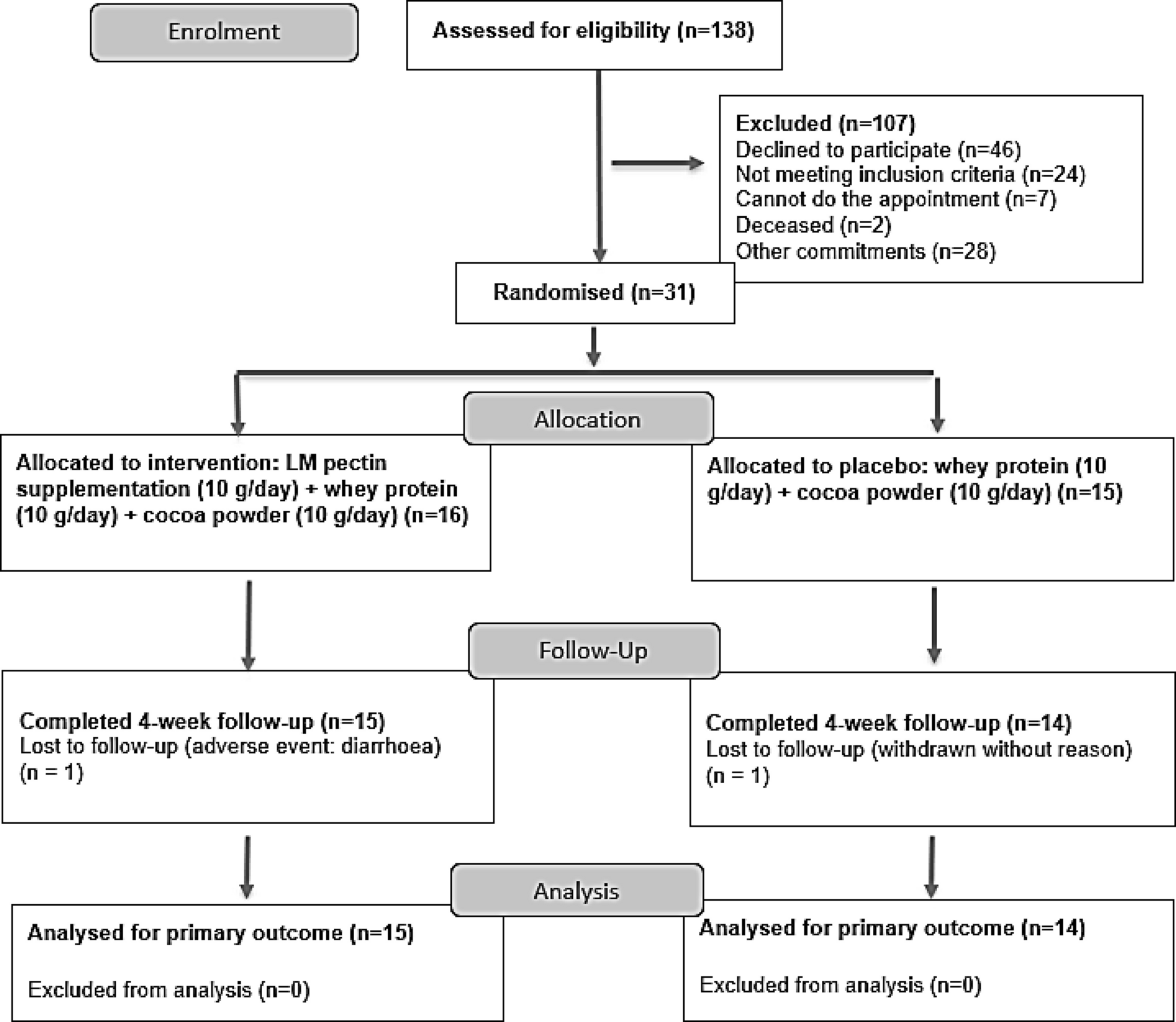
In a randomized, placebo-controlled trial of older adults with frailty, researchers evaluated the effects of low-methoxy pectin supplementation over four weeks. Thirty-one participants enrolled and 29 completed the intervention. Low-methoxy pectin is a fermentable dietary fiber from plant cell walls with preclinical immunomodulatory and microbiome-modifying effects. Compared with placebo, low-methoxy pectin significantly improved 30-second sit-to-stand test scores (2.07 ± 1.94 versus 0.71 ± 2.27 repetitions), while Timed Up and Go performance showed no significant changes. The supplement also reduced anxiety and depression scores and improved Short Form-36 measures of physical functioning, vitality, mental health, and social functioning. Pectin did not alter circulating inflammatory biomarkers, but it increased the relative abundance of Coprococcus comes, an acetate-producing gut bacterium linked to gut-brain signaling.
Why it matters
Frailty involves concurrent physical decline, psychological vulnerability, and alterations in the gut microbiome. These findings suggest that fermentable dietary fibers may offer a nutritional approach to support physical performance and psychological health in frail older adults.
Caveats
The study was short and limited by a small sample size of 29 completing participants. Larger, adequately powered trials are necessary to confirm whether these outcomes are reproducible and to evaluate potential microbiome-related mechanisms.
The paper
University of Nottingham · Nottingham University Hospitals NHS Trust
GeroScience · 28 Sep 2026