Sephin1 promotes mitophagy and reduces alpha-synuclein toxicity in Parkinson models
The compound directly binds Prohibitin-2 to activate PINK1-PRKN-dependent clearance of damaged mitochondria, easing motor deficits in transgenic mice.
Biochemical Pharmacology
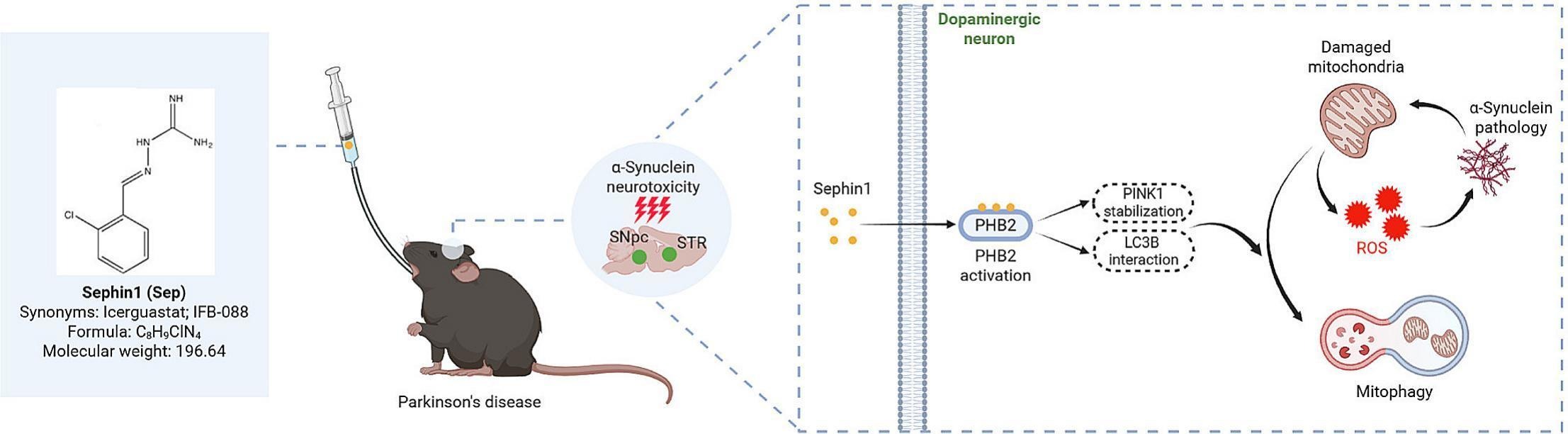
In cultured human cells, mouse primary neurons, and A53T transgenic mice, researchers investigated how the small molecule Sephin1 counters Parkinson's disease pathology. In cell models exposed to alpha-synuclein pre-formed fibrils, Sephin1 reduced neurotoxicity in a dose-dependent manner, lowered oxidative stress, and restored mitochondrial homeostasis. The drug acted independently of the canonical GADD34 pathway. Instead, target-binding assays confirmed that Sephin1 directly bound Prohibitin-2, strengthened its interaction with LC3B, and activated the PARL-PGAM5-PINK1 signaling axis to promote PINK1-PRKN-mediated mitophagy. In A53T transgenic mice, treatment rescued defective mitophagy, attenuated alpha-synuclein pathology, and mitigated motor dysfunction.
Why it matters
Parkinson's disease is an age-related neurodegenerative disorder driven in part by failing mitochondrial quality control. Identifying compounds that directly stimulate mitophagy could offer strategies to preserve neuronal function during aging.
Caveats
The findings rely on cultured cells and a transgenic mouse model rather than clinical settings. It remains unknown whether these protective effects and dosing translate effectively to human patients.
The paper
Show 8 more authors
Jie Cao, Yang-Ni Li, Chenxi Feng, Yu-fei Wang, Jian-cai Guru, Xue-lian Wang, Qian Yang, Yan Qu,Tang Du Hospital
Biochemical Pharmacology · 25 Sep 2026