Remote exercise may increase muscle mass in older Mexican adults
Muscle mass rose 9% with tai chi and 8% with strength training from baseline over six months in an analysis limited to completers.
Controlled
Limit: Exercise participants could have been more motivated or physically active than controls
Edited by Boris Djordjevic · AgingResearch.News
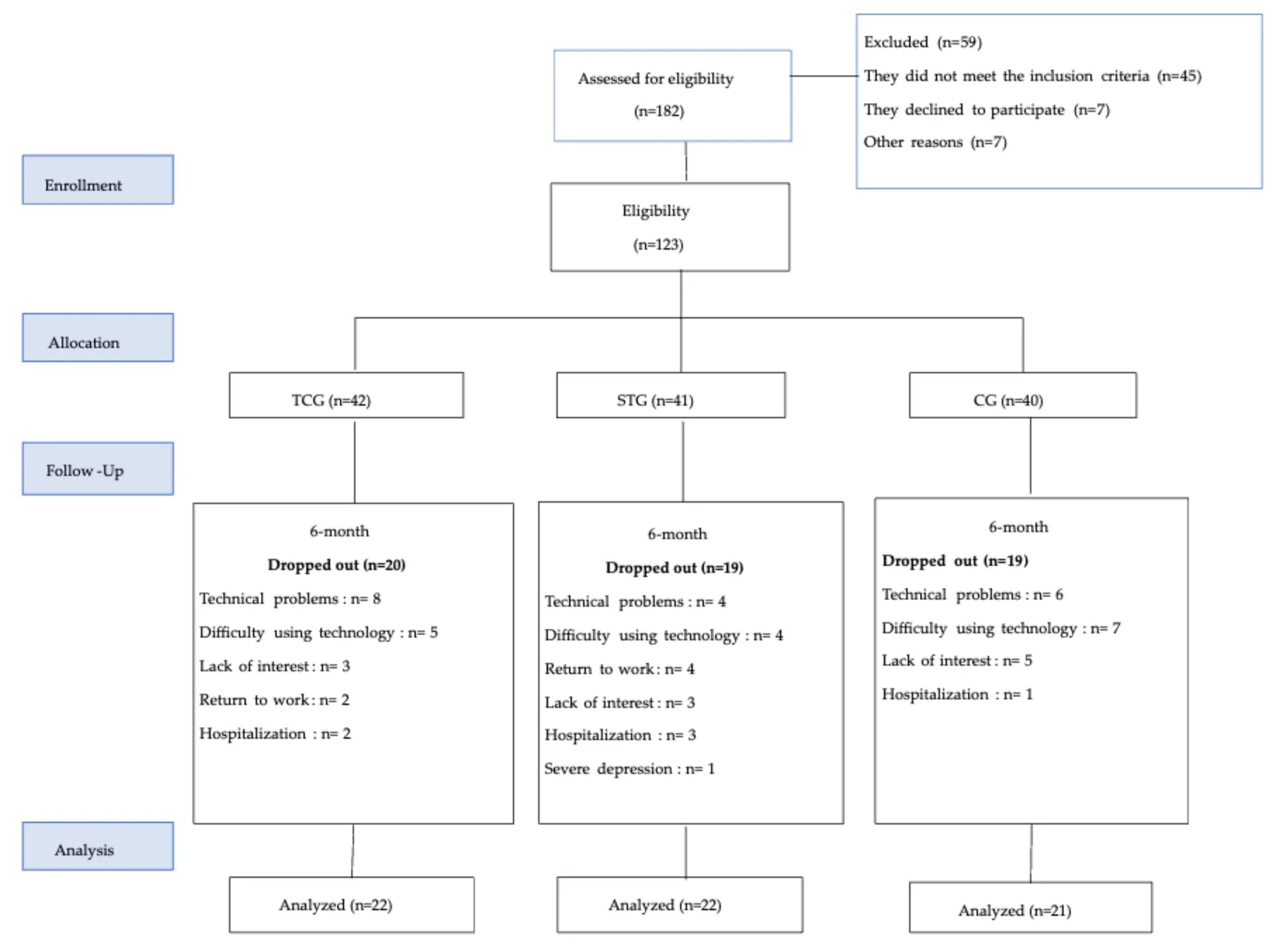
In a quasi-experimental study, 123 adults aged 60 to 74 from Mexico City entered remote tai chi, strength training or a comparison group during the COVID-19 pandemic. They had not exercised regularly in the previous six months. Geographic groups were randomly assigned to the exercise programs; controls chose not to join either.
Instructors supervised 60-minute online exercise sessions four days a week for six months. Controls attended weekly online meetings. Researchers analyzed only those who completed the study: 22 in each exercise group and 21 controls. Both exercise groups had higher estimated muscle mass and lower body-fat percentages than controls. Body fat was 4.81 percentage points lower with tai chi and 3.99 points lower with strength training. The authors suggested that both programs had similar positive effects on muscle mass.
Why it matters
For older adults who have difficulty exercising outside the home, the study addressed whether remote programs could offer a way to maintain muscle during confinement.
Caveats
Only completers were analyzed, after dropout rates of 48% for tai chi, 46% for strength training and 47% for controls. Controls self-selected, and the convenience sample excluded regular exercisers and required internet access, limiting generalization.
From the paper
- Participants
However, due to the emerging pandemic situation, it was only possible to complete a sample of 123 adults aged 60 to 74 years from Mexico City who had a stable Wi-Fi connection and a device for making video calls, without severe cognitive impairment (Montreal Cognitive Assessment, MoCA score ≥23), and who did not engage in regular physical exercise in the last 6 months (<60 min per week), without risk of sarcopenia assessed through the SARC-F screening test, considering as the cutoff point ≤3, nor a history of hospitalization in the last 6 months …
- Who took part
… adults aged 60 to 74 years from Mexico City who had a stable Wi-Fi connection and a device for making video calls, without severe cognitive impairment (Montreal Cognitive Assessment, MoCA score ≥23), and who did not engage in regular physical exercise in the last 6 months (<60 min per week), without risk of sarcopenia assessed through the SARC-F screening test, considering as the cutoff point ≤3, nor a history of hospitalization in the last 6 months …
- Ages
… adults aged 60 to 74 years from Mexico City …
- Duration
The TCG and STG participated in a formal exercise training program for six months (4 days/week/60 min) supervised by trained instructors.
- Limitation
Although 123 participants were initially recruited, only 65 completed the intervention and were included in the per-protocol analysis.
- Skeletal muscle mass
TCG and STG showed a statistically significant changes in comparison to the CG in SMM (TCG: MD = 1.79, CI 0.71, 2.88; STG: MD = 1.10, CI 0.18, 2.02, p < 0.01 …
- Percentage of fat mass
… FM (%) (TCG: MD = −4.81, CI, −8.17, −1.44; STG: MD = −3.99, CI −6.84,−1.13, p < 0.01 …
- Sit-stand test
The overall SPPB sub-test score showed an increase, although only it was observed a change statistically significant in STST time in TCG (MD = −4.47, CI −6.90, −2.04) and STG (MD = −2.02, CI −4.07, −0.04) compared to CG (MD = 1.21, CI −1.78, 4.20).
Quoted word for word from the full text on PubMed Central.
Exercise is part of Bryan Johnson's Blueprint
