Home program aided mobility in older adults with cognitive impairment
After three months, 89.1% of analyzed exercise participants met a clinically meaningful improvement threshold on at least one measure, versus 61.4% with usual care.
72 participants, blinded, multicenter, registered NCT03657940
Limit: Excluded patients with missing data were older and had weaker grips
Edited by Boris Djordjevic · AgingResearch.News
A secondary analysis of a randomized trial in Spain studied 188 adults living in the community, aged 75–95, with mild cognitive impairment or mild dementia, including 132 women. All were frail or at risk of frailty.
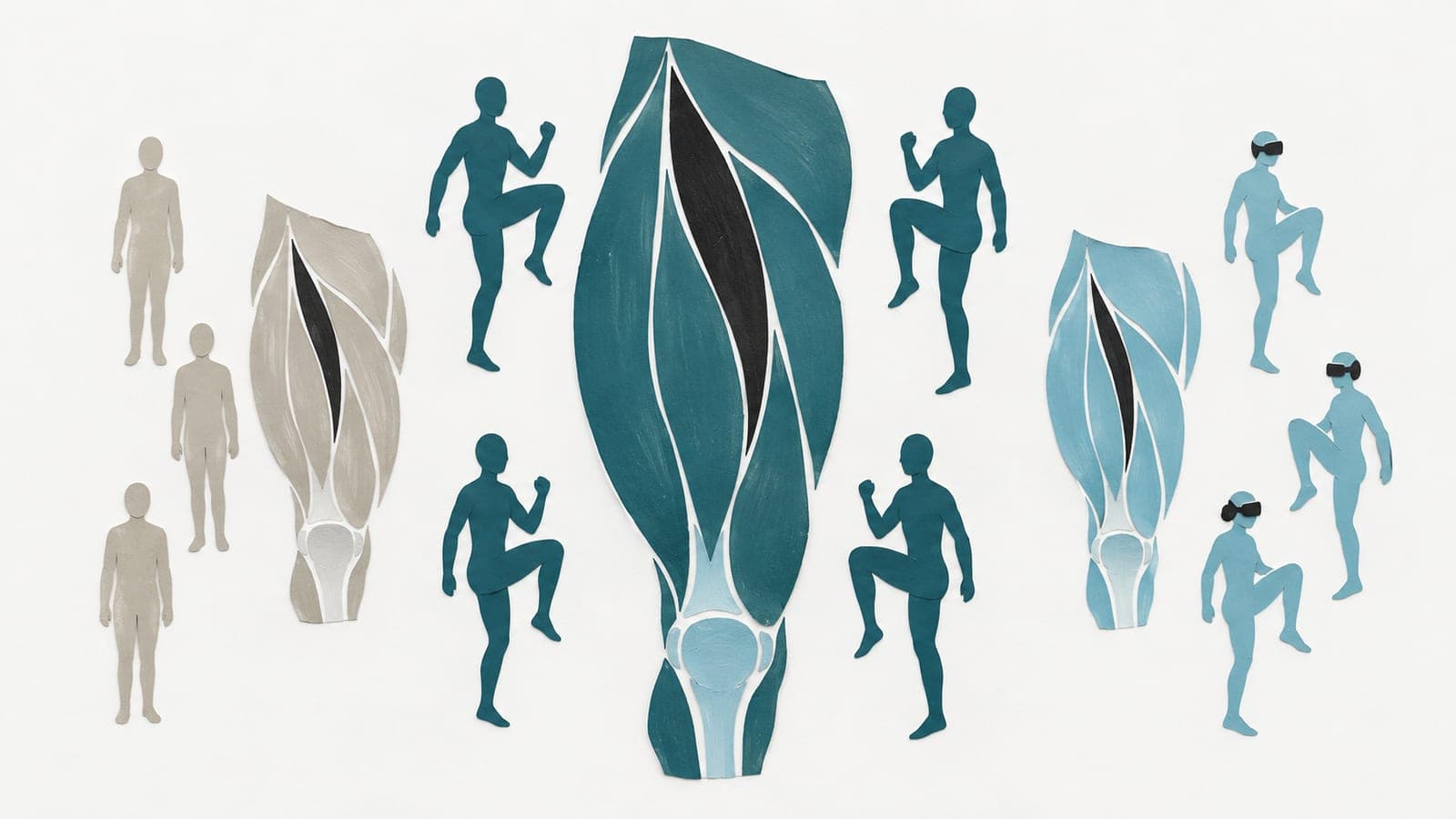
Participants received usual care alone or with three months of home exercise: strength, balance and flexibility exercises three days weekly, plus walking five days weekly. Analyses included 46 exercise participants and 72 controls. Clinically meaningful mobility gains—at least one point on a physical performance test—occurred in 67.4% versus 30.0%, respectively. Adjusted analyses found no group differences in meaningful improvements in cognition, depression symptoms, grip strength or daily activities. During the next three months, the groups did not differ significantly in falls, primary care or emergency visits, hospital admissions, moves into care facilities or deaths.
Why it matters
For older adults with cognitive impairment and frailty, maintaining physical function is an important concern. This analysis addressed whether exercise-related changes reached thresholds considered clinically meaningful.
Caveats
The analysis included only participants with before-and-after data; those with missing data were slightly older and had weaker grips. The findings may not extend to older adults unable to walk or without someone to supervise exercise.
From the paper
- Who took part
Briefly, participants were community dwellers aged ≥ 75 years, able to communicate and ambulate with or without assistance, with Barthel Index score ≥ 60, mild cognitive impairment or mild dementia (according to Diagnostic and Statistical Manual of Mental Disorders (DSM)V criteria (Global Deterioration Scale [Reisberg classification] = 4), pre‐frail or frail status according to the Fried criteria, and having someone to supervise the exercises …
- Ages
Of the 188 recruited patients (132 women, mean age was 84.1 (4.8) years (range 75–95 years)), 72 and 46 had available data at baseline and post-intervention for the control and intervention group, respectively, and could be therefore included in the analyses.
- Duration
Patients who met the inclusion criteria were randomly assigned to a 3-month multicomponent exercise intervention or to a control (usual‐care) group.
- Result
In adjusted analyses, participants in the exercise group were more likely to be responder for at least one outcome (odds ratio [OR] = 4.82, [95% confidence interval = 1.56–14.88], p = 0.001).
- Events by group
A smaller proportion of participants in the exercise group showed clinically meaningful improvements when attending to the GDS (25.5% vs 14.3% in the control group; chi-square p = 0.127), MMSE (29.8% vs 16.9% in the control group; chi-square p = 0.098) …
- Limitation
A major limitation is the small sample size for some analyses, which might result in our study being underpowered to find significant differences.
- Clinically meaningful Short Physical Performance Battery response
In adjusted analyses, participants in the exercise group had higher odds of being responder to the SPPB compared to those in the control group (OR = 5.05, [1.96–13.01]; p = 0.001).
- Clinically meaningful GDS, MMSE, handgrip strength, or Barthel Index responses
In adjusted analyses, participants in the exercise group had no increased likelihood of being responder for any of these outcomes, including GDS (OR = 1.78 [0.56–5.66], p = 0.328), MMSE (OR = 1.99 [0.69–5.73], p = 0.204), handgrip strength (OR = 1.95 [0.77–4.94], p = 0.162) or Barthel Index (OR = 1.27 [0.51–3.17], p = 0.605 …
Quoted word for word from the full text on link.springer.com.
- Multicomponent exercise
- Mild cognitive impairment
- Barthel index
- Geriatric Depression Scale
- Handgrip strength
- Humans
The paper
Universidad de Alcalá; Universidad Pública de Navarra (UPNA)
GeroScience, Aug 3, 2026, Open access