Deleting a gene reduced calcium buildup in aging mouse arteries
In 86-week-old mice with high blood fat levels, deleting a gene in artery muscle cells reduced calcium deposits compared with controls.
Our read
Mechanisms- Studied:
- Experiments in aged male and female mice, against wild-type controls
- What changed:
- Vascular calcification was lower in aged knockout mice than in wild-type controls
- The catch:
- Broader atherosclerotic remodeling in Apoe−/− mice could confound the reduction in vascular calcification
- In the record:
- One of 308 papers on MAPK14 on record: 3 with results in people, 16 in animals.
Editor of record: Boris Djordjevic · AgingResearch.News
Researchers studied male and female mice with high blood fat levels in an experiment that deleted Mapk14, a gene involved in stress signaling, from smooth muscle cells in blood vessel walls. The mice ate normal chow. At 86 weeks, the team examined the aorta, the body's main artery, using mice of the same age and sex without the deletion as controls.
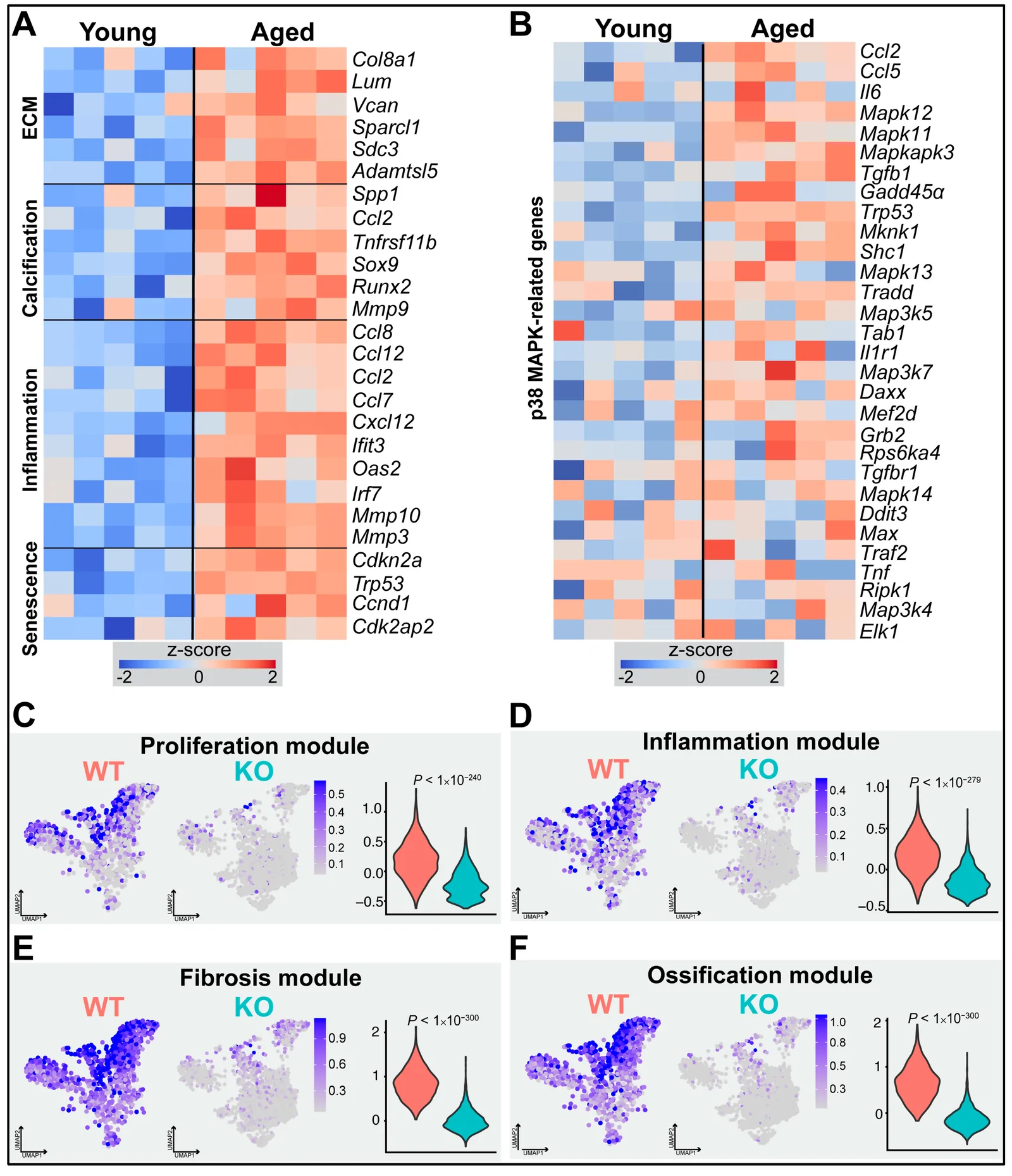
Mice lacking the gene had less calcium buildup, scarring and inflammatory cell infiltration in their aortas. They also had reduced expression of RUNX2, a protein that helps control bone formation. Analyses of previously published gene-activity data also found that deleting Mapk14 reduced activity in groups of genes involved in inflammation, scarring and bone formation in vessel muscle cells.
Why it matters
Calcium buildup in artery walls is a feature of vascular aging and contributes to cardiovascular harm. The authors identified MAPK14, the stress-signaling protein encoded by Mapk14, as a potential target for limiting this buildup and related tissue changes.
Caveats
The genetic experiment tested gene deletion in mice, not a drug treatment or benefits in people. Some reused gene-activity data came from mice studied in a different disease context.
From the paper
- Limitation
Although VSMC-specific MAPK14 deficiency reduces both Runx2 mRNA and RUNX2 protein expression, the precise molecular mechanisms linking p38 signaling to RUNX2 remain to be defined, including whether MAPK14 directly regulates Runx2 transcription or additionally influences RUNX2 protein stability.
Quoted word for word from the full text on PubMed Central.

Comments
Be the first to comment.