AI-estimated blood vessel age linked to poorer brain health
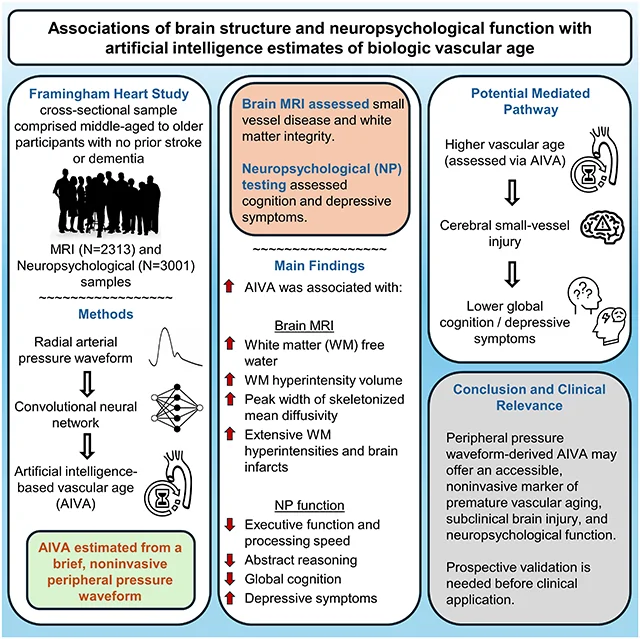
Each standard-deviation increase in estimated blood vessel age was linked to 1.44 times the odds of brain infarcts—areas of dead brain tissue.
3,001 participants
Limit: Brain changes could precede higher estimated vessel age rather than follow it
Edited by Boris Djordjevic · AgingResearch.News
Framingham Heart Study participants averaged 62 years of age, and 56% were women, in a cross-sectional observational study of blood vessel aging and brain health. The analyses included brain scans from 2,313 people and psychological testing from 3,001. Participants had no history of stroke or dementia.
An artificial intelligence model estimated blood vessel age from the shape of a pressure waveform. After accounting for age and other health factors, higher estimated vessel age was associated with more signs of disease affecting the brain’s small blood vessels and poorer overall thinking-test scores. The researchers expressed differences in estimated vessel age using standard deviations, a statistical measure of how widely values vary.
Why it matters
The authors suggest that this noninvasive measure of blood vessel aging may serve as an indicator of otherwise hidden vascular brain injury and aspects of brain function.
Caveats
This cross-sectional study could not establish whether higher estimated vessel age preceded or caused brain changes. The relatively healthy participants had no history of stroke or dementia, so the findings may not apply to people with those conditions.
The paper
Vassar College; Inc
Arteriosclerosis, Thrombosis, and Vascular Biology, Sep 24, 2026


