Brain shrinkage rates varied widely among adults in Japan
Average whole-brain volume decline was 0.24% per year in participants in their 40s, compared with 0.44% per year in those in their 70s.
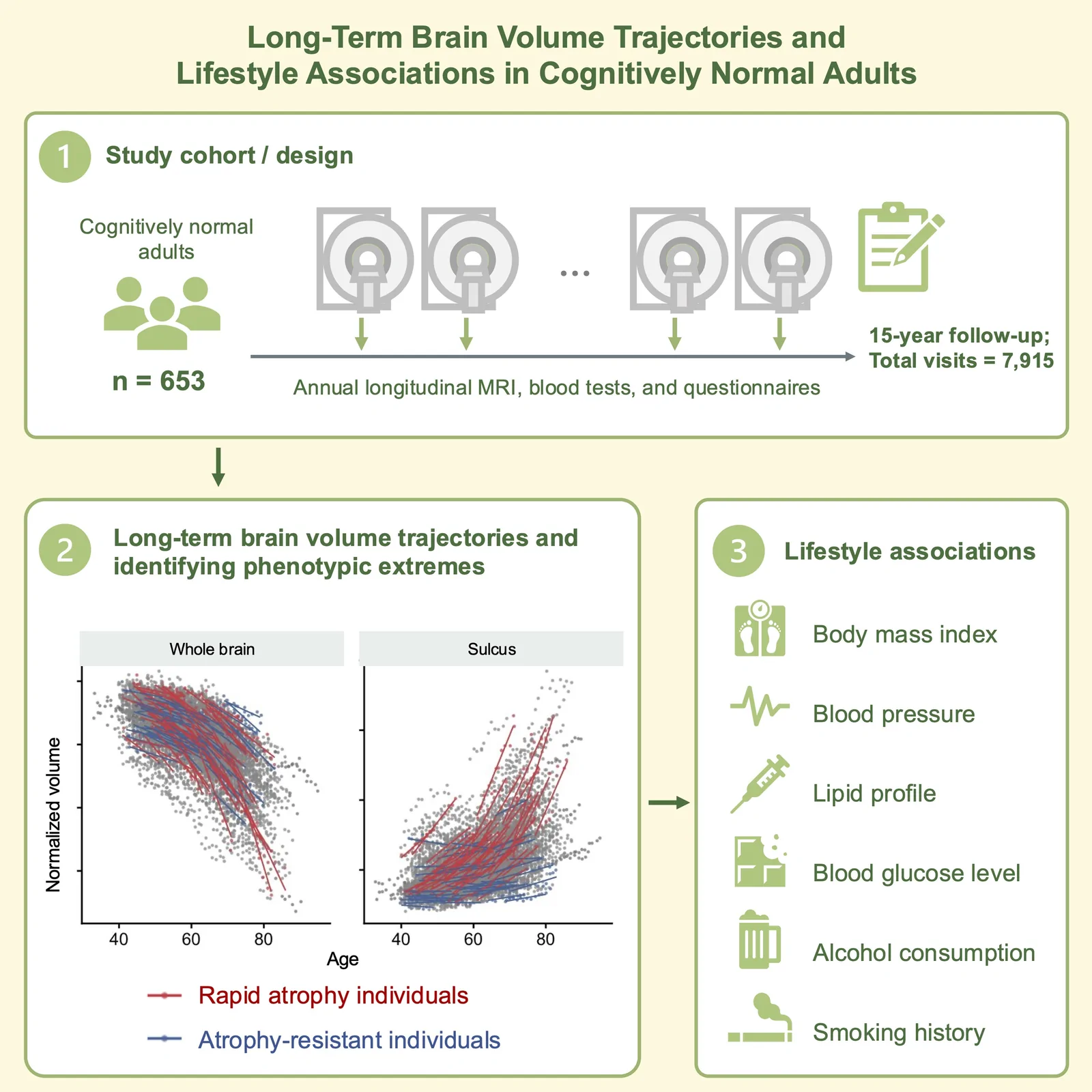
Limit: Undetected preclinical dementia could contribute to rapid brain shrinkage despite normal cognitive test results
Edited by Boris Djordjevic · AgingResearch.News
A prospective observational cohort study followed 653 adults with normal cognition in Japan, including 207 women, with an average starting age of 55.1 years. Researchers analyzed 7,915 brain scans collected over up to 15 years. They assessed lifestyle and health risks at the start and adjusted brain measurements for scanner changes.
Brain shrinkage varied substantially between people. Participants classified as having rapid shrinkage in their 40s lost whole-brain volume at 0.46% per year, comparable to the average in participants in their 70s. Those with the slowest shrinkage in their 70s lost as little as 0.27% per year. Faster shrinkage was associated with smoking exposure, higher body mass index—a measure of weight relative to height—higher blood pressure between heartbeats and higher levels of “bad” cholesterol.
Why it matters
Structural brain aging is relevant to cognitive health. The authors suggested that assessing lifestyle and blood-vessel risk factors could help identify people for targeted prevention strategies.
Caveats
The observational design cannot show that changing these risk factors slows brain shrinkage. The single-center cohort excluded people with brain abnormalities or cognitive impairment, including those who developed cognitive impairment during follow-up.
From the paper
- Result
High BMI [β = 0.027; 95% confidence interval (CI) (0.0058–0.049)], elevated diastolic blood pressure (β = 0.044; 95% CI 0.021–0.067) …
- Limitation
First, all participants had normal cognition by standard clinical criteria, but biomarkers for neurodegenerative disease, such as amyloid or tau PET, were not assessed.
Quoted word for word from the full text on PubMed Central.
The paper
Harvard University; The University of Tokyo
Brain Communications, Sep 7, 2026, Open access


