Compound improved muscle function in aged male mice
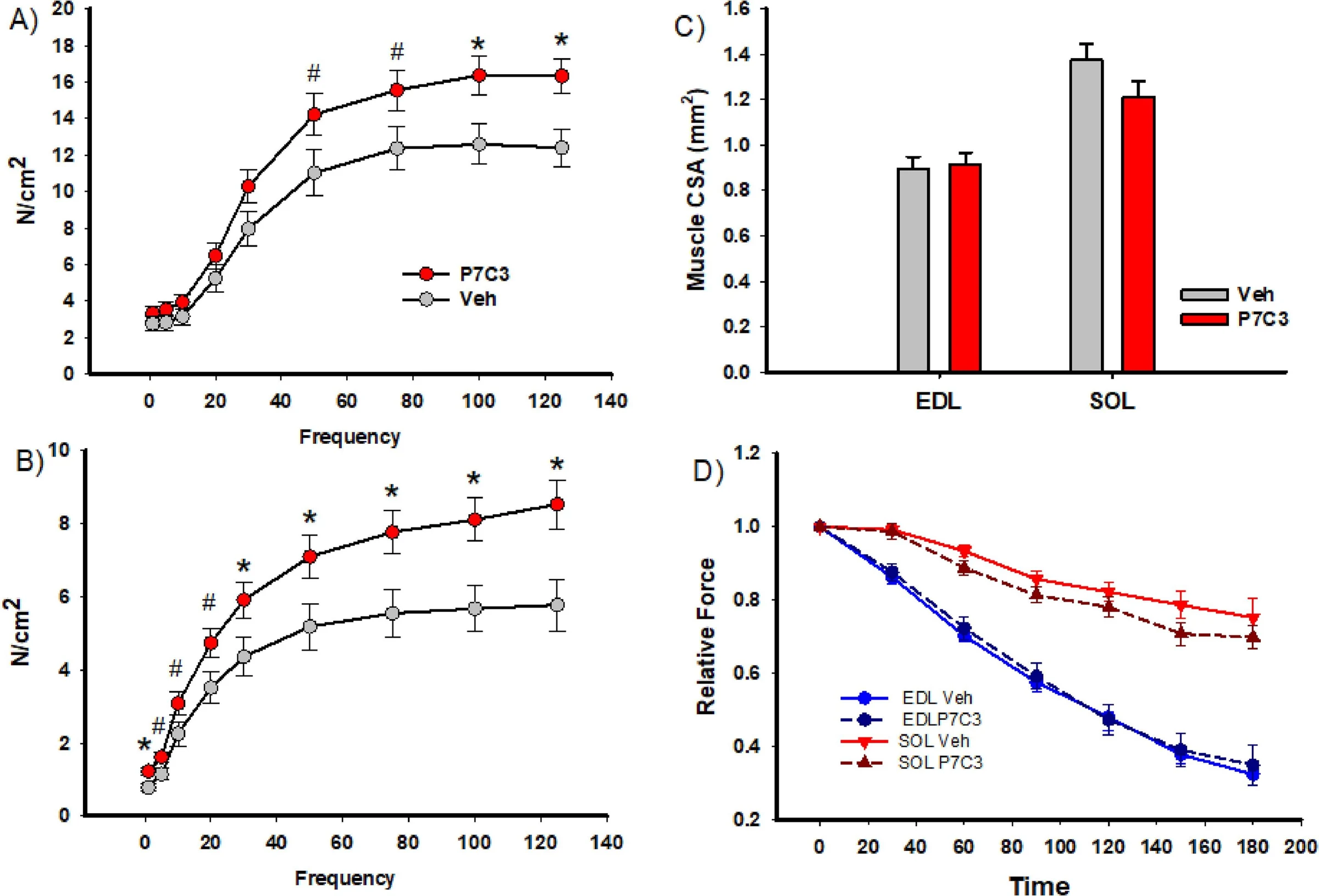
In a four-week experiment, two-year-old male mice given P7C3 maintained grip strength, while it declined in mice given a control solution.
Limit: Treatment lasted only four weeks, limiting conclusions about lasting muscle benefits
Edited by Boris Djordjevic · AgingResearch.News
An experiment in two-year-old male C57BL/6 mice compared daily injections of P7C3 with a control solution over four weeks. The P7C3 dose was 10 milligrams per kilogram of body weight. The compound activates an enzyme involved in muscle metabolism.
Tests on muscles removed from the mice found improved contractions in both fast- and slow-contracting muscles, but no change in muscle fatigue. Grip strength was maintained in the P7C3 group but declined in the control group. A separate lower-leg muscle showed a shift toward larger muscle fibers in mice given P7C3.
Why it matters
The work addresses whether changing muscle metabolism can help preserve strength in old age.
Caveats
This four-week animal experiment does not establish lasting benefits or effects in people. The abstract does not report how many mice were studied.
The paper
University of South Florida
Experimental Gerontology, Sep 20, 2026, Open access

