Prevalence of Hearing Loss and Years Lived With Disability in Ethiopia From 1990 to 2023: A Subnational Analysis for the Global Burden of Diseases Study
Cohort study, declared no competing interests
Abstract
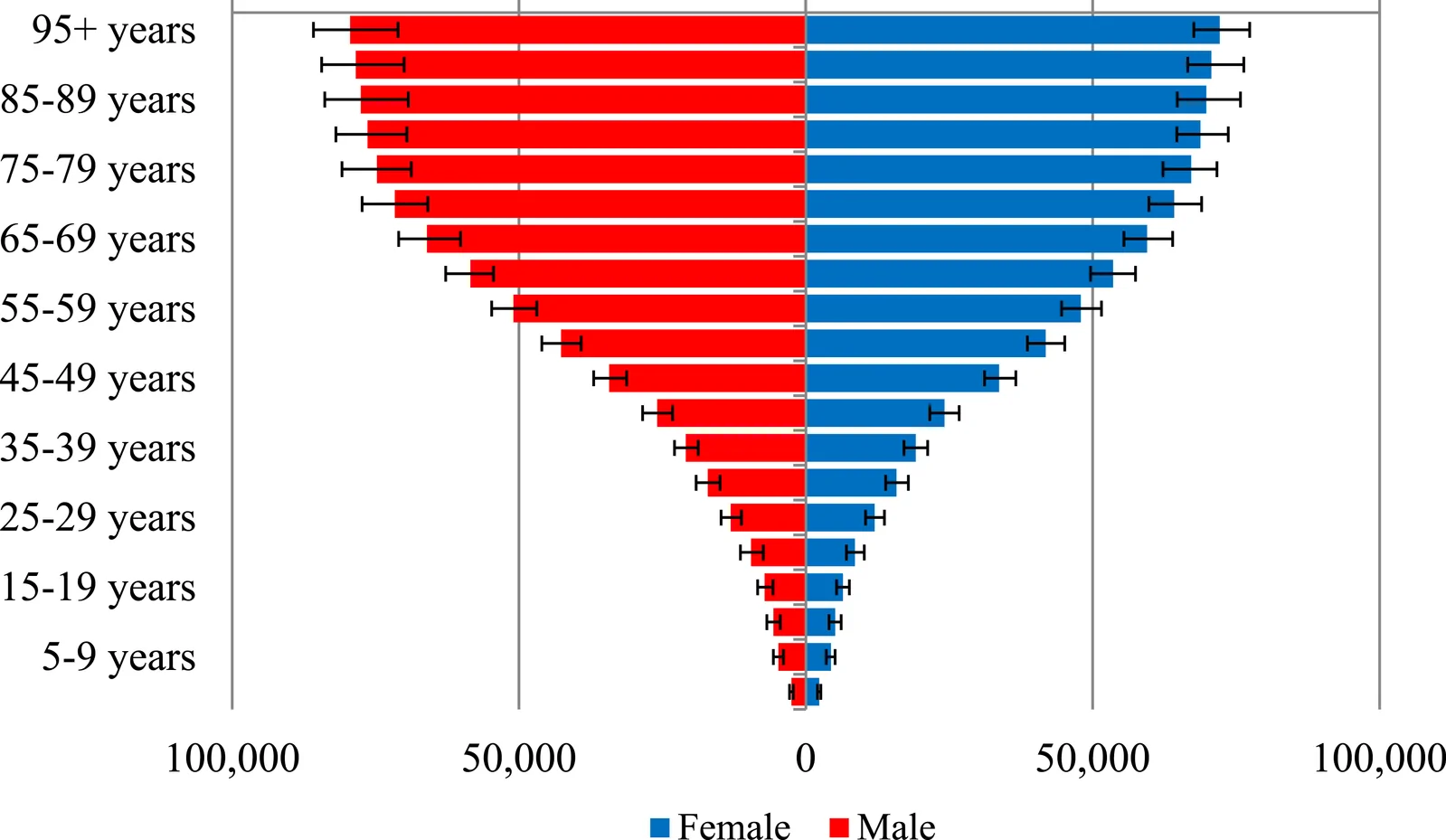
BACKGROUND: Hearing impairment is increasingly being acknowledged as a major public health issue. This study determined the prevalence of hearing loss and the years lived with disability (YLDs) in Ethiopia from 1990 to 2023. METHODS: The study used the Global Burden of Diseases 2023 estimates and methods. RESULTS: In 2023, Ethiopia had an estimated 15.93 million prevalent cases of hearing loss (95% UI: 15.00-16.79), with an age-standardized prevalence rate of 21,702 per 10⁵ population (95% UI: 20,818-22,568). The corresponding YLDs were 580,148 (95% UI: 403,721-806,166), yielding a rate of 801 per 10⁵ population (95% UI: 560-1109). Both prevalence and YLDs increased with age. Between 1990 and 2023, prevalence rose slowly by 3% (95% UI: 2-4), while the YLDs rate did not change significantly. Mild hearing loss dominated the burden, with 10.6 million cases (95% UI: 10.07-10.69) and a rate of 14,425 per 100,000 (95% UI: 13,759-15,133). Rates of complete hearing loss declined by 23% (95% UI: -26 to -21) and severe hearing loss by 3% (95% UI: -5 to -1), whereas rates of mild, moderate, and moderately severe hearing loss showed a slight increase. CONCLUSION: This study revealed a substantial and persistent burden of hearing loss in Ethiopia over the past three decades, dominated by mild cases and increasing with age. While severe and complete forms declined, mild-to-moderate rates rose, underscoring the need for integrated screening, expanded access to hearing care, and strengthened health systems to address this growing public health challenge.
From the paper
- Result
Between 1990 and 2023, the prevalence rate exhibited a net change of 3% (95% UI: 2%–4%).
- Limitation
In Ethiopia, as in many low-resource settings, data on hearing loss are sparse, which may introduce uncertainty and affect the precision of the estimates.
Quoted word for word from the full text on PubMed Central.
The paper
Ethiopian Public Health Institute; Bule Hora University
SAGE Open Nursing, 15 Sep 2026, Open access