Differences in screen-detected type 2 diabetes in two targeted community-based screening campaigns in Denmark
Non-randomised trial, declared ties to: AstraZeneca, Bayer, Novo Nordisk and 6 more
Abstract
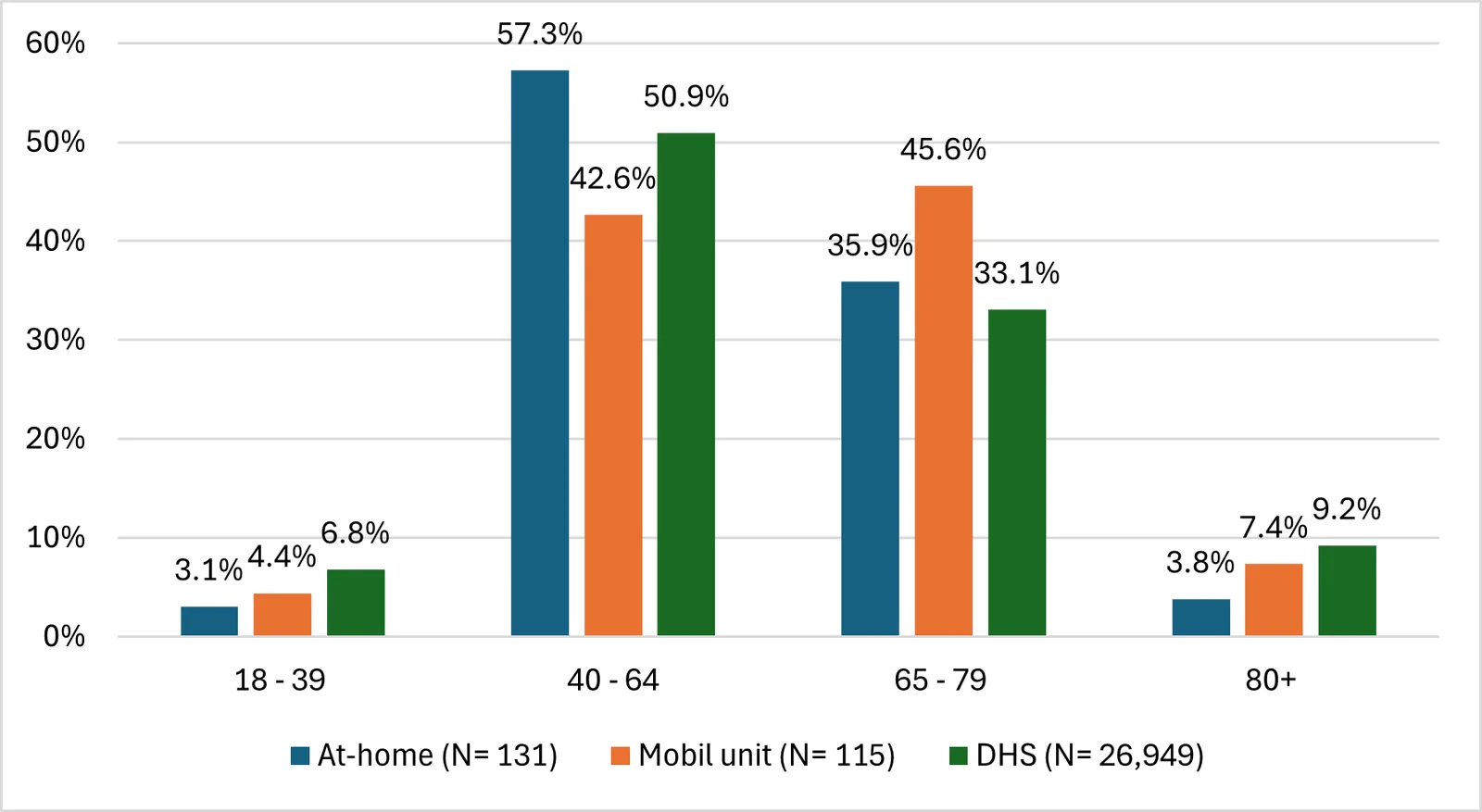
OBJECTIVE: Targeted type 2 diabetes screening campaigns aim to improve patients' quality of life and life expectancy and reduce healthcare costs, although different setups may yield varying detection outcomes. The aim of this study is to assess whether at-home self-sampling improves the detection rates of prediabetes and diabetes compared with standard mobile unit screening. RESEARCH DESIGN AND METHODS: Between June 2022 and November 2024, the Danish Diabetes Association offered free capillary HbA1c tests to individuals at high risk of diabetes based on the Leicester's Risk Assessment score. Two community-based screening setups were applied: (a) a mobile unit using a point-of-care device and (b) at-home self-sampling screening tests using mailed Hemoglobin Capillary Collection System analyzed by high-performance liquid chromatography. RESULTS: In total, 4051 individuals were tested via the mobile unit and 5609 via the at-home setup. In the mobile unit setup, the proportion of individuals aged ≥65 years was 54.3%, whereas in the at-home setup, they constituted 38.1%. HbA1c ≥48 mmol/mol (≥6.5%) was found in 3.1% of participants in the mobile unit and 3.5% in the at-home setup, while HbA1c values of 42-47 mmol/mol (6.0-6.4%) occurred in 9.1% and 15.2%, respectively. CONCLUSIONS: Mobile units and at-home self-sampling are complementary screening approaches, finding similar rates of screen detection with HbA1c ≥48 mmol/mol (≥6.5%), though the latter is more efficient in detecting individuals with HbA1c values of 42-47 mmol/mol (6.0-6.4%).
From the paper
- Participants
In contrast, in the at-home self-sampling setting, 10 583 individuals were identified as being at high risk based on the LRA test and requested a self-sampling kit; approximately 53% returned an adequate blood sample, resulting in a total of 5609 participants.
- Limitation
First, although participants were informed that screening was intended for individuals without known diabetes or pre-diabetes, we could not independently verify their prior status; some may have used the campaigns as a way to confirm known results.
Quoted word for word from the full text on PubMed Central.
The paper
Danish Diabetes Association
BMJ Open Diabetes Research & Care, 15 Sep 2026