Probable dementia varied by race and ethnicity in older adults
Among adults aged 85 and older, model-adjusted probabilities of probable dementia were 60.2% for Hispanic adults and 35.1% for non-Hispanic White adults.
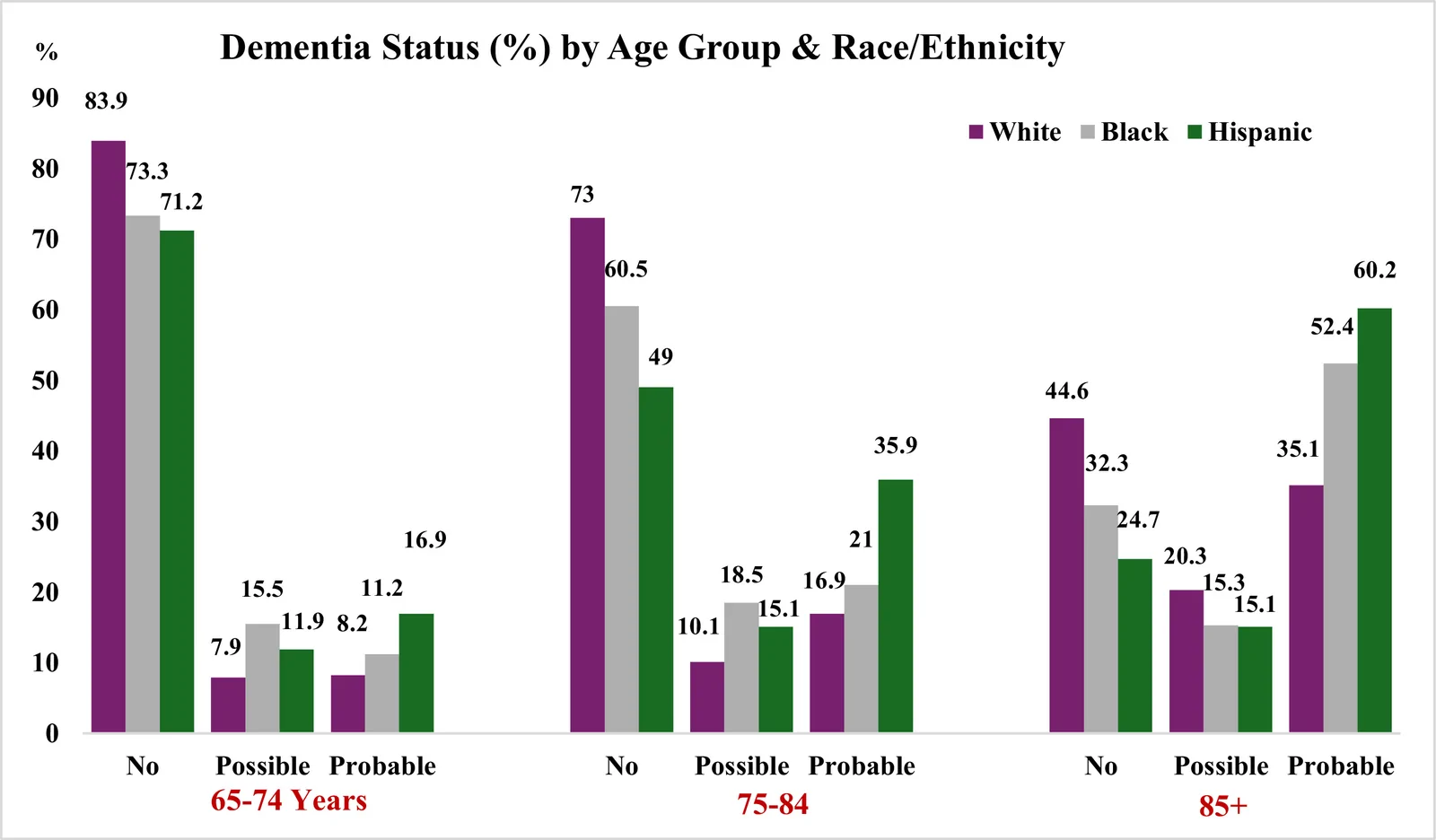
Cohort study
Limit: Educational quality, wealth, and healthcare access were incompletely captured and could explain racial disparities
Edited by Boris Djordjevic · AgingResearch.News
In a cross-sectional observational study, researchers analyzed 7,574 Medicare beneficiaries aged 65 and older living independently in the United States; 55.4% were female. They used 2023 National Health and Aging Trends Study data. Dementia classifications combined diagnoses, cognitive tests and reports from participants or people answering for them.
Older age, lower education, stroke, two or more falls, and depression or anxiety were associated with higher odds of possible or probable dementia. The association with lower education was especially pronounced among Hispanic adults. Among non-Hispanic White and Black adults, hearing aid users had lower predicted probabilities of probable dementia than nonusers. Hispanic hearing aid users had higher predicted probabilities than nonusers.
Why it matters
The authors argued that unequal burdens of late-life cognitive decline call for culturally responsive care and fewer structural barriers to hearing and dental services.
Caveats
This cross-sectional analysis cannot establish cause and effect, and the dementia classifications were not all based on clinical diagnoses. The findings concern independently living Medicare beneficiaries aged 65 and older, not all older adults.
From the paper
- Participants
The sample included 7,574 adults aged 65 and older living independently in the United States.
- Result
… female adults had significantly lower odds of possible dementia (OR = 0.72; 95% CI, 0.57–0.91; p =.005) and probable dementia (OR = 0.77; 95% CI, 0.62-0.95, p =.017) compared to male adults.
Results, Prevalence of cognitive impairment and risk factors
- Limitation
Third, the methodological approach rigorously addresses the limitations of brief cognitive screenings by incorporating both proxy reports (AD8) and performance-based executive function tests (such as the Clock Drawing test) …
Quoted word for word from the full text on PubMed Central.
The paper
San Diego State University
The Journal of Prevention of Alzheimer's Disease, Sep 12, 2026, Open access
Comments
Be the first to comment.