Risk-factor clusters linked to dementia in older adults
Among 125,848 adults over 65, the psychological, social and inactivity cluster had the highest dementia hazard, with a reported hazard ratio of 1.23.
246,968 adults
Limit: The abstract omits the comparison group for the dementia hazard ratios, limiting their interpretation
Edited by Boris Djordjevic · AgingResearch.News
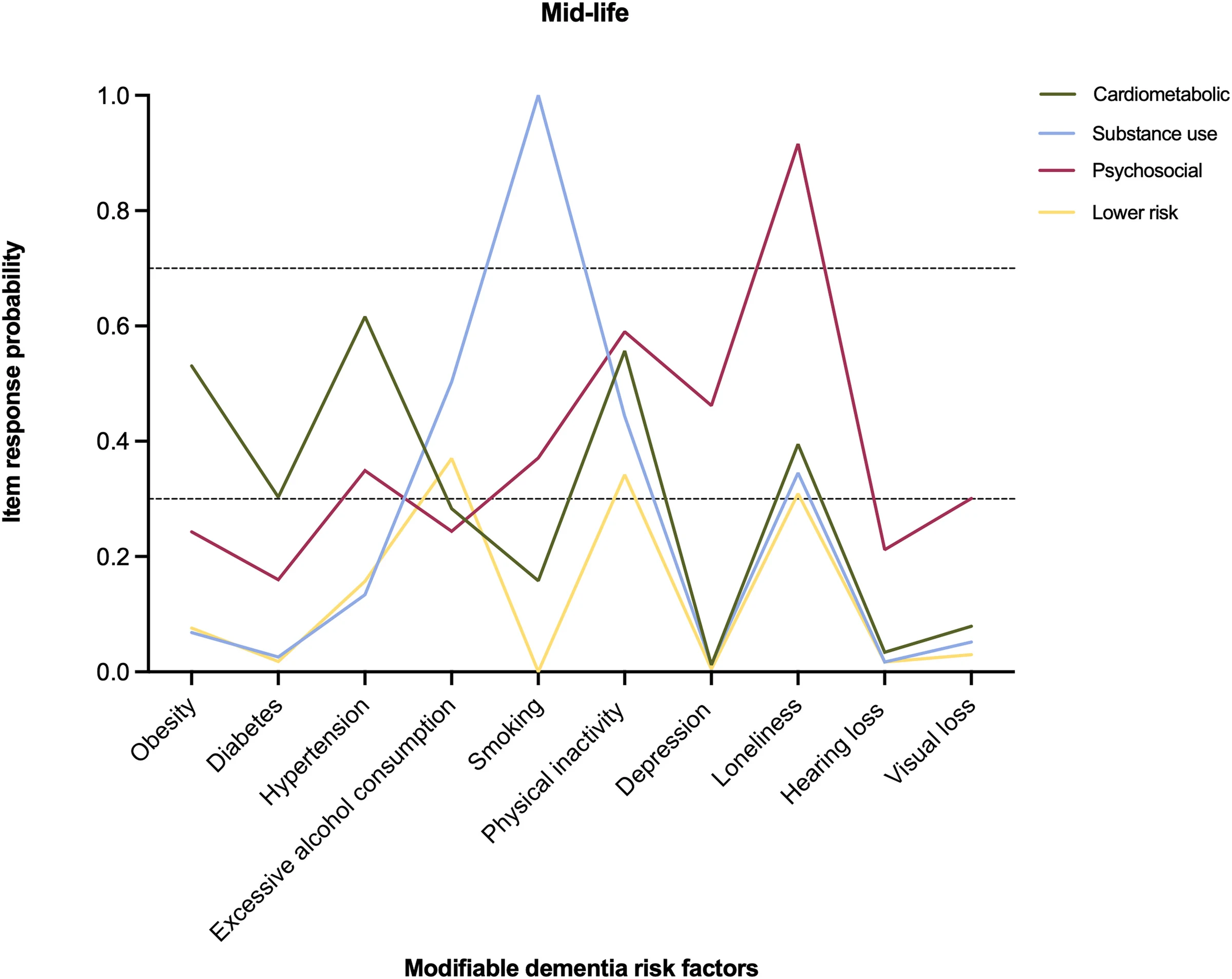
This prospective cohort study analyzed 246,968 adults in the Netherlands: 121,120 aged 45–65 and 125,848 over 65. Researchers used a 2012 survey to group participants by ten potentially changeable dementia risk factors, including smoking, diabetes, loneliness and depression. They identified four clusters in each age group, with dementia follow-up through 2023.
The researchers analyzed links with dementia in the older group. After accounting for social and demographic characteristics, the cluster marked by psychological and social risks plus physical inactivity had the highest dementia hazard. Its hazard ratio—a comparison of dementia rates over follow-up—was 1.23. The substance-use cluster had a hazard ratio of 1.16, and the cluster marked by heart and metabolic health risks had a ratio of 1.12.
Why it matters
Potentially changeable dementia risks often occur together. The findings support considering these combinations when designing targeted dementia-prevention strategies.
Caveats
This observational study cannot show that the clusters caused dementia, and the dementia-risk analysis covered only adults over 65. The abstract did not specify the comparison group for the hazard ratios.
The paper
Maastricht University
Journal of Alzheimer's Disease, Oct 22, 2026, Open access