Balance may link health problems to fall risk in older adults
In a cross-sectional study of 4,805 older adults, balance statistically linked hearing difficulties, poorer thinking skills and high blood pressure with a fall-risk score.
Limit: Mood and previous falls could influence both reported balance problems and the fall-risk score
Edited by Boris Djordjevic · AgingResearch.News
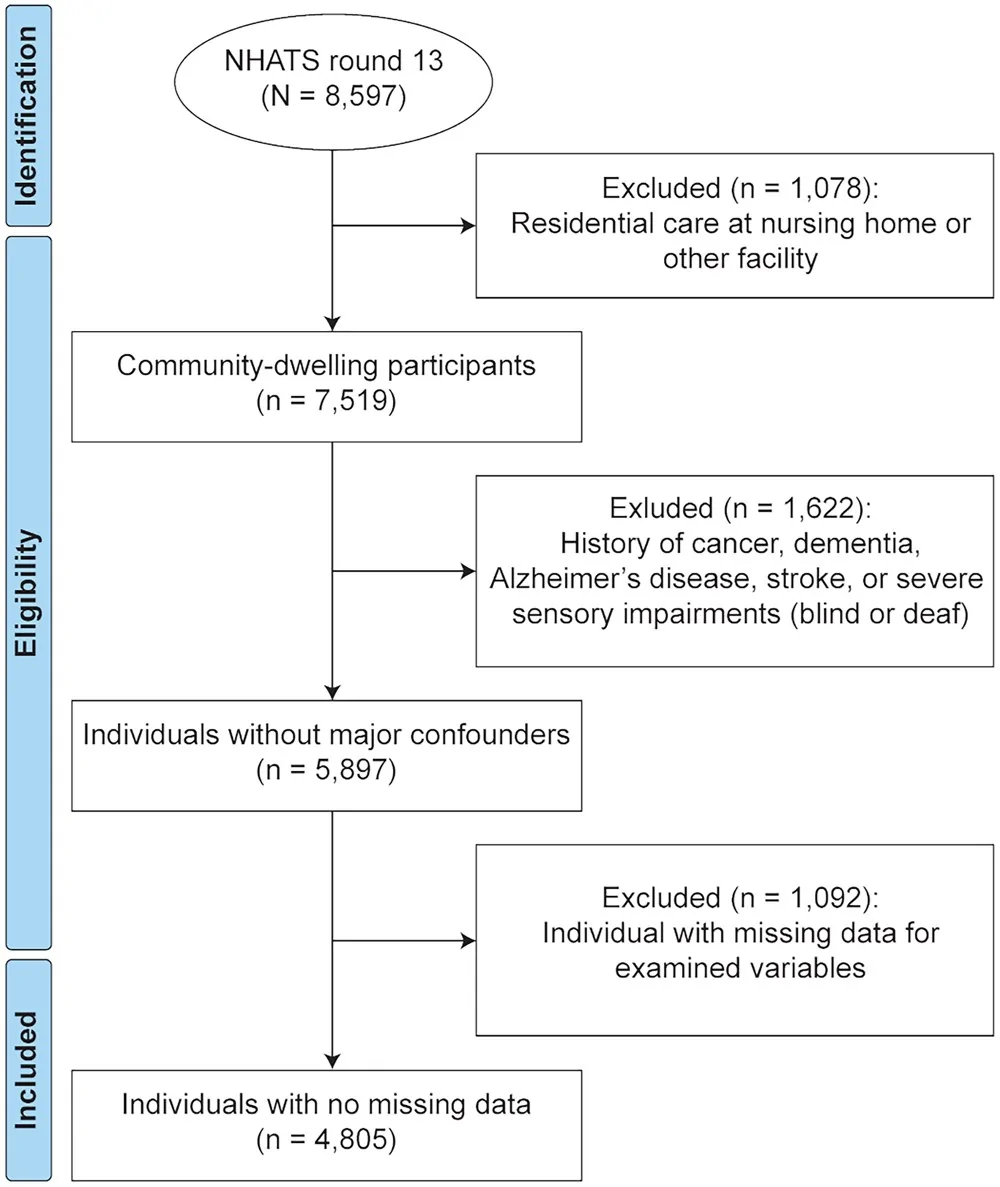
Researchers analyzed 2023 survey data from 4,805 community-dwelling US adults aged 65 and older in a cross-sectional observational study. They assessed reported balance problems and performance on standing balance tests. Their fall-risk score combined reports of falls in the past month and year with worry about falling in the past month.
Reported balance problems had the strongest association with a higher score. Poorer balance-test performance, depression and anxiety symptoms, and heart disease were also associated with higher scores. Statistical models linked hearing difficulties, poorer cognitive test scores and high blood pressure to the fall-risk score through balance. The authors proposed that reported and tested balance represent two pathways connecting these health problems with fall risk.
Why it matters
For preventing falls in older adults, the authors recommended prioritizing both forms of balance assessment while addressing mental health, hearing and thinking skills.
Caveats
Cross-sectional data cannot establish cause and effect or the order of events, and the score combined past falls with worry rather than tracking future falls. The analysis excluded people reporting cancer, dementia, Alzheimer’s disease, stroke, blindness or deafness, and those with missing data.
From the paper
- Participants
After applying these exclusion criteria and performing listwise deletion of missing data, the final analytic sample included 4805 community-dwelling older adults.
- Limitation
Second, by including only community-dwelling older adults, the findings cannot be generalized to individuals in nursing homes or other residential facilities.
Quoted word for word from the full text on PubMed Central.
The paper
San Jose State University; Ball State University
Innovation in Aging, Jul 1, 2026, Open access

Comments
Be the first to comment.