UK health cohort broadly mirrors national patterns, with gaps
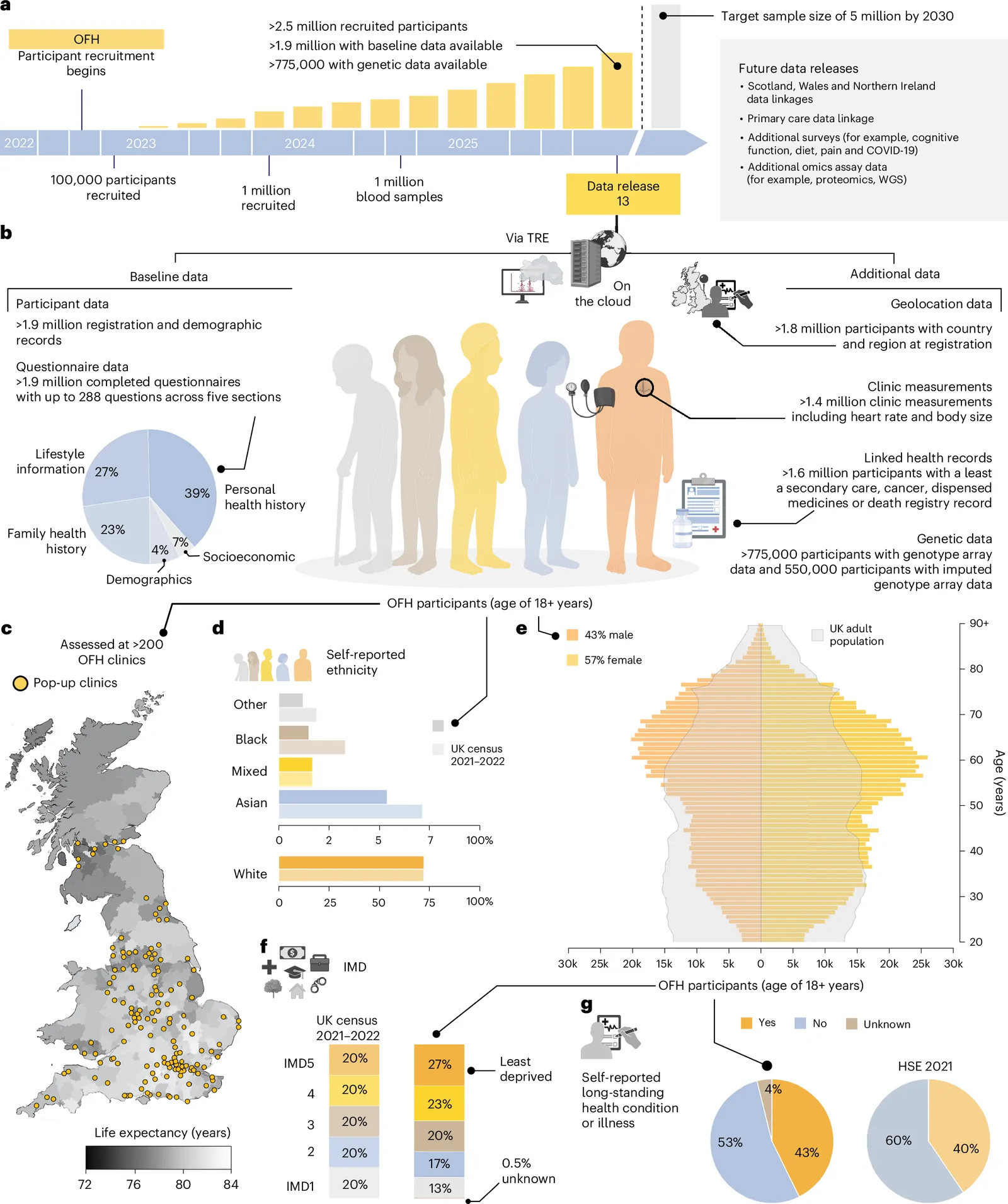
An observational analysis of 1.9 million UK adults found broadly familiar health patterns, but higher self-reported rates of several conditions than national estimates.
Limit: Self-reported participant data incompletely captures chronic and ambulatory conditions without primary care records
Edited by Boris Djordjevic · AgingResearch.News
An observational analysis examined baseline questionnaire data from 1,900,557 UK-resident adults aged 18 or older in the volunteer-based Our Future Health cohort. Researchers also used available clinic measurements and linked health records, comparing health and disease patterns with national estimates and UK Biobank data.
Participants’ social backgrounds, lifestyles and health broadly reflected UK population patterns. However, all but one minority ethnic group and people in the most deprived areas were underrepresented. Several self-reported conditions, particularly depression and anxiety, were more common than in national estimates. Disease patterns and associations between conditions and known clinical factors broadly agreed with UK Biobank findings. Medication use and cancer prevalence followed expected age-related patterns, while lung cancer rates were lower than national figures.
Why it matters
For research on diseases that become more common with age, understanding the cohort’s makeup helps frame how its findings might apply to the wider population.
Caveats
Volunteer recruitment limits how well the findings represent the wider population, and agreement between self-reported diagnoses and hospital records varied by condition. At registration, 97.7% of participants lived in England.
The paper
Phenomic profiles and disease patterns of 1.9 million participants from Our Future Health
University of Oxford; University Medical Center Groningen
Nature Medicine, Sep 10, 2026, Open access
doi.org/10.1038/s41591-026-04602-4PubMed 42722883
Corrected, Oct 26, 2026

Comments
Be the first to comment.