Hormone receptor preserves muscle stem cell reserves in mice
Experiments in young adult male mice found that removing the androgen receptor from muscle stem cells depleted their reserves and impaired muscle repair.
Edited by Boris Djordjevic · AgingResearch.News
Experiments in young adult male mice tested how the androgen receptor, a protein that responds to male sex hormones, maintained muscle stem cells. Researchers deleted the receptor’s gene specifically in these cells at nine weeks of age. They injured a lower-leg muscle at three months and compared repair with control mice.
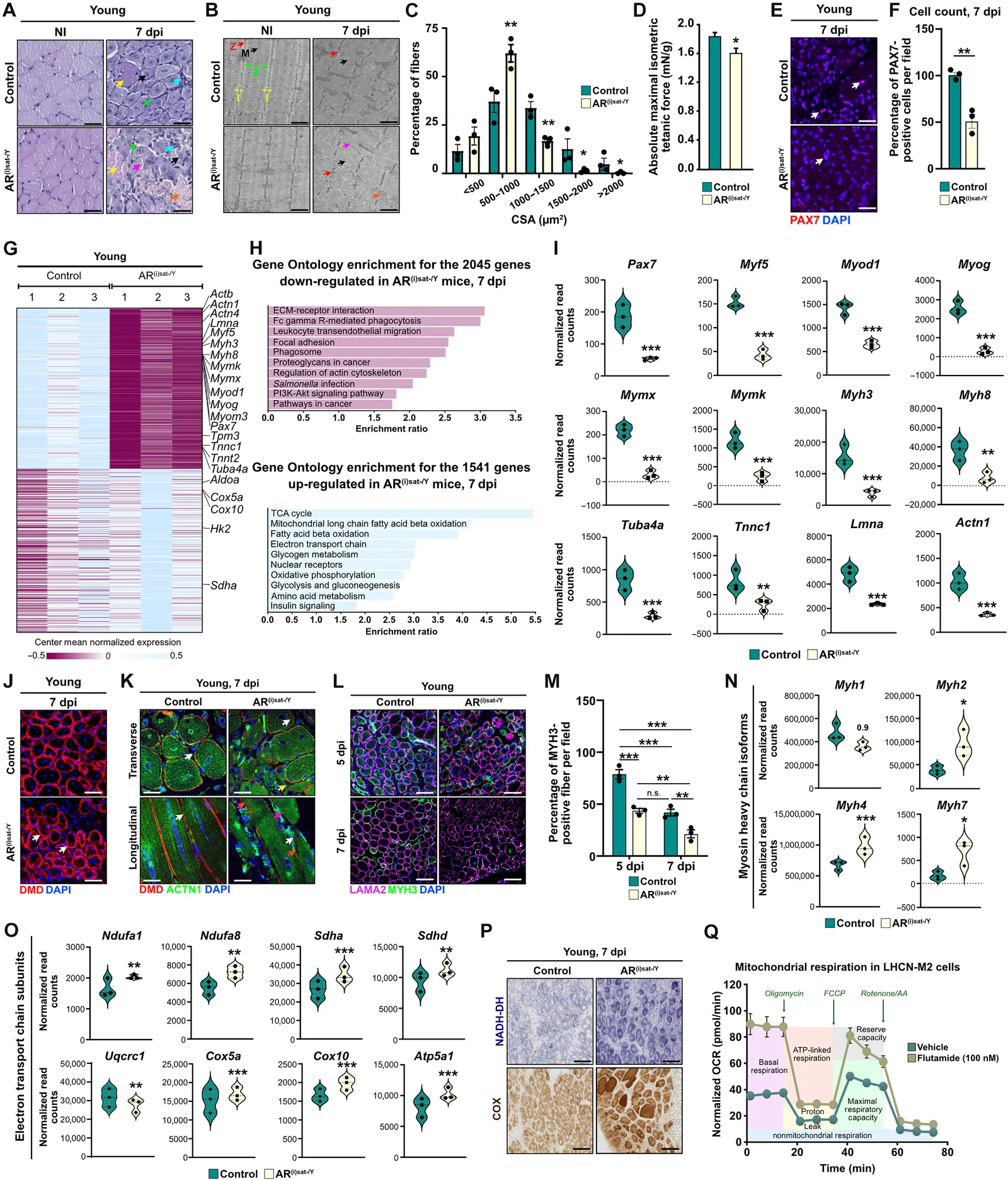
Without the receptor, stem cells began dividing prematurely, and their reserves shrank. Abnormal muscle fibers persisted through 42 days after injury, and muscle force was reduced at 28 days. During repair, the receptor shifted its DNA binding from sites linked to keeping stem cells dormant to sites involved in activation and changes in energy use. The researchers also found lower testosterone and receptor levels in older mice.
Why it matters
The work addresses how declining responses to male sex hormones may contribute to poorer muscle repair with age.
Caveats
The main experiments used genetically altered male mice with deliberately injured muscles. They do not establish whether altering this pathway would improve muscle repair in people.
From the paper
- Events by group
Moreover, in the fully committed cluster 3, the proportion of cells in G₁ dropped from ∼80% in controls to ∼60% in mutants, whereas those in S phase, absent in control mice, increased by more than 15% in MuSC-AR–deficient mice, indicating that they are more prone to mitotic activity.
Quoted word for word from the full text on PubMed Central.
The paper
Centre National de la Recherche Scientifique
Science Advances, Sep 9, 2026, Open access


Comments
Be the first to comment.