Protein loss destabilizes DNA in lab-grown human lung cancer cells
Experiments in human lung cancer cells found that losing the protein disrupted DNA stability and the production of the cell’s protein-making machinery.
Edited by Boris Djordjevic · AgingResearch.News
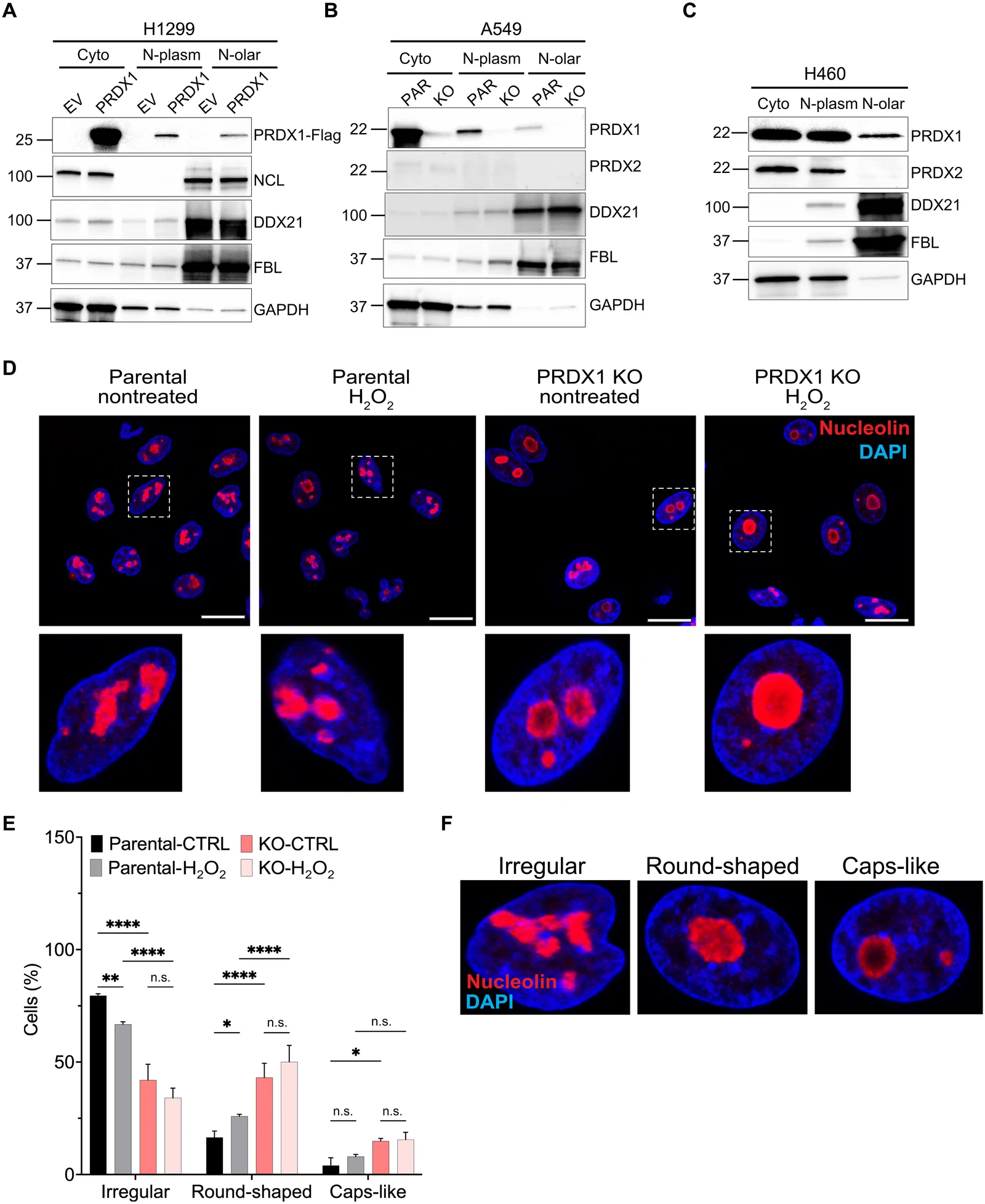
In experiments in human non–small cell lung cancer cells grown in the lab, researchers removed peroxiredoxin 1, a protein that clears reactive oxygen molecules. They examined the nucleolus, a structure inside the cell nucleus where production of ribosomes—the cell’s protein-making machinery—begins.
Losing the protein altered nucleolar shape and made its DNA less stable. Cells produced less new ribosomal RNA, a component of ribosomes, and processed it less effectively. The loss also activated a DNA damage response in the nucleolus. Restoring the protein specifically to the nucleolus substantially restored ribosomal RNA production and reduced the buildup of structures in which RNA binds to DNA.
Why it matters
Earlier research found shortened lifespans and accelerated tumor development in mice lacking this protein. This work addresses a possible cellular basis for those outcomes.
Caveats
The findings came from cancer cells grown in the lab, not normal tissues or people. These experiments did not test effects on aging or lifespan.
The paper
Peroxiredoxin 1 safeguards the nucleolar genome from oxidative damage
National Institutes of Health
Science Advances, Sep 9, 2026, Open access

Comments
Be the first to comment.