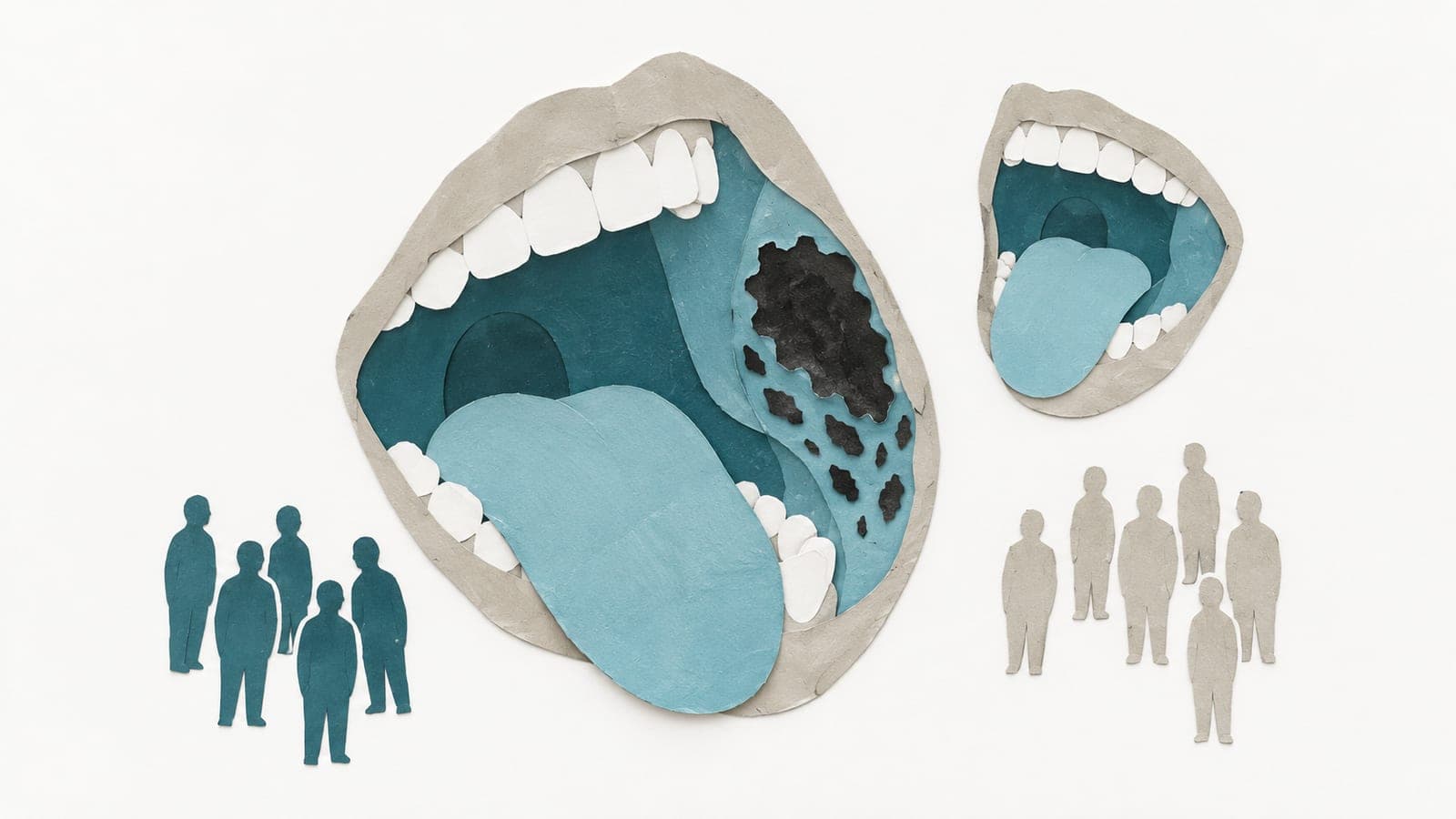
Trends in oral cancer mortality in China from 2004 to 2021
Abstract
Objective: To analyze the level and trend of oral cancer mortality in China from 2004 to 2021. Methods: Mortality data were derived from the national mortality surveillance dataset of China's Disease Surveillance Points System (2004-2021) released by the Chinese Center for Disease Control and Prevention. Age-standardized mortality rates (ASMR) were calculated using the 2010 Chinese standard population. Joinpoint analysis, age-period-cohort (APC) analysis, and decomposition analysis were employed to examine the oral cancer mortality rates across different years and among populations with varying demographic characteristics. Results: From 2004 to 2021, the age-standardized mortality rate (ASMR) of oral cancer in China exhibited a significant downward trend (EAPC=-0.70, P=0.001). This decline was pronounced in urban areas (EAPC=-1.44, P<0.001), whereas rural areas showed a stable trend (EAPC=-0.24, P=0.27). The age effect indicated that mortality risk increased with age in both urban and rural populations. The period effect revealed a decreasing trend in period-specific relative risk (RR) for urban residents. The cohort effect demonstrated that more recent birth cohorts in urban areas had progressively lower mortality risk. Decomposition analysis identified population growth as the primary driver of oral cancer deaths, followed by population aging, in both urban and rural areas. Conclusions: From 2004 to 2021, the overall ASMR of oral cancer in China declined significantly, with notable disparities across urban-rural, gender, and age groups. In urban areas, both period and cohort effects showed favorable trends, with mortality risk decreasing over time and across successive birth cohorts.
The paper
Wuhan University
Zhonghua Kou Qiang Yi Xue Za Zhi, 1 Sep 2026
doi.org/10.3760/cma.j.cn112144-20260203-00087PubMed 42677437