Mediterranean diet linked to weaker smoking-related aging signals
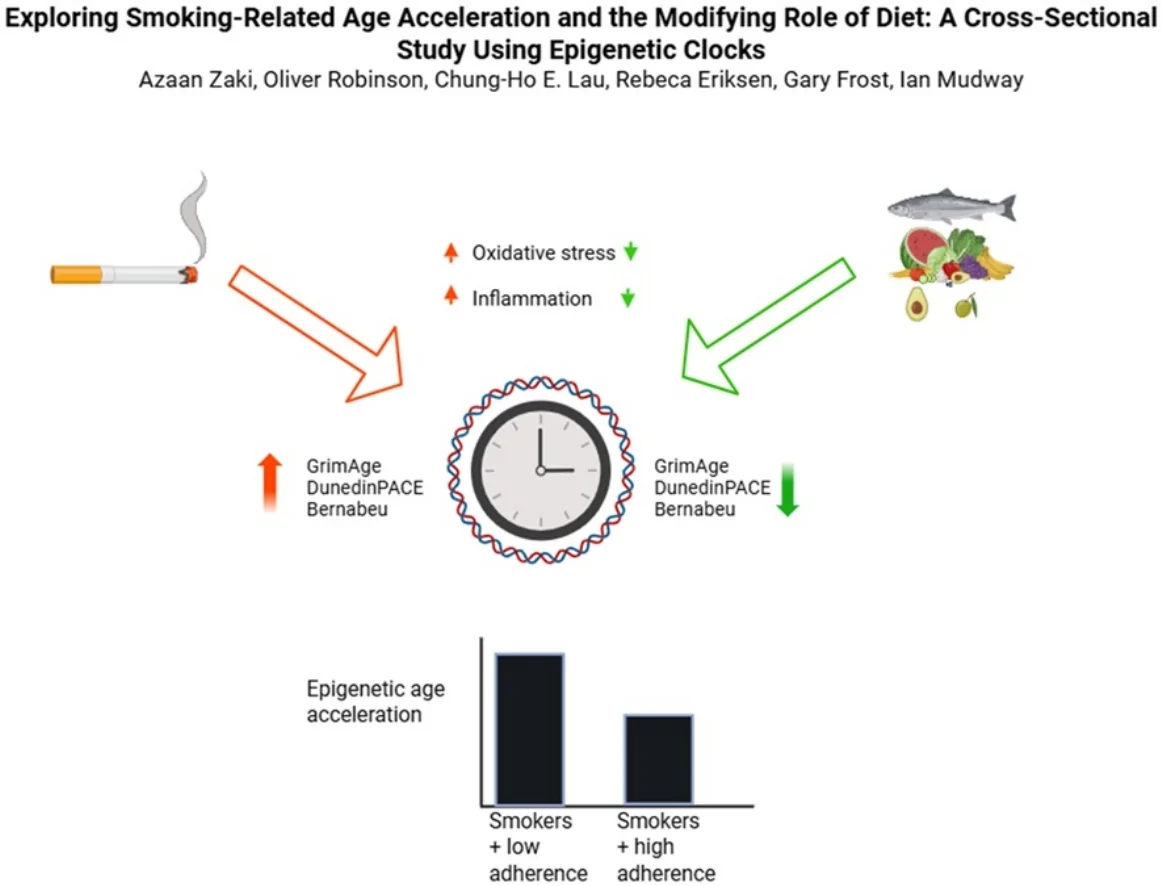
A cross-sectional analysis of 928 police employees linked closer Mediterranean diet adherence to smaller smoking-associated differences in blood-based aging measures.
Limit: Food-diary completers may differ from noncompleters, biasing the diet–aging association
Edited by Boris Djordjevic · AgingResearch.News
This cross-sectional analysis included 928 police employees in Great Britain, with a mean age of 41 years; 59% were male. Researchers compared seven-day food diaries and smoking measures with 11 epigenetic clocks—measures of biological aging based on chemical tags on DNA in blood cells.
Higher Mediterranean diet scores were linked to younger clock readings relative to age on two measures, GrimAge and Bernabeu. Smoking was associated with higher readings, but the difference was smaller with closer diet adherence. For GrimAge, current smokers’ readings exceeded never smokers’ by 1.79 standard deviations in the lower-adherence group and 1.35 in the higher-adherence group. These units describe differences relative to the spread of clock readings. Bernabeu showed a similar pattern, although evidence for a diet–smoking interaction among current smokers was weaker.
Why it matters
The authors suggest that certain biological aging clocks may help researchers study variation in responses to the combined influence of harmful and protective exposures.
Caveats
The cross-sectional design cannot establish cause and effect, and GrimAge incorporates smoking-related DNA signals. These blood-based markers do not show that diet neutralizes tobacco risks or extends life.
From the paper
- Participants
In total, 928 participants had complete data for both methylation and diet variables and were included in the final analysis.
- Result
Each standard deviation increase in MDS was significantly associated with lower EAA as measured by GrimAge (–0.07 SD, 95% CI: –0.13, –0.01, FDR p = 0.033) and BernabeuAA (–0.08 SD, 95% CI: –0.14, –0.02, FDR p = 0.033).
- Limitation
The cross-sectional design limits causal inference, and the predominantly white occupational cohort may restrict generalisability.
Quoted word for word from the full text on PubMed Central.
The paper
MRC Centre for Environment and Health
The Journal of Nutrition, Health & Aging, Aug 28, 2026, Open access
