Computerized speed training raises brain scan signal in older adults
In a randomized trial of 92 older adults, 10 weeks of speed-based computerized training increased a brain-scan marker of nerve signaling more than non-speeded games.
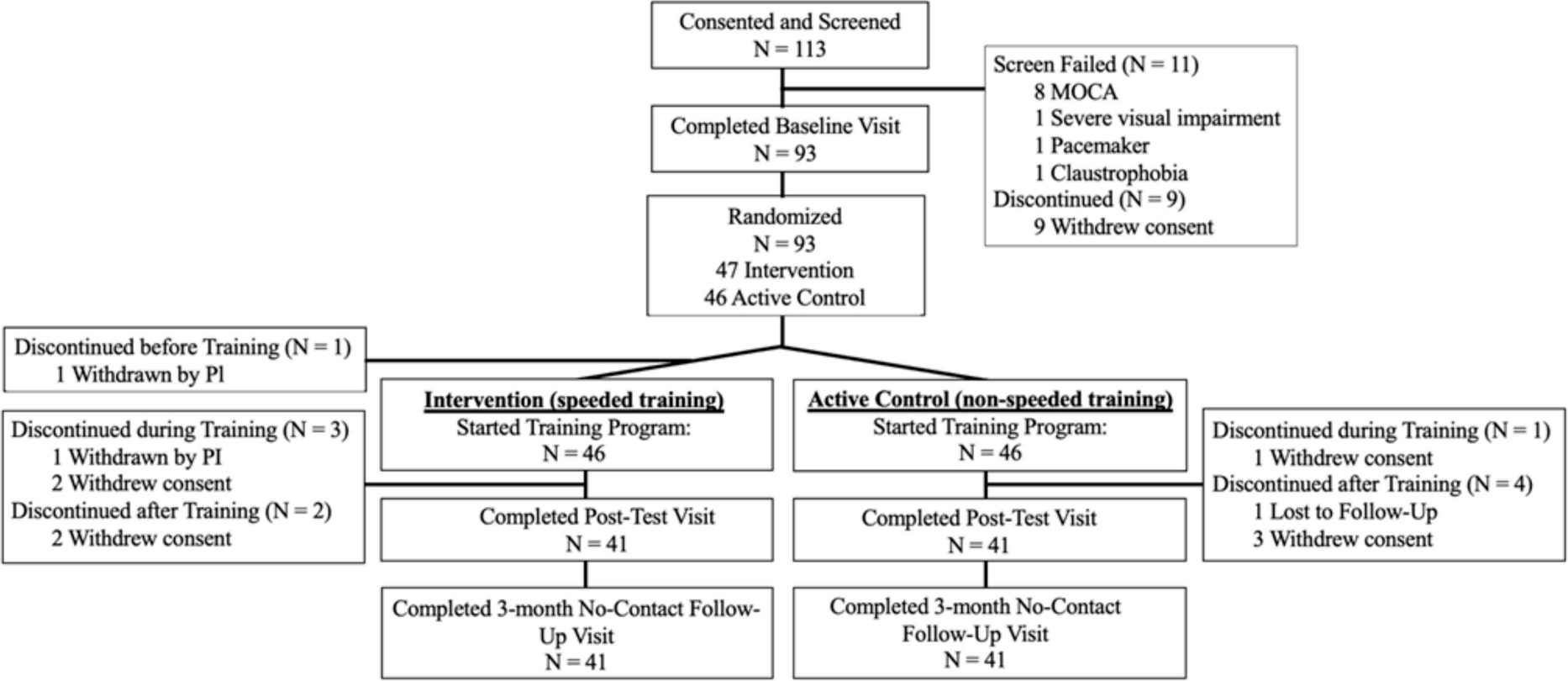
92 participants, 10 weeks, double-blind
Limit: Unmeasured tau-related degeneration could affect baseline cholinergic signal or training responses
Edited by Boris Djordjevic · AgingResearch.News
In a randomized clinical trial, researchers studied 92 cognitively intact adults aged 65 and older, with an average age of 71.9 years; 66% were women. Participants completed 35 hours over 10 weeks of either computerized speed-based exercises or non-speeded computer games. Brain scans measured binding of a tracer to nerve endings that use acetylcholine, a chemical messenger involved in learning and attention. This binding indicates the integrity of these nerve endings and their capacity for signaling.
The speed-training group showed significant increases in tracer binding across several brain regions. These increases were greater than in controls, who showed no significant change. The speed-training group improved more on practiced tasks, but overall measures of cognitive control showed no significant difference between groups.
Why it matters
The brain's acetylcholine signaling system degenerates with age. The authors identified its capacity to change as a potential target for efforts to help older adults maintain thinking abilities.
Caveats
Primary analyses included only 82 participants with before-and-after data, and group comparisons used brain regions selected because they changed in the training group. Binding changes were not significantly associated with cognitive improvements, and the findings may not apply to people with neurocognitive disorders, who were excluded.
From the paper
- Participants
A total of 93 participants completed the baseline assessments and were randomized to intervention (speeded training, N = 47) or active control (non-speeded training, N = 46), with 1 participant withdrawn by the site PI prior to engaging with the intervention.
- Who took part
The INHANCE trial is a double-blind, parallel-group, active-controlled randomized clinical trial designed to evaluate the superiority of a computerized speed-based cognitive training intervention over an active control condition in healthy older adults.
- Ages
The data from the intent-to-treat population (N = 92) included 46 participants each in the intervention and active control arms and were analyzed (mean age of 71.9 years, mean education of 16.5 years, 66% women).
- Duration
Participants completed 35 h of training over 10 weeks, using BrainHQ (Posit Science), or an active control consisting of non-speeded computer games.
- Result
The intervention group showed greater improvements than the active control group on the Double Decision task (z-score change difference: + 1.53, 95% CI 1.07 to 1.99, P < 0.001) and Freeze Frame task (z-score change difference: + 0.90, 95% CI 0.48 to 1.33, P < 0.001) at post-test.
- [18F]FEOBV cholinergic binding
Cluster-level summaries revealed greater training-related increases in FEOBV SUVR in the intervention group compared with controls (Table 2), indicating that, in clusters showing reliable training-related increases in FEOBV binding, the magnitude of change was greater in the intervention group than in the active control group …
Results, Between-group differences in ΔSUVR within training-responsive clusters
- Cognitive function
The strongest effect was observed in the right anterior cingulate cortex (cluster size: 251 voxels, peak MNI coordinates (x, y, z): 4.5 48 −4.5, peak T = 3.87, pFWE = 0.04).
Results, Baseline associations of whole-brain FEOBV binding with age and cognitive performance
Quoted word for word from the full text on link.springer.com.
The paper
Montreal Neurological Institute and Hospital
GeroScience, Aug 27, 2026, Open access

