Blood chemical patterns linked to aging markers and health
Blood chemical scores showed moderate correlations of 0.21–0.36 with DNA-based aging measures in an internal test group of older Chinese adults.
7,162 participants, cohort study, independent replication
Limit: Epigenetic aging could change blood metabolites rather than the reverse
Edited by Boris Djordjevic · AgingResearch.News
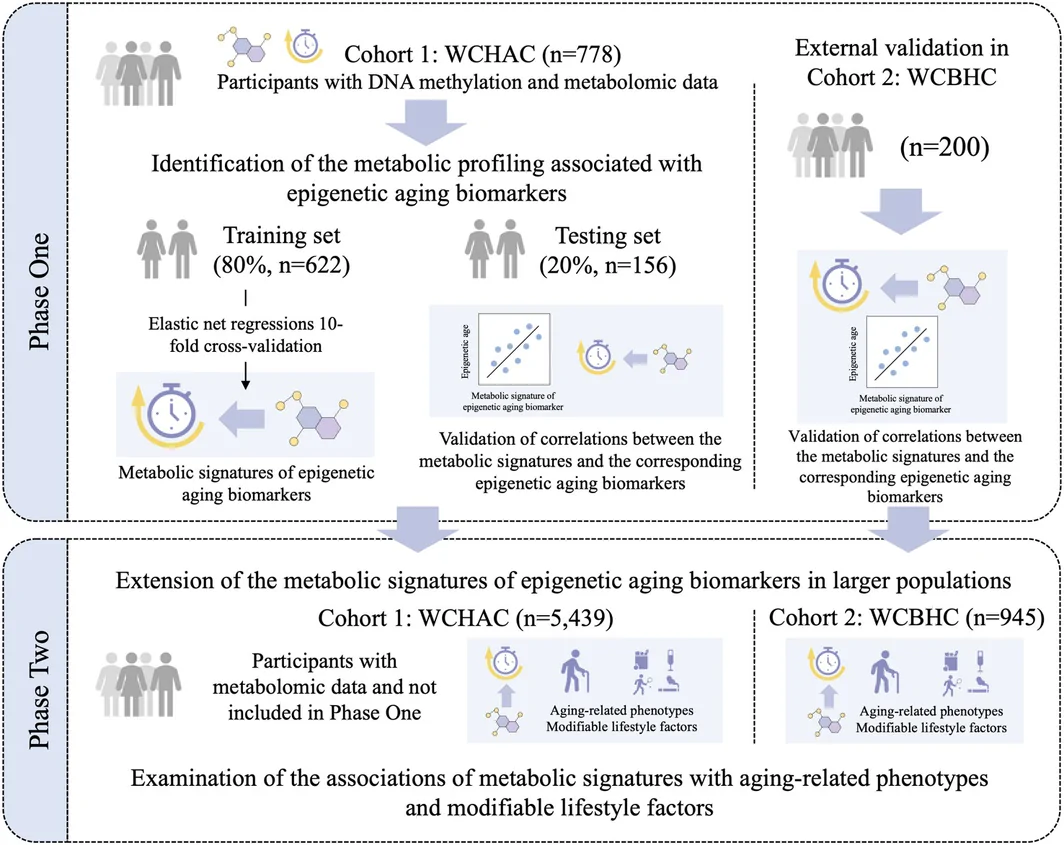
In an observational study, researchers analyzed data from 7,162 older Chinese adults in two cohorts. The primary cohort enrolled community-dwelling women and men aged 54 and older. Researchers measured 221 small molecules in blood and built chemical-pattern scores using 778 participants with both chemical and DNA data. The DNA aging measures relied on patterns of chemical tags on DNA.
In a separate primary-cohort group of 5,439 participants, the chemical scores had 279 associations with health measures, including diseases, poorer health status and unfavorable clinical test results. Gallstones, chronic kidney disease and hepatitis were linked to multiple scores. Smoking, alcohol use, body mass index—a measure of weight relative to height—and physical activity were also associated with the scores. Three of five scores tracked their corresponding DNA aging measures in the independent validation cohort.
Why it matters
DNA-based aging markers aim to capture biological aging. The authors suggest that their metabolic counterparts may offer indicators of declining body function and lifestyle effects.
Caveats
The baseline observational analysis cannot establish cause and effect or whether the scores predict future health decline; some diseases were self-reported. The findings concern older Chinese adults, and the primary analyses excluded people with cancer.
From the paper
- Participants
A total of 5439 participants (55.47% female, median age: 68 years) were included in Phase Two.
Results, Associations With Aging‐Related Phenotypes and Modifiable Factors
- Limitation
The observed associations between epigenetic aging biomarkers and metabolites may be bidirectional.
Quoted word for word from the full text on PubMed Central.

