Lower cognitive scores linked to failed emergency-call tasks
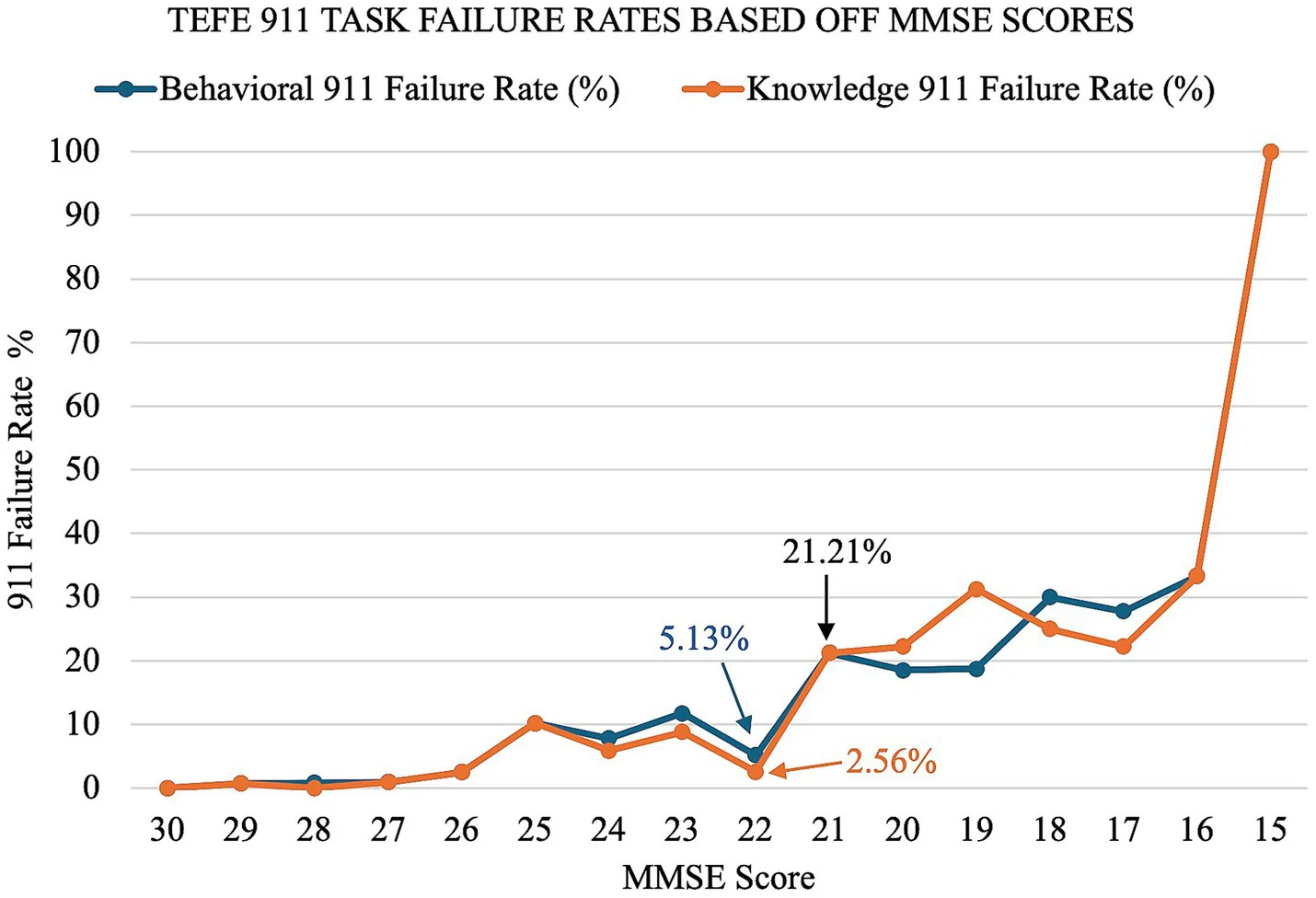
Memory-clinic patients scoring 21 or lower had 3.71 times the adjusted odds of failing emergency-call tasks compared with those scoring above 21.
Limit: The dementia groups excluded patients with moderate or severe dementia
Edited by Boris Djordjevic · AgingResearch.News
A retrospective cross-sectional study examined records from 905 memory-clinic patients aged 60 or older with mild dementia, mild cognitive impairment or normal cognition. Patients completed the Mini-Mental State Examination, a 30-point cognitive screening test, and a practical emergency assessment. The emergency tasks tested whether they could name 911 and dial it independently, without prompting.
Scores of 21 or lower were associated with higher odds of failing at least one emergency task after accounting for age, education, sex, race and diagnosis. This cutoff identified 61.9% of patients who failed either task. Among those who passed both tasks, 88.9% scored above 21.
Why it matters
Emergency-response ability matters for older adults’ independence as cognition declines. The authors suggest that patients scoring 21 or lower may warrant further practical assessment of this ability.
Caveats
This cross-sectional analysis measured test performance, not responses to real emergencies, and selected its main outcomes retrospectively. Patients came from one memory clinic, and the dementia groups excluded moderate and severe cases.
- Mild cognitive impairment
- Mini-Mental State Examination
- Alzheimer's disease
- Cognitive decline
- Mixed dementia
- Humans
The paper
University of North Texas
Frontiers in Aging Neuroscience, Aug 7, 2026, Open access

Comments
Be the first to comment.