Eye photos help artificial intelligence detect artery plaque
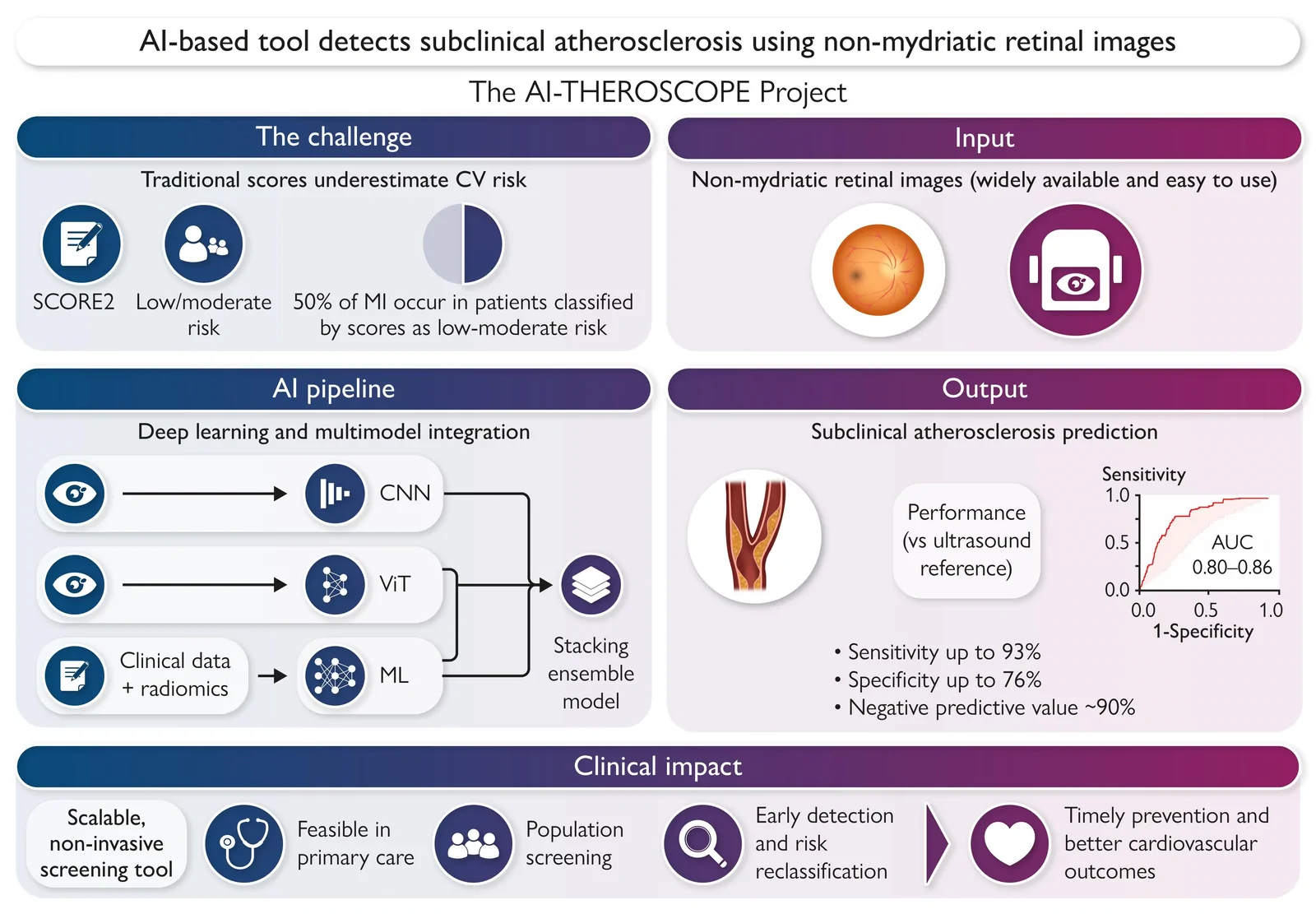
The model’s score for distinguishing people with and without plaque rose from 0.80 with retinal images alone to 0.86 with added clinical information.
Our read
Biomarkers- Studied:
- Cohort study of 931 people
Editor of record: Boris Djordjevic · AgingResearch.News
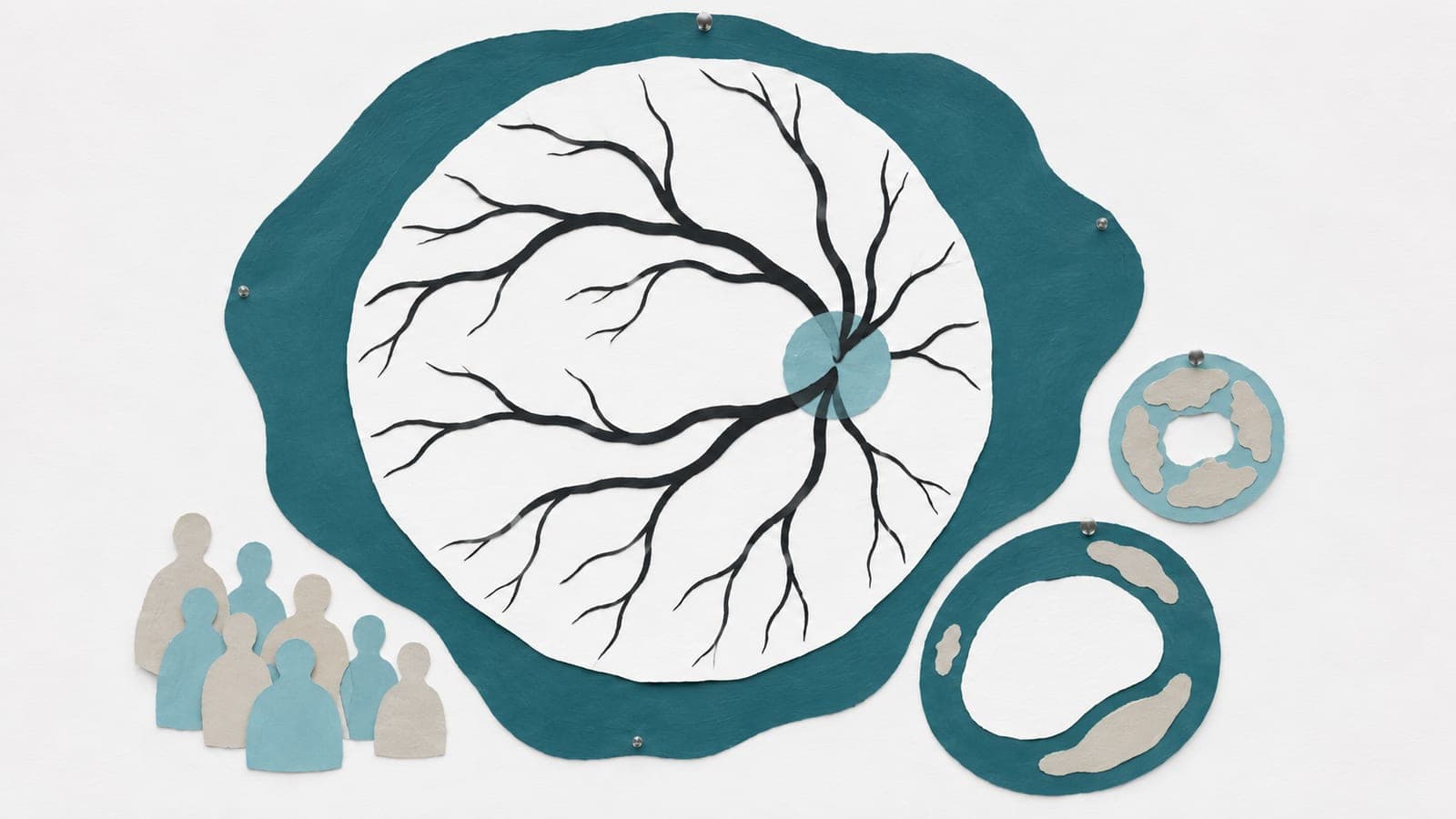
Adults without prior cardiovascular disease—931 people averaging 52.6 years of age, 70.2% women—underwent eye imaging and artery scans in a prospective observational study at a Madrid hospital. Photographs captured the retina, the light-sensitive layer at the back of the eye. Ultrasound scans of neck and groin arteries checked for atherosclerosis, a buildup of plaque in arteries.
The researchers developed an artificial intelligence model using 781 participants and tested it in a separate group of 150. Adding age, sex, high blood pressure, diet and smoking information to retinal images improved its ability to distinguish people with and without plaque. This version identified 93.4% of participants with plaque, compared with 88.2% using images alone. Performance was better in younger people and those at low-to-intermediate cardiovascular risk.
Why it matters
Cardiovascular risk scores may underestimate risk in younger people with prolonged exposure to risk factors. The authors suggest retinal imaging may help identify high-risk people earlier.
Caveats
The model was tested in 150 people at the same Madrid hospital used for development, rather than at other centers. The study excluded people with prior cardiovascular disease and several serious retinal conditions.
From the paper
- Participants
A total of 931 patients were included in the final analysis.
- Result
Subgroup analysis by sex showed no statistically significant difference in model discrimination between women (AUC 0.83; 95% CI: 0.74–0.92) and men (AUC 0.86; 95% CI: 0.77–0.96; P = 0.63 for the difference) in enhanced mode, indicating consistent performance across sexes.
- Limitation
Although prospective, this was a single-centre study conducted in a selected population of healthcare workers and their relatives, which may limit the generalizability of the findings.
Quoted word for word from the full text on PubMed Central.
The paper
Universidad Complutense de Madrid
European Heart Journal Digital Health, Aug 10, 2026, Open access
Comments
Be the first to comment.