Loneliness and isolation linked to fewer years free of mental disorder
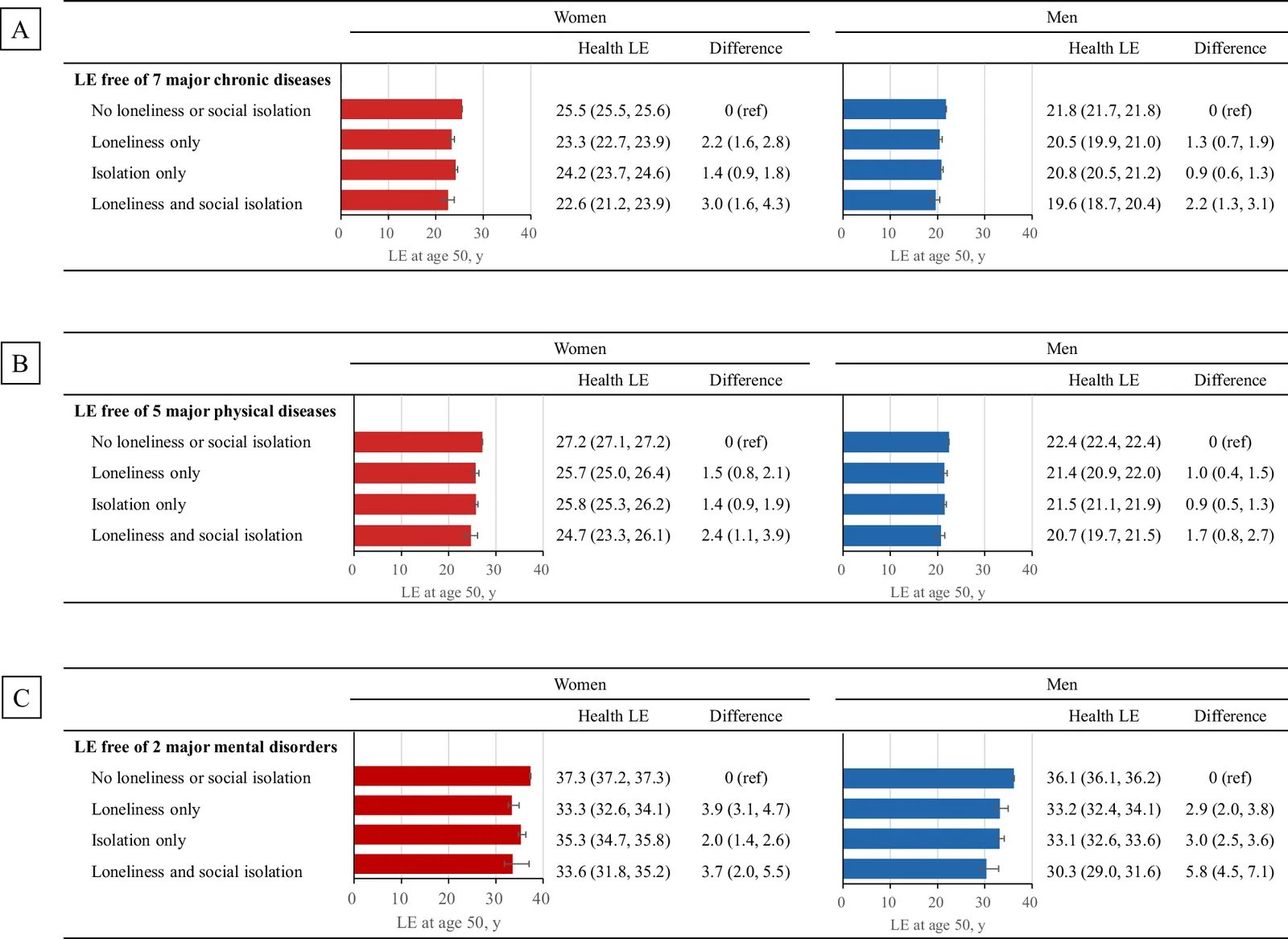
At age 50, women and men reporting both had an estimated 3.7 and 5.8 fewer years without depression or anxiety, respectively, than those reporting neither.
Limit: Disease-free life expectancy was modeled rather than observed over a lifetime
Edited by Boris Djordjevic · AgingResearch.News
An observational cohort study followed 277,489 UK Biobank women and men aged 40 to 69 at recruitment, initially free of seven major chronic diseases, including depression and anxiety. Researchers assessed loneliness and social isolation through questionnaires. They tracked new diagnoses over a median of 13.4 years and used hospital and death records to model disease-free life expectancy from age 50.
Compared with people reporting neither, those with both loneliness and isolation had an estimated 2.4 fewer years free of physical disease among women and 1.7 among men. The gaps for years without depression or anxiety were larger: 3.7 in women and 5.8 in men. Healthier lifestyles were associated with a narrower disease-free life expectancy gap linked to isolation. The corresponding narrowing for loneliness was not statistically significant.
Why it matters
Healthy aging concerns years lived without major illness, not just total lifespan. This study examined how social connection relates to that span for physical and mental health.
Caveats
This observational study cannot establish cause and effect, and life expectancy was modeled rather than observed over a lifetime. The findings concern adults initially free of the seven diseases studied, not people already living with those conditions.
The paper
Tulane University
Nature Communications, Aug 20, 2026, Open access


