Scale-Aware Compositional Inference Improves Reproducibility and Uncovers Convergent Aging Programs in Spatial Transcriptomics
Abstract
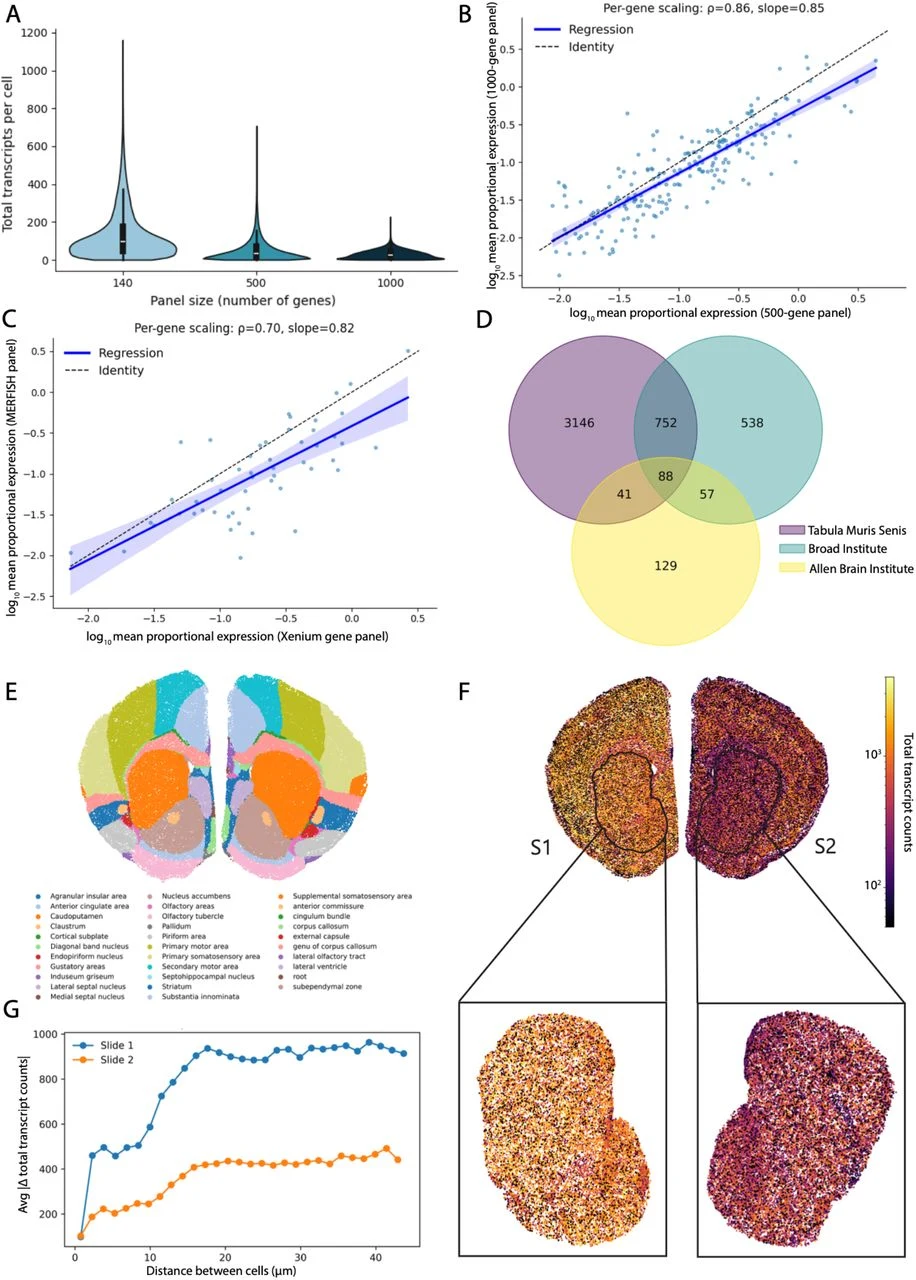
Spatial transcriptomics enables analysis of molecular organization with anatomical context. Existing spatial differential expression methods are restricted to within-sample inference, forcing between-sample comparisons to rely on approaches adapted from single-cell RNA-seq. Here, we establish a scale-aware inference framework for spatial differential expression by modeling compositional constraints and variation in total RNA abundance rather than removing them through normalization, enabling calibrated between-sample inference at cell-level resolution. Our method produces more reliable results in simulated data and different spatial platforms. When applied to aged mouse brains, the analysis reveals converging aging-associated programs involving cellular signaling, membrane homeostasis, and neurovasculature across independent datasets.
The paper
Pennsylvania State University
bioRxiv, 30 Jul 2026, Preprint, not peer-reviewed