Transcriptomic longevity modules predict life span-extending compounds in roundworms
Researchers built a predictive model in roundworms, validated ten life-extending compounds, and identified conserved aging modules linked to frailty in mice.
Science Advances
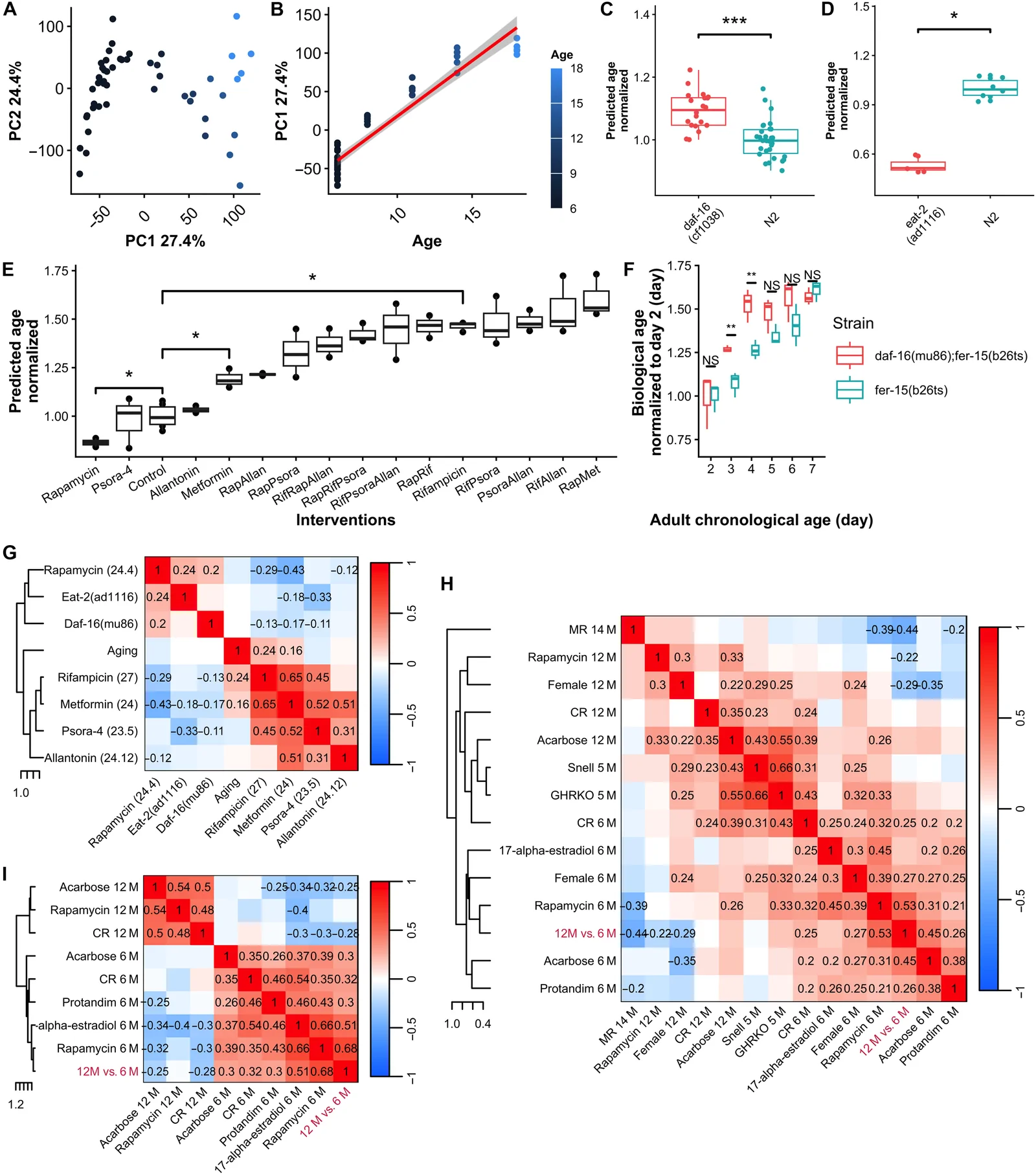
In the nematode Caenorhabditis elegans, researchers built a computational model to predict potential geroprotective compounds by analyzing gene expression changes. The team deconstructed the aging transcriptome into coexpression modules, identifying specific sets of genes modulated by known lifespan-extending interventions. Many of these longevity-associated modules displayed adaptive alterations during natural aging. Using this framework, the authors predicted and tested candidate interventions, validating 10 compounds that significantly extended the lifespan of C. elegans, including seven previously unreported molecules. RNA sequencing of the two top candidates confirmed that they specifically modulated the target longevity-associated modules. Furthermore, the researchers found that several of these functional modules are conserved in mice, where their expression patterns correlate with physical frailty.
Why it matters
The work demonstrates that beneficial transcriptomic adaptations naturally occur during aging. Targeting these conserved, longevity-associated gene networks provides a structured framework for discovering geroprotective interventions.
Caveats
Lifespan extension was established only in roundworms, and mammalian findings were limited to transcriptomic correlations with frailty in mice rather than tested lifespan effects.
The paper
Show 15 more authors
Qingyun Wang, Kamil Pabis, Zhuangli Yee, Shivaanisha Raventhiran, Shou-Ping Guan, Shermaine Thein, Stephen D. Raj, Jun Tan, Angelica Faye Ga, Sharah Mae Capinpin, Diogo Barardo, Qing Zhang, Zongmin Liu, Esther S.P. Wong, Brian Keith Kennedy,National University of Singapore
Science Advances · 30 Sep 2026