Lab-grown human brain models recorded developmental time
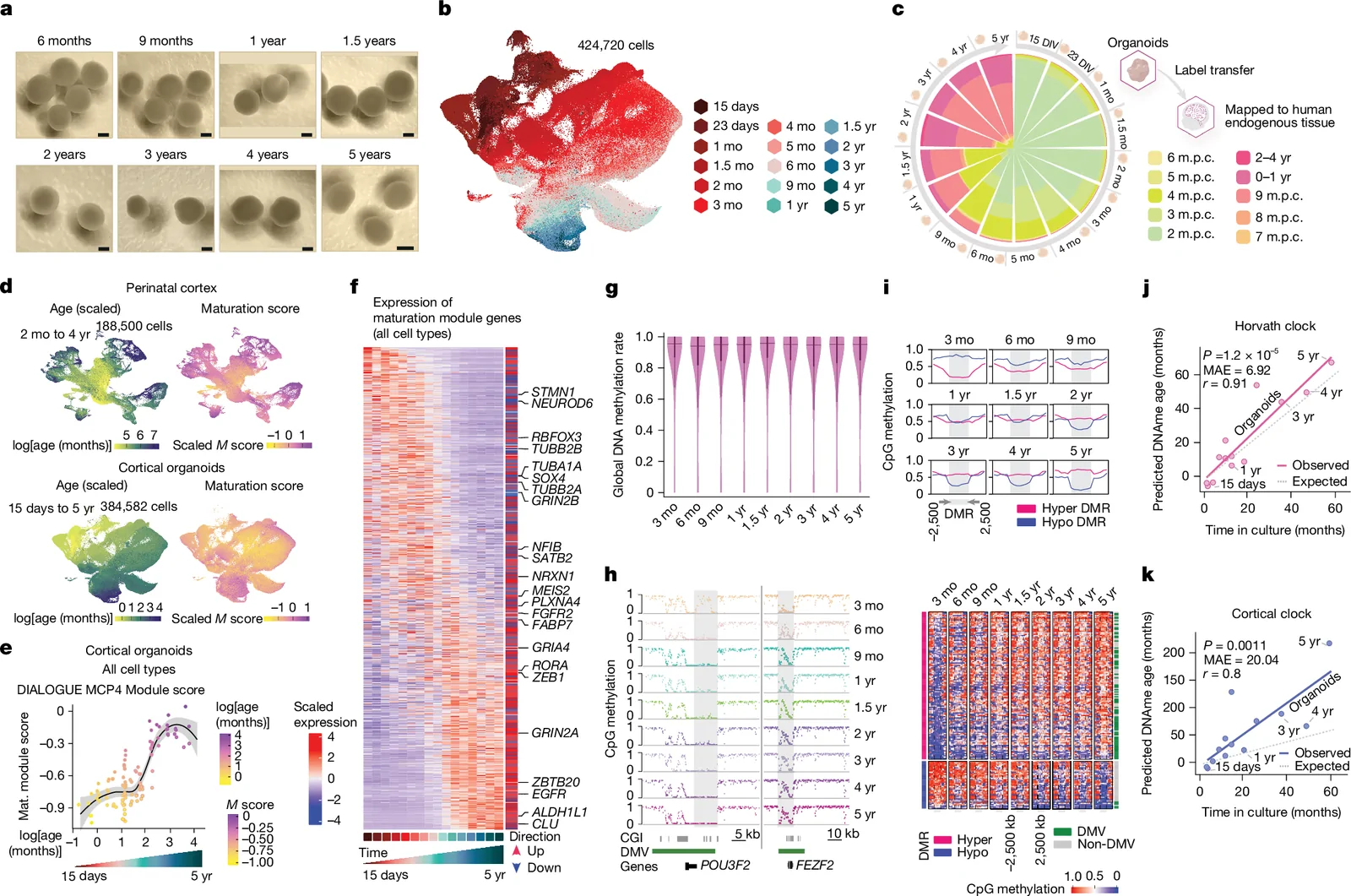
Human brain organoids grown for five years showed cell-type-specific changes in gene activity and DNA-based age estimates that tracked time in culture.
Our read
Mechanisms- Studied:
- Experiments in human brain organoids, 5 years
- What changed:
- Predicted epigenomic age of organoids correlated precisely with time spent in vitro, paralleling epigenomic aging in vivo
- The catch:
- Only 34 organoids were analyzed from six months to five years
- Stake:
- An author founded Celsius Therapeutics and holds shares in it. An author holds shares in Immunitas Therapeutics. Authors also declare ties to 2 more companies.
- Why it’s aging research:
- Change across ages, or exceptional longevity.
Editor of record: Boris Djordjevic · AgingResearch.News
Human cortical organoids—lab-grown cell clusters modeling the brain’s outer layer—continued to mature in experiments lasting more than five years. Researchers analyzed gene activity in 34 organoids collected from six months to five years, alongside earlier data from 76 organoids.
Gene activity changed with time in patterns resembling human brain maturation, with differences between cell types. Gene activity patterns resembling those seen after birth emerged after 12 months in culture. Age estimates based on DNA methylation, chemical tags on DNA, closely tracked time spent in culture and paralleled changes in the human brain.
Why it matters
The human brain’s long maturation period is difficult to study experimentally. This work supports using organoids to investigate how brain cells keep track of developmental age.
Caveats
The experiments used lab-grown organoids, not intact human brains. They studied development and maturation, not aging-related decline in older people.

Comments
Be the first to comment.