External conditioning of data collection enhances the information content from wearable sensors
Non-randomised trial, registered NCT04198194
Abstract
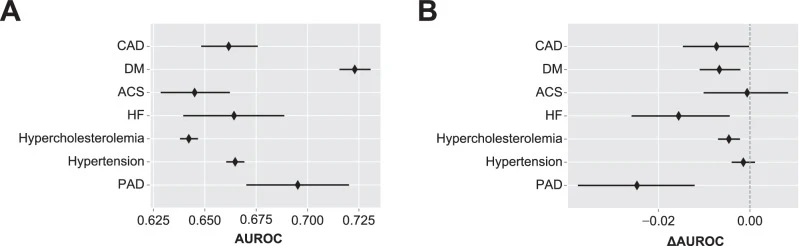
Heart rate variability (HRV) has well-documented associations with cardiometabolic disease. However, HRV is also affected by a wide range of other factors. We hypothesized that the presence of specific passive context or external structured conditions to the collection of physiologic data might enhance the information content of these data. To test this, we analyzed HRV (specifically SDNN) collected during different contexts ("perturbations") using data from the Apple Heart and Movement Study (AHMS). We measured HRV's association with seven cardiometabolic diseases using the area under the receiver operating characteristic curve (AUROC). We first examined the effect of two passive perturbations that controlled for circadian variation. We then explored the effect of an active perturbation, specifically a mindful-breathing session (mindful HRV). While the passive perturbations did not result in significant increases in information content for any cardiometabolic phenotypes, mindful HRV added discriminant information for all seven cardiometabolic diseases (difference in AUROC 0.026-0.180 compared with non-mindful HRV). After adjusting for age, sex, and BMI, the advantage of mindful HRV remained significant for five diseases. Active perturbations, enhanced the signal for cardiometabolic status and emphasize the utility of real-time triggers for adding information content to ambient recording using wearables. (ClinicalTrials.gov Identifier: NCT04198194 , 2019/12/13, Apple Heart & Movement Study).
- Mindful breathing
- Mindful-breathing session
- Digital and wearable data
- Cardiometabolic disease
- Heart rate variability
- Humans
The paper
Brigham and Women's Hospital
NPJ Cardiovascular Health, 30 Jul 2026, Open access


