Cuffless sensor agreed with a cuff-based blood pressure monitor
In device tests, a single detector tracked the wrist artery’s diameter and captured features of blood pressure patterns, supporting potential for continuous monitoring.
Nature Communications
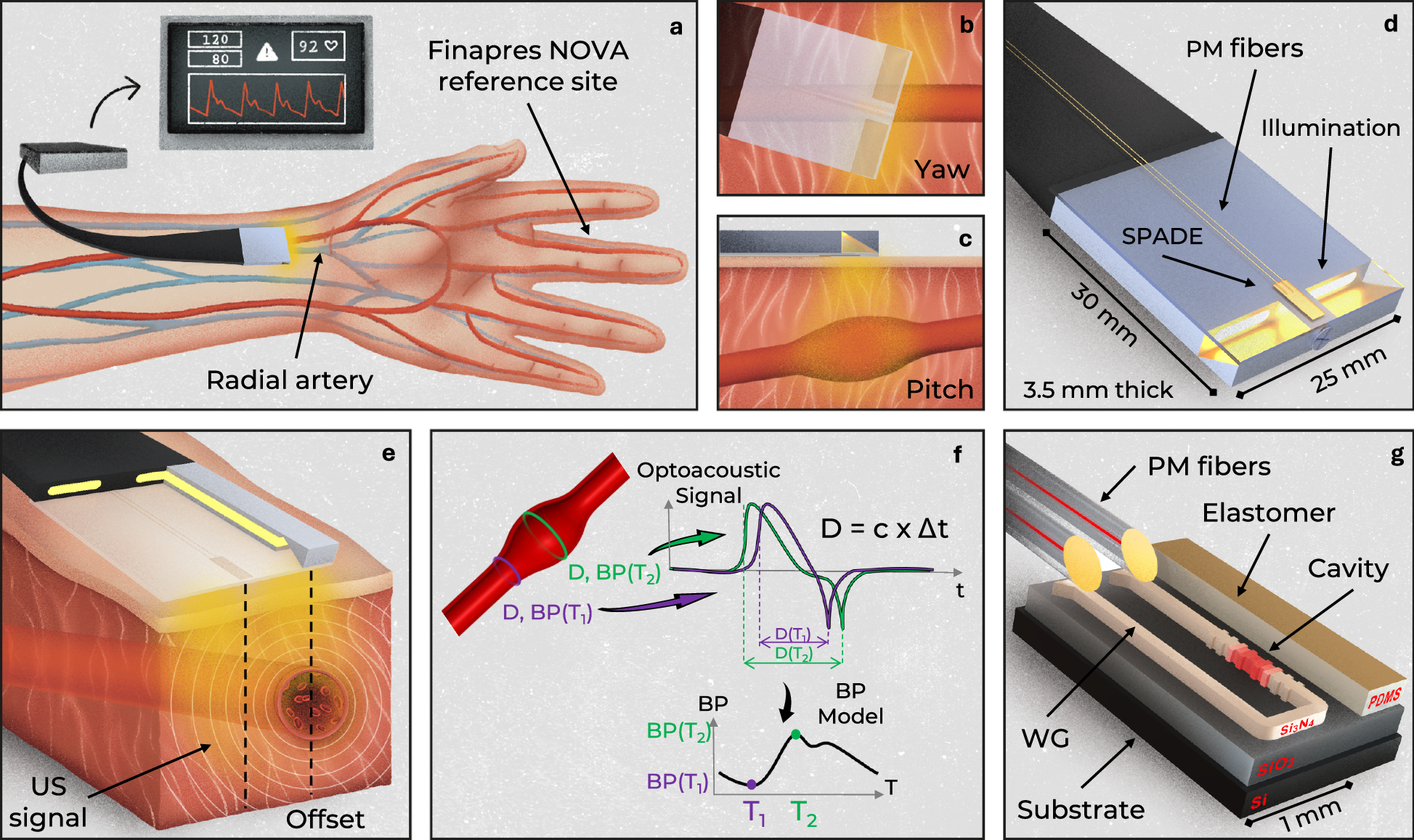
A miniaturised sensor measured signals from the radial artery, an artery at the wrist, in an experiment testing cuffless blood pressure monitoring. The device used light to generate ultrasound waves inside the artery. A single detector tracked changes in the artery’s diameter and tolerated shifts in position and rotation.
The detector measured artery signals 100 times per second, capturing features of the blood pressure waveform—the pattern of pressure changes with each heartbeat. The device’s readings agreed with a reference cuff-based monitor. The researchers said this agreement highlighted the approach’s potential for continuous blood pressure monitoring in daily life.
Why it matters
Cardiovascular assessment is relevant to health in later life. The work addresses whether continuous blood pressure monitoring could become practical in daily life.
Caveats
The abstract does not describe the testing population, sample size or numerical level of agreement. Agreement with a cuff-based monitor alone does not establish reliable continuous monitoring in daily life.
The paper
Silicon-photonics optoacoustic sensor for fully wearable blood pressure monitoring
Technion – Israel Institute of Technology
Nature Communications · 17 Sep 2026 · CC BY