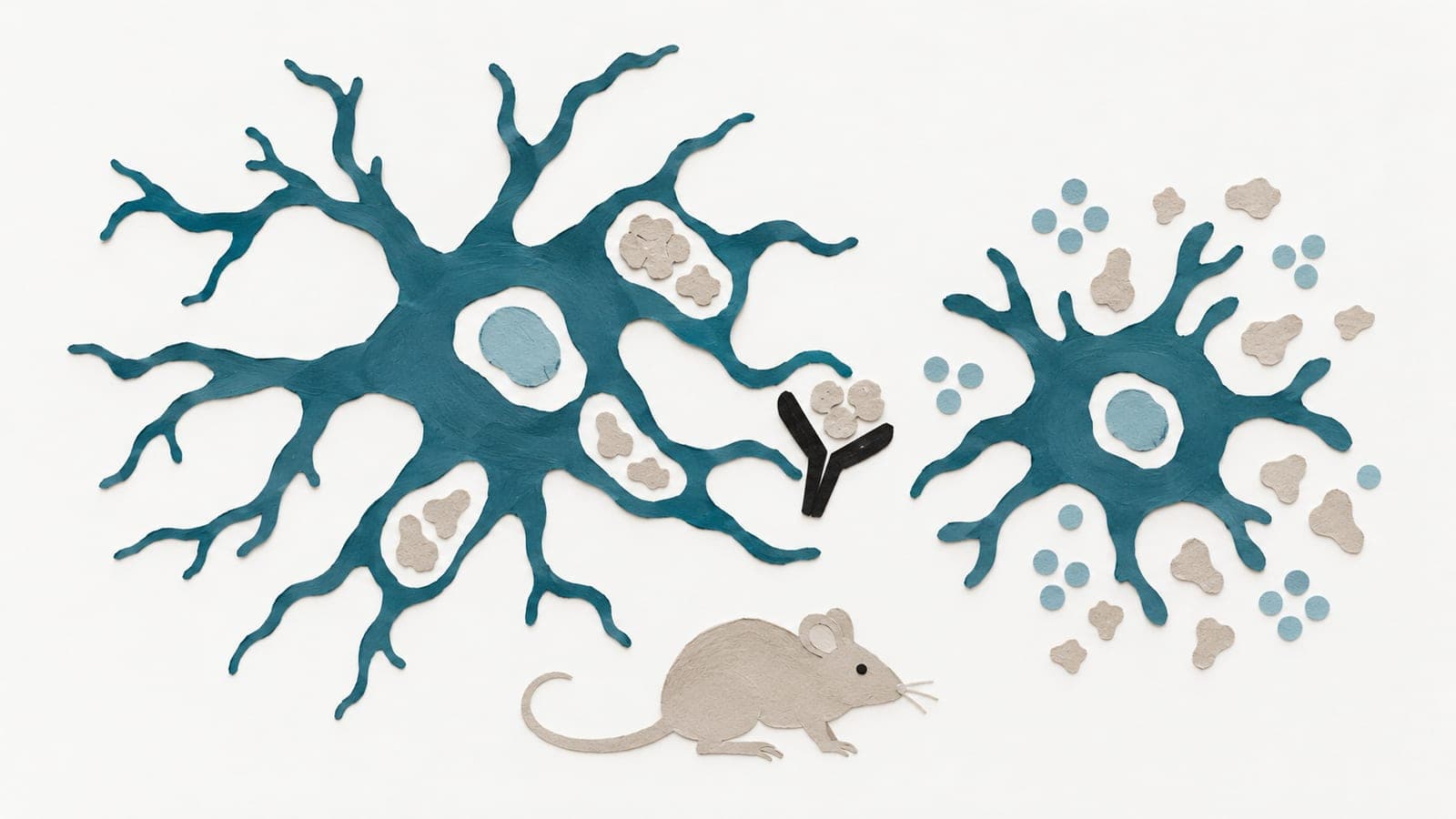
Gene deletion reduced brain inflammation in aged mice
In animal experiments, aged mice lacking the gene also showed better motor function and less anxiety-like behavior than mice with the gene intact.
Edited by Boris Djordjevic · AgingResearch.News
In an animal experiment, researchers studied aged mice lacking xCT, a protein in a system that releases glutamate, a chemical messenger. They also tested microglia, the brain’s immune cells, in the lab.
Levels of xCT rose in microglia with aging. Deleting xCT or blocking it with a drug reduced glutamate release from these cells. Aged mice lacking xCT had less of an inflammation-promoting protein in their brains than aged mice with the gene intact. They also had better motor function and showed less anxiety-like behavior. The researchers found no worsening of oxidative stress, an imbalance involving reactive molecules, and no change in nerve cell numbers. The authors identified microglial xCT as an important source of glutamate outside cells in the aging mouse brain.
Why it matters
Excess glutamate and brain inflammation contribute to age-related changes. The work addresses how the brain’s immune cells may connect these processes to changes in movement and behavior.
Caveats
The behavioral findings came from genetically altered mice, not a drug treatment or a study in people. The abstract does not report group sizes or the size of the behavioral effects.
The paper
Tottori University
Biochemical and Biophysical Research Communications, Jul 30, 2026