Charcot-Marie-Tooth disease variants of HSPB1 progressively alter neuromuscular signalling
Abstract
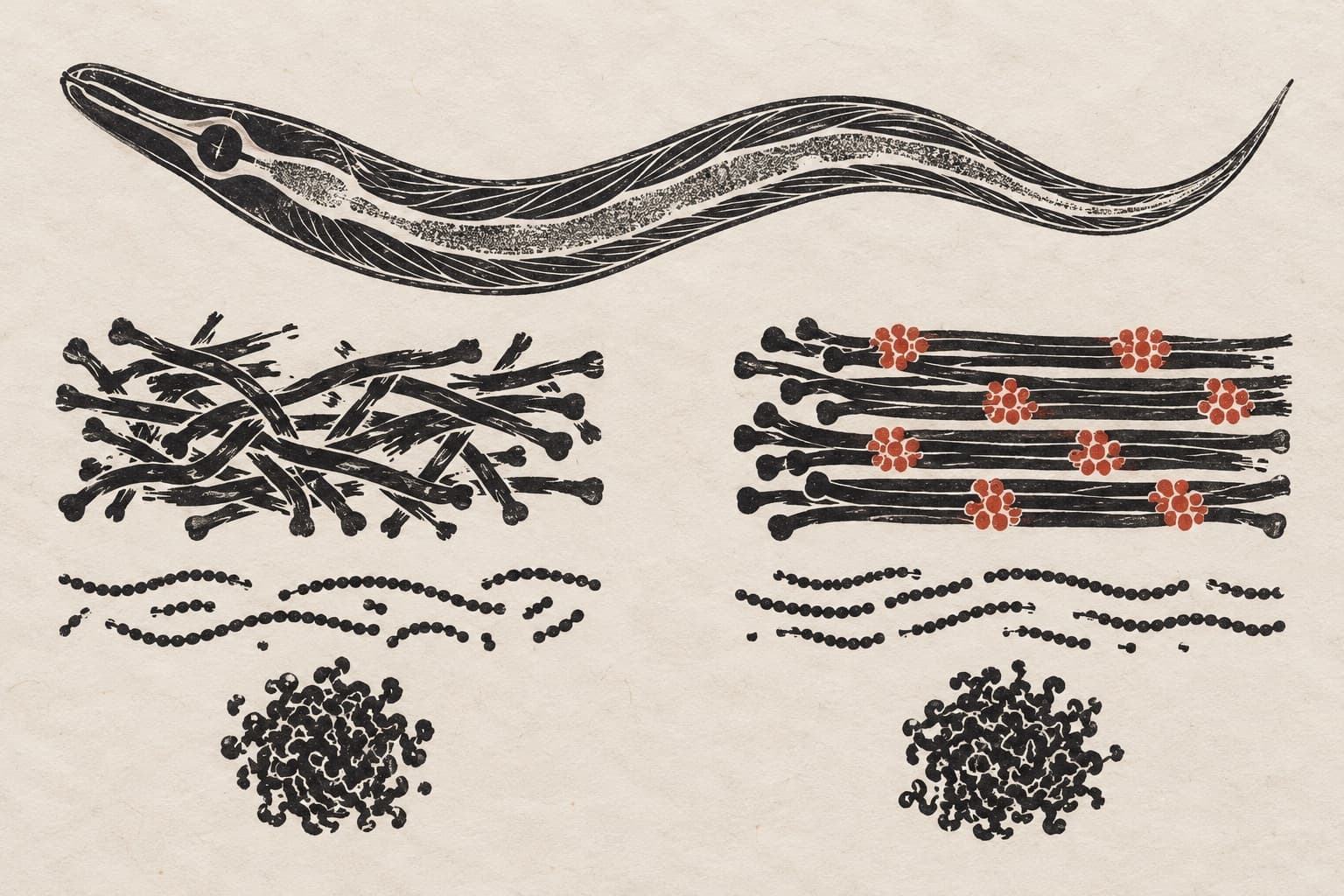
Autosomal dominant variants in HSPB1 can cause type 2 Charcot-Marie-Tooth disease, a progressive neuromuscular disorder. HSPB1 is a small, ATP-independent chaperone that functions in protein folding, stabilisation and stress protection, as well as regulating intracellular processes such as organization of the cytoskeleton. How diverse variants in HSPB1 exert progressive neuromuscular defects is unclear. Using a transgenic Caenorhabditis elegans model, we examined three distinct HSPB1 variants and determined that mutant HSPB1 caused an early defect in neuromuscular signalling strength as assayed by aldicarb sensitivity. Our data point to the effects being presynaptic in origin and unrelated to differences in expression of mutant HSPB1 compared with that of the wild-type protein. In contrast, the early defect in neuromuscular signalling may be a result of a general loss of small chaperone function. We also identified a progressive effect whereby age-dependent changes to neuromuscular signalling were accelerated in worms expressing mutant HSPB1. These effects were not mirrored by a general loss of small chaperone function; however, wild-type HSPB1 expression strikingly protected against progressive defects seen in controls. These results indicate a possible progressive mechanism for HSPB1-dependent neuromuscular defects.
- HSPB1
- Proteostasis
- Synaptic transmission
- Charcot-Marie-Tooth disease type 2
- Aldicarb sensitivity
- C. elegans
The paper
University of Liverpool
Disease Models & Mechanisms, Jul 23, 2026, Open access