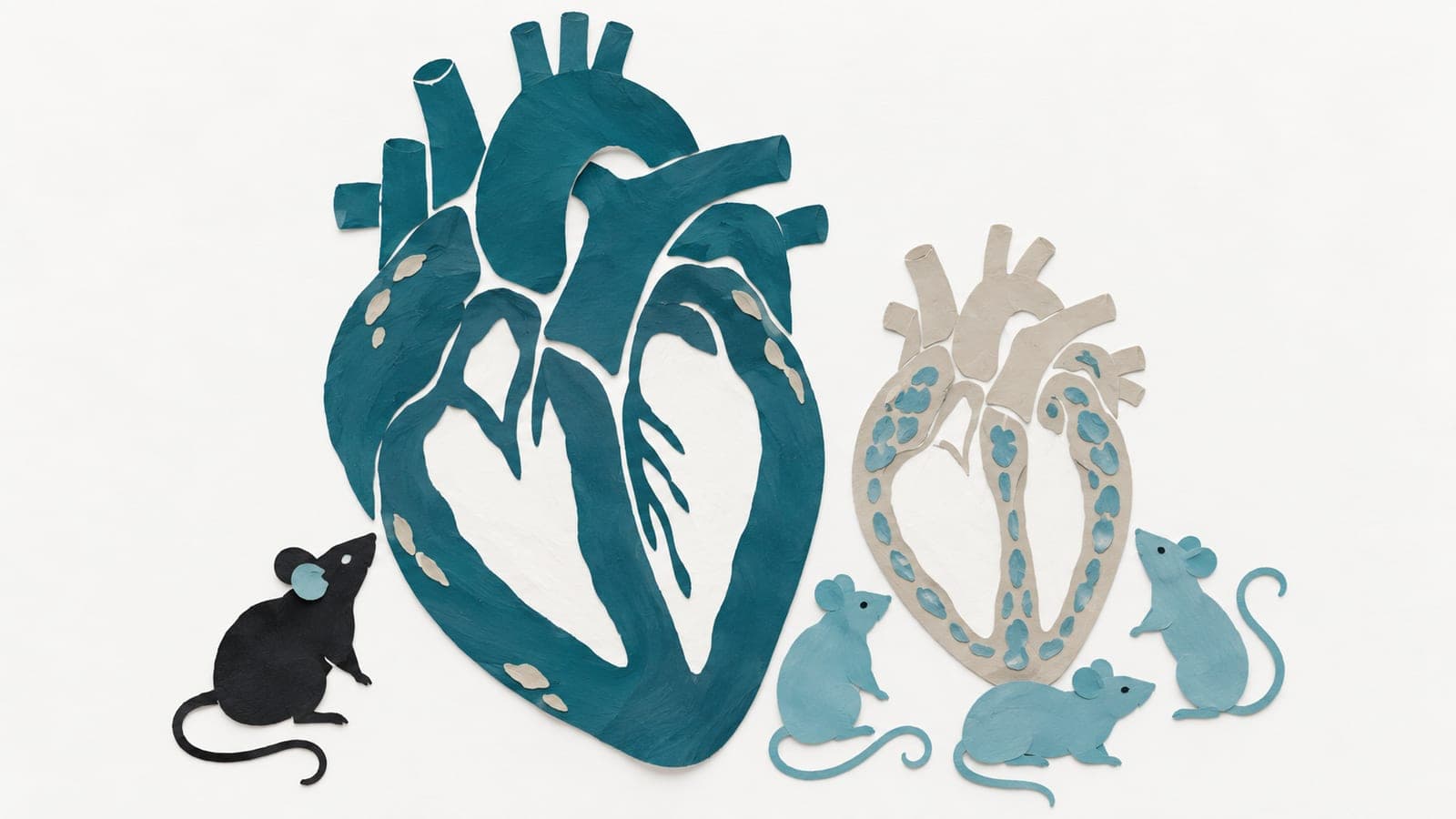
Heart aging paths diverged as male mice became frail
During frailty, variation in heart and artery aging rates increased two- to threefold compared with pre-frailty in a lifelong study of 58 male mice.
Limit: The study analyzed only long-lived mice surviving beyond the cohort median of 24 months
Edited by Boris Djordjevic · AgingResearch.News
In a longitudinal observational study, researchers tracked 58 male C57BL/6 mice with heart ultrasound every three months from six months of age until natural death. They focused on mice that lived beyond the cohort’s median lifespan of 24 months. Progressive weight loss after 18–21 months marked the transition to frailty.
During frailty, differences between mice in how quickly heart and artery measurements changed increased two- to threefold. These differences grew despite shared genetics and controlled housing. Arteries stiffened across life, while the heart’s main pumping chamber grew in mass even as body weight fell. The share of blood this chamber pumped out with each beat declined from 51% to 27%.
Why it matters
The work addresses why genetically similar animals can follow different paths of heart and artery aging. The authors propose that random biological processes play a dominant role in shaping these late-life trajectories.
Caveats
The observational design described aging trajectories but could not establish their biological causes. The study involved only male mice and focused on those surviving beyond 24 months.
The paper
National Institute on Aging
GeroScience, Jul 6, 2026, Open access