Sulfide supplements prevented heart enlargement in aging mice
In a mouse experiment, dietary supplementation begun at 9 months restored metabolic balance in the heart and prevented decline across the body.
Limit: The conference abstract did not report sample sizes, supplement doses or numerical effect sizes
Edited by Boris Djordjevic · AgingResearch.News
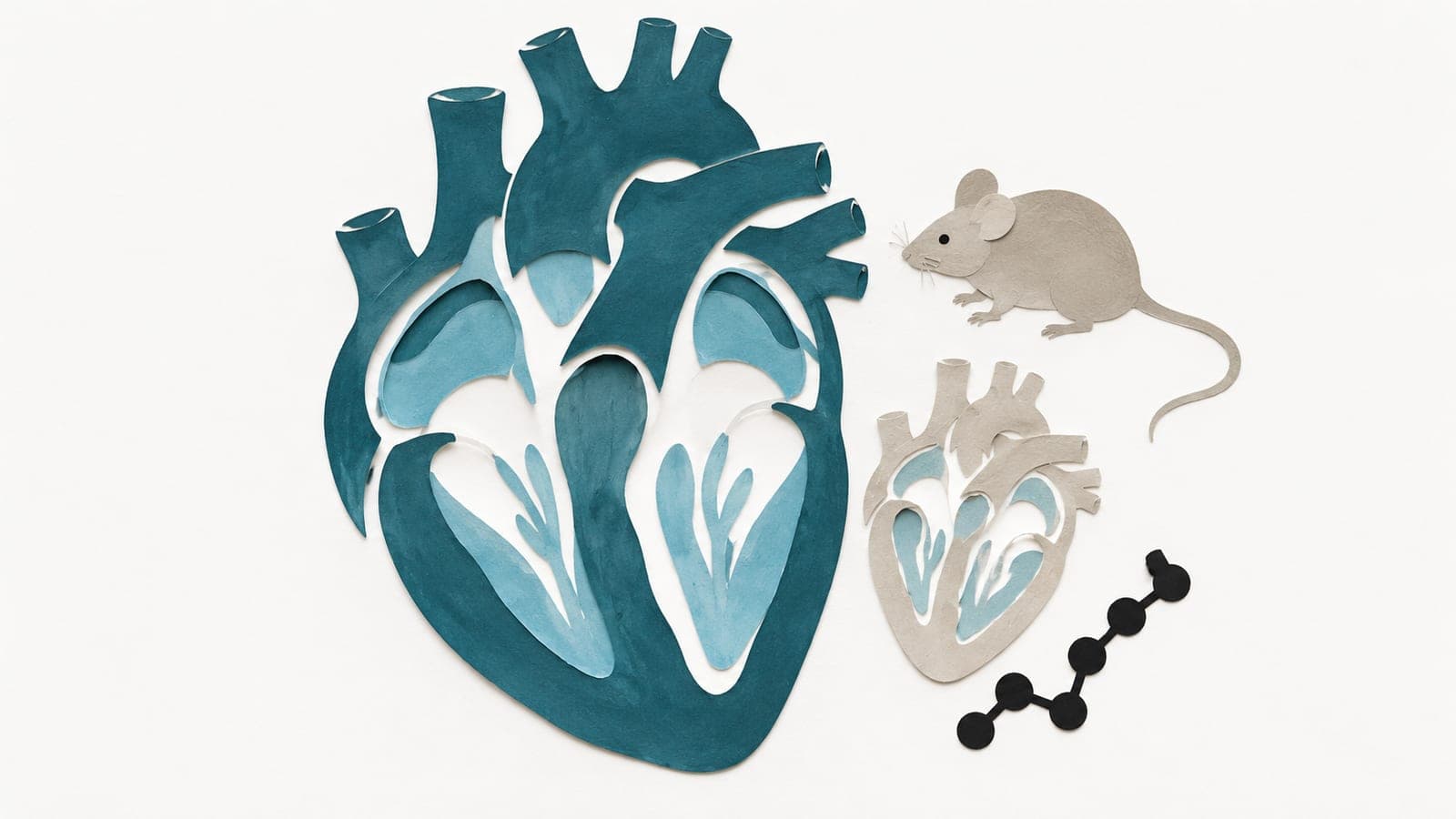
In an experiment in mice followed up to 18 months of age, researchers reduced a hydrogen sulfide-producing enzyme in cells lining blood vessels. They compared these mice with their unmodified littermates. Heart sulfide levels declined with age. Reducing the enzyme shortened lifespan and worsened metabolic health and physical performance. The mice developed enlarged heart muscle and poorer heart relaxation, while contraction function remained preserved.
The researchers also started dietary supplementation at 9 months with polysulfides, sulfur-containing compounds. Supplementation prevented heart muscle enlargement and decline across the body. It restored metabolic balance and the regulation of gene activity in the heart.
Why it matters
Heart aging involves structural changes and declining metabolism. The work points to signals from blood-vessel cells as a possible target for limiting these changes.
Caveats
This animal experiment cannot establish whether supplementation would benefit people. The conference abstract did not report sample sizes, supplement doses or numerical effect sizes.

